
7 US-Iran Updates: Iran Strikes Arab Nations, Russia Feels the Impact
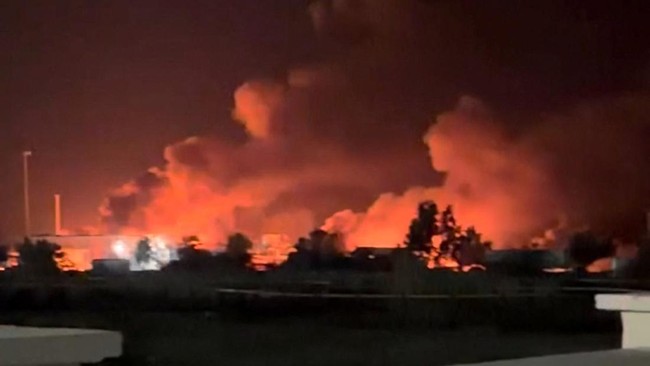
The escalation of the conflict between the United States (US) and Iran has intensified after Tehran launched attacks on several Gulf countries hosting US military bases. The strikes were described as retaliation for Washington’s military operations against Iranian ports and islands in the Strait of Hormuz.
Iran’s Islamic Revolutionary Guard Corps (IRGC) claimed to have struck the US Fifth Fleet in Bahrain, the Ali Al Salem Air Base in Kuwait, and the Azraq Air Base in Jordan using long-range drones and missiles. The IRGC stated it targeted 21 US military facilities and destroyed four of them, including an F-35 fighter jet hangar in Jordan. However, authorities in Bahrain, Kuwait, and Jordan stated that all projectiles were successfully intercepted, resulting in no casualties.
- Iran Retaliates Against US by Attacking Arab Nations
Iran stated that the attacks on Bahrain, Kuwait, and Jordan were a response to US military operations against Qeshm Island and several ports along the Strait of Hormuz coast. Washington had previously accused Tehran of being responsible for the downing of a US Apache helicopter. The IRGC also warned that its forces are ready to deliver a larger response if the US attacks again. ‘Our forces are fully prepared to deliver a devastating and decisive response to US military action,’ the IRGC statement read.
- Trump Threatens Iran Will ‘Pay the Price’
US President Donald Trump asserted that Iran would face consequences for the attacks. In a social media post, Trump accused Tehran of deliberately slowing down peace negotiations. ‘They have been negotiating for too long on a deal that would greatly benefit them. Now they must pay the price,’ Trump wrote, contradicting his comments from the previous day that the two sides were only two to three days away from reaching an agreement.
- Palestine Condemns Attacks on Bahrain, Kuwait, and Jordan
The office of Palestinian President Mahmoud Abbas condemned Iran’s attacks on Bahrain, Kuwait, and Jordan. In an official statement, Palestine expressed solidarity with the three countries and affirmed its support for any measures taken to defend their respective sovereignty.
- Netanyahu and Trump Discuss Gulf Situation
Israeli Prime Minister Benjamin Netanyahu and President Trump held a telephone conversation to discuss the latest developments in the Gulf region. According to Netanyahu’s office, the two leaders agreed to continue coordination across various sectors. Trump provided an update on US military measures in the region, while Netanyahu highlighted the increasing threat to Israel and the importance of maintaining security zones along his country’s borders.
- Iranian Military Area Attacked Again
Tensions also continued within Iranian territory. The Governor of Konarak, Mohammad Younes Haqqani, said a naval military area in the southern city of Konarak was targeted by fighter jets in two waves. ‘Two explosions were heard in the naval military area, and the area was targeted by enemy fighter jets in two stages,’ Haqqani said. He added that rescue teams and security forces had been deployed, while an investigation into the attack was ongoing.
- US Claims Strait of Hormuz Remains Safe
The US Central Command (CENTCOM) denied Iran’s claim that Tehran controls the shipping lanes in the Strait of Hormuz. In a statement, CENTCOM asserted that Iran does not control the strategic shipping route. Since early May, the US military claims to have assisted the smooth passage of more than 800 merchant ships and the shipment of approximately 380 million barrels of crude oil through the international trade corridor.
- Markets and Russia Affected by the Conflict
Amid rising tensions, the NASDAQ index closed higher thanks to a rally in semiconductor company stocks, although market participants remained wary of the risk of a wider conflict. Meanwhile, Russia recorded its first monthly budget surplus of the year, amounting to 279 billion roubles, driven by a surge in oil and gas revenues during the conflict. However, Bloomberg estimates that this profit is only temporary, as Russian oil prices fell again after Iran and the US signed a memorandum of understanding the previous month. On the other hand, Russian government spending in the first six months of the year reached US$320 billion, driven by the high costs of the ongoing war in Ukraine.