
7 Horrifying Facts About the Flash Flood That Devastated Nepal and Killed Hundreds
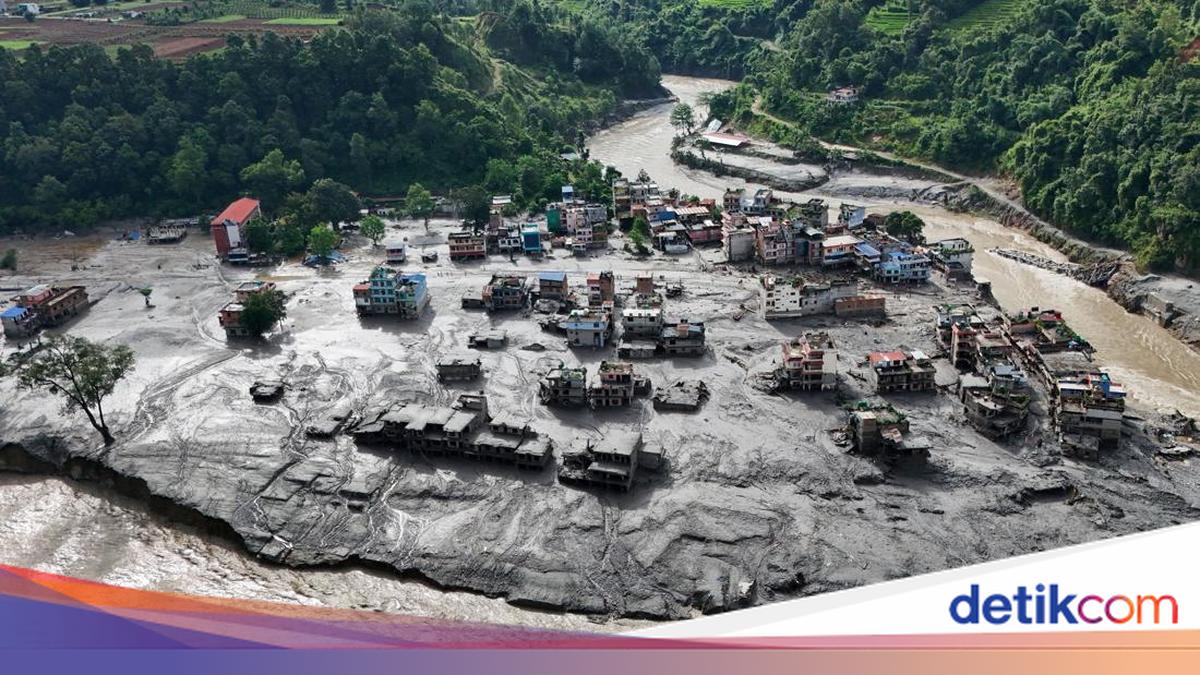
A devastating flash flood has struck Nepal, causing significant loss of life and leaving hundreds of people still reported missing. The disaster occurred on Wednesday (26/8/2026), when the flash flood swept through areas of Nepal bordering Tibet. Images shared by Nepalese police showed torrents of floodwater rushing through rivers and sweeping away homes. Nepalese authorities have deployed several helicopters for rescue operations. The areas of Syapru Besi and Timure in the mountainous Rasuwa district, which has a population of 50,000, were the worst affected.
A helicopter pilot who witnessed the deadly flash flood said the wave height reached around five to six metres. The pilot, named Aman Budathoki, initially thought the armed forces were using explosives. “About five minutes before landing, we saw dust rising high from the river,” Budathoki told CNN. “At first it looked like a landslide. We even wondered whether the army was using explosives for road construction,” he added. However, within seconds, the pilot saw dark floodwater mixed with debris rushing down and merging with clear water. Budathoki described the situation on the ground as terrifying. “We could see waves of water five to six metres high. We began circling over the villages there and saw large trees and several vehicles swept away by the strong current,” he said. “The situation was very frightening. We even tried to follow the flood path briefly to assess the damage,” he continued.
Horrifying video footage of the moment the flood struck Gyirong Port on the China-Nepal border also went viral. The video showed people panicking and running. Shortly afterwards, the flash flood wave swept away buildings and people. The flash flood, which was accompanied by mud, damaged roads, bridges and a power plant project in the Himalayan country. Severe damage was reported in areas of Nepal close to Tibet.
A massive landslide and terrifying flash flood occurred on the Nepal-Tibet border, causing widespread damage and leaving hundreds dead or missing. What triggered the flood? Nepalese Foreign Minister Shisir Khanal stated that an earthquake was reported on the Tibet-Nepal border shortly before the landslide, indicating that the earthquake may have triggered the disaster. Initially, the US Geological Survey (USGS) reported a magnitude 4.4 earthquake along the Nepal-China border at 8.37 am local time. At almost the same time, a mass of ice and rock slid rapidly down the mountain slope towards the Lhende Khola River. This river is a tributary of the Bhote Koshi River, which flows from China into Nepal and often passes through deep gorges. The USGS later clarified that the recorded tremor was not an earthquake, but rather vibrations caused by the enormous landslide. The tremor believed to have been caused by the landslide was recorded as having a strength equivalent to a magnitude 5.2 earthquake. It will take weeks to confirm the exact cause, but an international team of scientists believes that a large chunk of glacier broke away from the mountain and fell into the valley below. In other words, it was not an earthquake that caused the glacier collapse. Rather, the landslide itself caused the earthquake-like tremor.
The cause of the powerful flood that struck and devastated areas of Nepal and Tibet is still being analysed further. Nepal itself is a region vulnerable to climate disasters amid global warming. Vast expanses of ice are melting and rocky mountain slopes are becoming unstable, losing their solidity and becoming more unstable. As glaciers melt and form large lakes at high altitudes, summer melting can cause lake water to overflow downstream. In addition, climate change is triggering more extreme rainfall, potentially causing deadly floods. Scientists are still working to determine the exact cause of this disaster. They are examining satellite imagery to locate the precise site of the landslide, checking whether any glacial lake suddenly emptied its water, and identifying possible river blockage points, while analysing recent rainfall data.
To date, Nepalese authorities have found 165 people dead. Meanwhile, hundreds of others are still reported missing. The search process is ongoing. “The pain and loss you are experiencing is not small,” said Nepalese Prime Minister Balendra Shah in a statement on social media. “But I want to assure you that you are not alone in this difficult time; the state is with you with all its strength and resources,” he added.
The Indonesian Ministry of Foreign Affairs is monitoring the condition of Indonesian nationals in the area affected by the flash flood on the Nepal-Tibet border. The ministry said there have been no reports so far of Indonesian nationals affected by the flood. “The Indonesian Embassy in Dhaka and the Indonesian Embassy in Beijing continue to monitor the condition of Indonesian nationals through coordination with Indonesian community networks and the Honorary Consul of the Republic of Indonesia in Kathmandu,” the ministry told reporters on Thursday (27/8/2026). To date, the ministry has confirmed there are no reports of affected Indonesian nationals. There are around 45 Indonesian nationals recorded in Nepal, the majority of whom reside in Kathmandu and work in the hospitality sector. The Indonesian Embassy in Dhaka is paying special attention to Indonesian nationals in Nepal who are tourists, particularly those undertaking activities.
Source: jawawa.id (https://jawawa.id/newsitem/7-horrifying-facts-about-the-flash-flood-that-devastated-nepal-and-killed-hundreds-1787874669)
Originally published by detikcom (https://news.detik.com/internasional/d-8637490/7-fakta-ngeri-banjir-bandang-terjang-nepal-tewaskan-ratusan-orang), translated from Indonesian