
7 Games That Support Children’s Development
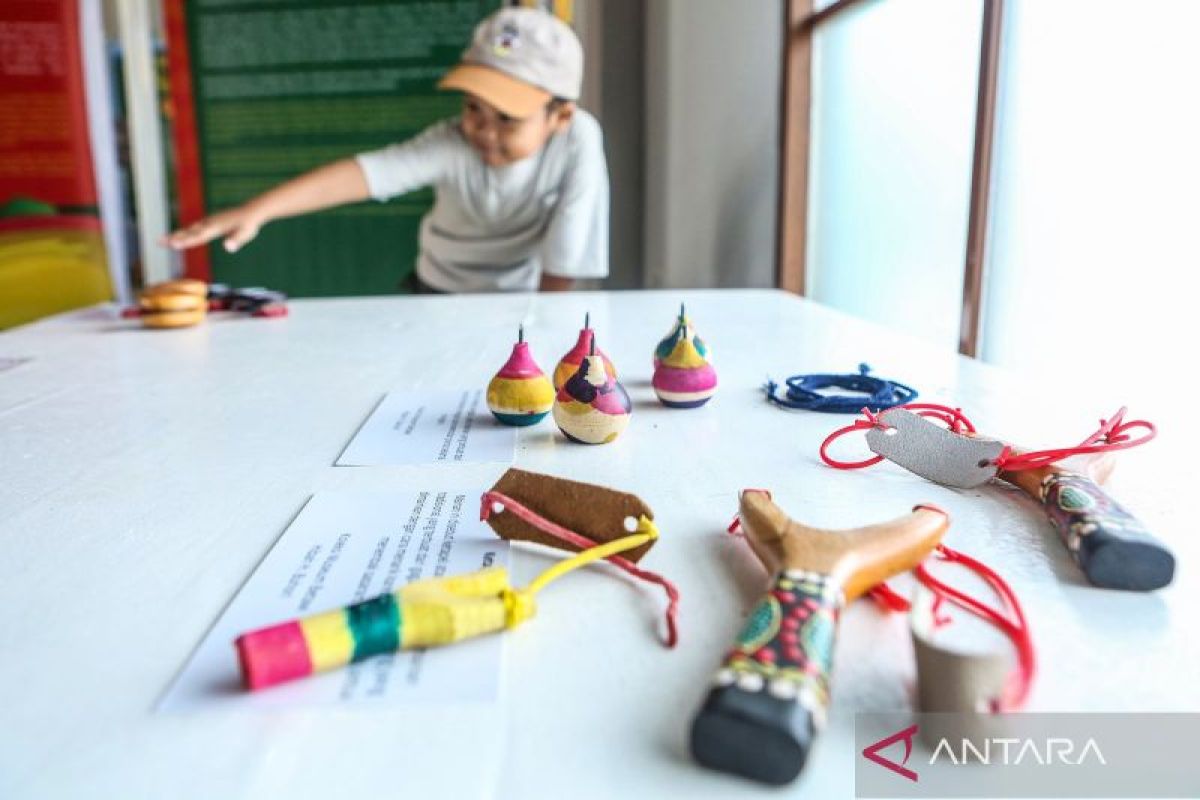
Jakarta (ANTARA) - Playing is more than just a way for children to pass the time. Behind these seemingly simple activities are a range of benefits for physical development, thinking skills, creativity, and social and emotional abilities.
Through play, children can learn to recognise their surroundings, understand rules, communicate and solve problems in their own way. Parents should therefore give children the opportunity to try different kinds of games suited to their age and stage of development.
In its clinical report, The Power of Play, the American Academy of Pediatrics (AAP) explains that play plays an important role in supporting children’s brain development, language skills, emotional regulation and social abilities.
So, which games can help support children’s development?
- Building blocks
Building blocks are a simple toy that can help develop children’s thinking skills and creativity.
As they arrange blocks into buildings or other shapes, children learn to recognise size, colour and form, as well as the concept of balance. The activity also develops hand-eye coordination and problem-solving skills when a structure collapses.
- Puzzles
Puzzles can help develop concentration, memory and the ability to recognise patterns.
Children must match pieces by shape and colour to complete a picture. The process teaches them to think systematically and be patient when faced with a challenge.
Parents can choose puzzles with a number of pieces suited to their child’s age and abilities.
- Pretend play
Games such as playing house, doctor or school can help develop imagination and communication skills.
Through role-play, children learn about different situations and try to see things from another person’s perspective. These games also give them the chance to recognise emotions, practise empathy and build confidence.
- Hide-and-seek
Hide-and-seek is a simple game that can support children’s physical development as well as their social skills.
As they play, children practise moving and running, and judging where someone might be hiding. They also learn to understand rules, wait their turn and interact with their peers.
The game can also help build social bonds through an enjoyable shared activity.
- Drawing and colouring
Drawing and colouring can help develop children’s creativity and fine motor skills.
When holding coloured pencils, crayons or paintbrushes, children learn to control the movements of their fingers and hands. The activity also helps develop hand-eye coordination, which will be useful when they begin learning to write.
Parents should avoid placing too many restrictions on their children’s drawings. Let them create and express their imagination through colours and shapes.
- Ball games
Playing with a ball—throwing, catching, kicking or dribbling it—can help develop children’s gross motor skills.
These games help improve balance, movement coordination, muscle strength and body control.
When playing with friends, children can also learn to work together and communicate, as well as to accept both winning and losing.
- Playing music and singing
Introducing music through simple instruments such as tambourines, toy drums or instruments made from recycled materials can help stimulate children’s development.
Children learn to recognise rhythm, sounds and patterns. Singing can also help expand their vocabulary and develop language skills.
Moving to the rhythm of music can also be an enjoyable activity involving body coordination and emotional expression.
Choosing games suited to a child’s age
Although different games offer benefits, parents should still consider a child’s age, abilities and interests when choosing activities.
Make sure games use safe materials and do not contain small parts that could pose a choking risk. Adult supervision should be provided where necessary.
Parents do not always need to provide expensive toys. Simple items such as cardboard boxes, wooden spoons, paper and balls can be useful play materials, provided they are used safely.
Ultimately, the best games are not necessarily the most sophisticated or expensive, but those that give children the opportunity to explore, create, move and interact. With appropriate guidance, play can be an important part of supporting children’s development.