
7 Criteria for Choosing the Right Payment Gateway to Support Business Continuity
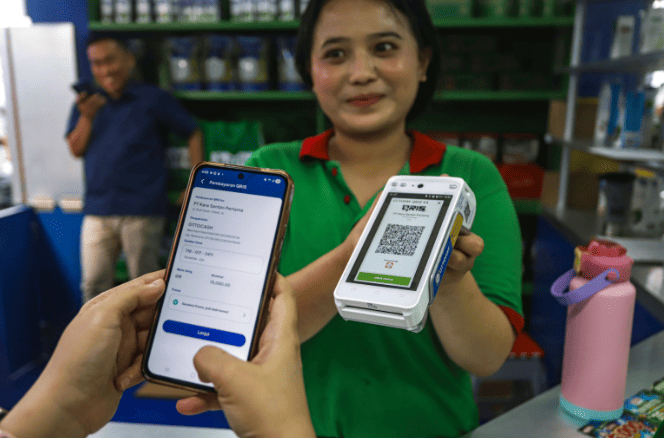
Payment Gateway has become one of the crucial components in business operations, particularly in today’s digital transaction era. The presence of a reliable payment gateway will influence the customer experience in transacting, from convenience to security.
Moreover, choosing the right payment gateway provider is not just about comparing rates, but also considering various other aspects that support the smooth running and development of the business.
In selecting a payment gateway, businesses need to consider various factors such as the completeness of payment methods, implementation flexibility, transaction security, regulatory compliance, operational experience, and the quality of support provided by the service provider.
Here are 7 criteria that can serve as a guide when choosing a payment gateway so that your business runs smoothly and with minimal risk.
The first thing to consider is how complete the accepted payment methods are. An ideal payment gateway provider should support various payment instruments so that customers have flexibility in choosing the most suitable transaction method.
The wider the coverage of available payment methods, the easier it is for businesses to provide a comfortable payment experience, both for online and offline needs.
Not only cards, payment methods such as Virtual Accounts from various banks, QRIS in various types (static, dynamic, and cross-border), as well as popular e-Wallets such as DOKU e-Wallet, OVO, DANA, and ShopeePay also need to be available.
In addition, some payment gateways also support payments through minimarkets such as Alfamart and Indomaret, as well as PayLater methods from providers such as Akulaku or Kredivo.
With complete payment methods, businesses can reach more customers and provide a more flexible transaction experience according to individual preferences.
Currently, QRIS is one of the payment methods experiencing rapid growth in Indonesia. Not only used for domestic transactions, QRIS is also continuing to develop through the QRIS Cross Border feature which allows businesses to accept payments from international customers with a more practical transaction experience.
For businesses that want to keep up with digital payment developments and start accepting QRIS-based transactions, the QRIS registration process through DOKU can be an initial step to expand payment options, including the need for static, dynamic, and cross-border QRIS.
Besides the available payment methods, businesses also need to consider how the payment gateway can be implemented according to the sales channel and technical needs they have.
Every business has different conditions. There are businesses that already have a website or application and require direct integration into the system, businesses that use e-commerce platforms, and businesses that do not yet have a website but still want to accept digital payments.
Therefore, an ideal payment gateway provider should provide various implementation options, ranging from Hosted Payment Gateway, API Integration, Payment Gateway Plugin, MCP Server, to no-code solutions.
The choice of implementation can be adjusted to the existing infrastructure, the level of control over the payment process, and the available technical capabilities.
For businesses that already have a website or application, the payment gateway can be implemented through various integration methods according to operational needs.
Hosted Payment Gateway
Hosted payment gateway is suitable for businesses that already have a website or application but do not yet have their own payment page.
With this method, the payment page is provided by the payment gateway provider so that businesses do not need to build a payment system from scratch.
Customers will be directed to a payment page that is connected to various payment methods. This solution is suitable for businesses that require faster implementation without needing to develop a payment page internally.
API Integration (Self-Hosted Payment Gateway)
API integration is suitable for businesses that require greater control over the appearance, transaction flow, and customer experience.
Through API integration, the payment system can be connected directly to the business website or application so that the transaction process can be tailored to operational needs and internal systems.
This method is generally used by businesses that have a developer team or require higher flexibility in managing the payment experience.
Payment Gateway Plugin
Payment gateway plugin is a practical choice for businesses using certain e-commerce platforms.
With a plugin, businesses can connect the payment system to the website without needing to build integration from scratch.
This method is suitable for businesses using platforms such as Shopify, Magento, or WooCommerce because the installation and configuration process can be done more easily.
For businesses that do not yet have a website, application, or technical development needs, no-code solutions can be an option to start accepting digital payments.
Payment Link
Payment Link allows businesses to create payment links that can be shared through various channels such as WhatsApp, social media, email, or invoices.
Customers simply open the link to make a payment through a payment page that supports various payment methods. This solution is suitable for businesses that need a practical way to accept payments without having to build a website or their own payment system.
Digital Catalog
The Digital Catalog provided by the payment gateway allows businesses to create a product catalogue while providing a payment process in one ecosystem.
Unlike ordinary product catalogues that only function to display product information, a digital catalogue from a payment gateway is already connected to a payment page so that customers can select products and immediately make a transaction.
This solution is suitable for businesses that do not yet have their own website or online store but still want to display products and accept digital payments practically. With these various implementation options, businesses can choose a payment gateway solution based on sales channel readiness, operational needs, and technical capabilities.
The next criterion that is no less important is the legality of the payment gateway provider. Ensure the provider is licensed and meets applicable regulatory standards.
A payment gateway provider that is compliant with regulations demonstrates that the service is operated legally, has good governance, and is able to maintain the security of merchant transactions.
From a security perspective, the service provider also needs to have certifications such as PCI DSS (payment card data security standard) and ISO/IEC 27001, which is an information security standard.
In addition, the implementation of security standards and regulatory compliance are important factors to ensure business transactions run safely and with minimal risk.
The next thing to consider is how the payment gateway provider builds relationships with merchants.
Ideally, the provider should not only act as a technology vendor but also become a partner that supports long-term business development.
A good payment gateway not only provides a payment system but also provides support in the integration process, helps understand business needs, and provides solutions that can improve the customer transaction experience.
This approach helps businesses adjust payment needs as the business grows.
Operational experience is also an important consideration. Service providers with a long track record are usually better able to manage situations such as transaction spikes during certain periods, increased transaction needs, and regulatory changes.
In addition, choosing a provider with mature experience can help the integration and system maintenance process run more smoothly and minimise the risk of transaction disruptions.
For example, the DOKU payment gateway has been operating since 2007 and has experience in supporting various digital payment needs in Indonesia. This experience helps deliver stable and reliable services for merchants of various business scales.
The quality of support after implementation is also an important factor in choosing a payment gateway.
Problem handling and system development should ideally be not only reactive but also proactive.
A good payment gateway provider will help identify transaction obstacles, provide recommendations for improving payment performance, and assist businesses as operational needs develop. Continuous assistance helps businesses ensure the payment system remains aligned with ever-changing needs.
Digital transactions run non-stop and can occur at any time, even outside normal working hours.
Therefore, the availability of 24-hour customer service is an important factor in choosing a payment gateway. With support that is always available, transaction obstacles can be handled more quickly so that the risk of operational disruption and loss of revenue can be minimised.
This is especially important for businesses that have customers from various regions or run high-volume transactions.
Choosing a payment gateway must consider various aspects ranging from the completeness of payment methods, implementation flexibility, regulatory compliance, operational experience, quality of support, to customer service.
By choosing the right provider from the start, businesses can run transactions more safely, efficiently, and provide a better payment experience to customers.
This is because the cost of switching payment gateways later is usually far greater than the difference in rates seen when initially choosing a service.
If you want to ensure your business is always ready to accept various payment methods and receive optimal support, choosing a payment gateway must be a priority.
Entrust your business payment management to DOKU, which has been operating for more than 17 years with a transparent fee structure and no monthly fees. DOKU is a payment fintech company that provides various digital financial solutions for businesses.
DOKU provides a Payment Gateway with a wide range of payment methods including DOKU e-Wallet that can be implemented through various implementation options according to business needs, from hosted payment gateway, API integration, plugins, to no-code solutions.
Besides the Payment Gateway, DOKU also provides a modern B2B financial ecosystem such as Wallet as a Service (including Embedded Wallet and Sub Account) as well as Payouts services for the convenience of your business’s outgoing payment operations.