
7 Countries Mandate Church Tax: Are Many 'Apostates'?
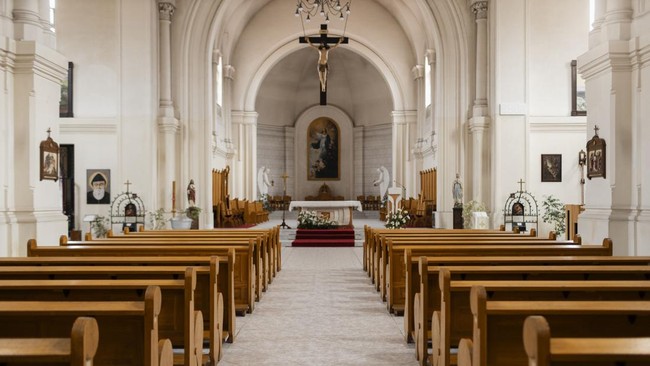
Several European countries levy a church tax. This tax is distinct from tithes and offerings.
In countries with a church tax, the government collects funds through the national tax system to support registered religions. This tax is collected from every individual registered as a member.
A study conducted by the Pew Research Center found that the majority of the population still supports the tradition of paying church taxes. In fact, in several Western European countries that implement mandatory taxes for Christian church members, most adults report that they pay this tax.
Here is a list of countries that have a church tax system:
Germany - 8-9%
Denmark - an average of 0.867% of taxable income
Sweden - an average of 1.05% of income
Finland - generally around 1-2% of taxable income, depending on the parish
Switzerland - varies by canton, potentially a few per cent of income tax
Iceland - there is a system of contribution to religious communities through taxation
Austria - church members pay Kirchenbeitrag, generally around 1.1% of income
Avoiding Church Tax
In Austria, Denmark, Finland, Germany, Sweden, and most parts of Switzerland, the church tax is mandatory for all members of large churches that meet minimum income criteria. This tax is usually collected from the majority of Christian taxpayers, but may exclude students, the unemployed, pensioners, and others with low incomes.
Church membership is usually determined through baptism, but those who wish to avoid the tax must formally withdraw from membership. Theoretically, leaving the church could provide a financial advantage for individuals in these countries. Consequently, social experts theorise that the church tax could be one of the factors causing people to distance themselves from religion.
Nevertheless, Pew Research Center research shows no clear link between secularisation and church taxes. In fact, there is no evidence that countries implementing church taxes are experiencing a decline in the number of congregants. Conversely, the countries that have recorded the sharpest decline in identifying as Christian—including Belgium, Norway, and the Netherlands—do not implement a church tax.
In the six countries that mandate church taxes for their members, those who do not participate in the tax tend to take the stance that religion should be separated from government policy. In some countries, the gap is very striking: For example, the majority of the Austrian population who do not participate in the church tax (82%) say that religion and government policy should be separated, while only half of the Austrian population who pay the church tax hold the same view.
Source: jawawa.id (https://jawawa.id/newsitem/7-countries-mandate-church-tax-are-many-apostates-1788490566)
Originally published by CNBC Indonesia (https://www.cnbcindonesia.com/lifestyle/20260903122923-33-764614/7-negara-wajibkan-pajak-gereja-benarkah-banyak-yang-murtad), translated from Indonesian