
7.53 Million Indonesian Commuters, 90% Use Private Vehicles in 2026
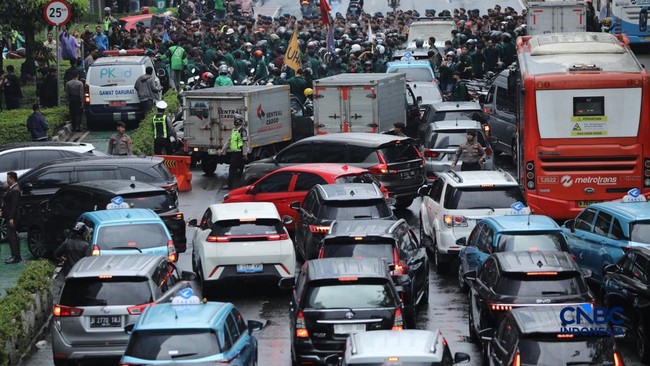
Most commuter workers in Indonesia still use private or official vehicles, while only a small proportion take public transport to work.
Statistics Indonesia (BPS) defines commuter workers as employed people who work outside the regency or municipality where they live and regularly travel to and from home on the same day.
According to the latest BPS data, there were 7.53 million commuter workers in August 2026, equivalent to around 5.09% of the country’s 147.98 million employed people. This was down from 7.69 million in August 2025.
“To support travel to and from work, most commuter workers used private or official vehicles in August 2026,” BPS said in its Indonesian Employment Situation 2026 report, cited on Friday (6 November 2026).
BPS recorded that 90.98% of commuter workers used private or official vehicles in August 2026, up from 90.86% in August 2025.
Meanwhile, 7.06% used public transport, down 0.10 percentage points from 7.16% in August 2025. The share using online transport fell to 0.79% from 0.89% a year earlier.
The ‘other’ category accounted for 1.17%, up from 1.09% last year. BPS said this category includes walking or not using any means of transport.
BPS noted that commuter work is more common in metropolitan areas, particularly in the metropolitan regions developed in Indonesia and made up of several cities.
The ten developed metropolitan regions are Mebidang, Patungraya Agung, Jabodetabekpunjur, Cekungan Bandung, Gerbangkertosusila, Kedungsepur, Sarbagita, Banjarbakula, Bimindo and Mamminasata.
Mebidang comprises Medan, Binjai and Deli Serdang; Patungraya Agung comprises Palembang, Ogan Komering Ilir, Banyuasin and Ogan Ilir; Jabodetabekpunjur comprises Jakarta, Bogor Regency, Bogor City, Depok, Tangerang Regency, Tangerang City, South Tangerang, Bekasi Regency, Bekasi City, Puncak and Cianjur; and Cekungan Bandung comprises Bandung City, Bandung Regency, Sumedang, West Bandung and Cimahi. Kedungsepur comprises Grobogan, Kendal, Demak, Salatiga, Semarang City and Semarang Regency.
Gerbangkertosusila comprises Gresik, Bangkalan, Mojokerto Regency, Mojokerto City, Surabaya, Sidoarjo and Lamongan; Sarbagita comprises Denpasar, Badung, Gianyar and Tabanan; Banjarbakula comprises Banjarmasin, Barito Kuala, Banjar, Banjarbaru and Tanah Laut; Bimindo comprises Bitung, Minahasa, North Minahasa, Tomohon and Manado; and Mamminasata comprises Makassar, Maros, Gowa and Takalar.
The boundaries of nine metropolitan regions are based on their respective presidential regulations, while Bimindo is governed by separate regulations. Their coverage includes all or part of the relevant regencies and municipalities.
For data processing, the boundaries used cover all regencies and municipalities within each metropolitan region.
The three metropolitan regions with the highest proportions of commuter workers in August 2026 were Jabodetabekpunjur (16.79%), Sarbagita (14.13%) and Banjarbakula (10.88%).
Men made up most commuter workers in August 2026, at 70.59%, a decline of 0.59 percentage points from August 2025.
By highest educational attainment, the largest shares of commuter workers were vocational secondary school graduates (26.40%), graduates with a diploma IV or bachelor’s, master’s or doctoral degree (24.59%), and general senior secondary school graduates (21.17%).
The largest year-on-year increase in the share of commuter workers was among vocational secondary school graduates, up 1.97 percentage points from August 2025.
Source: jawawa.id (https://jawawa.id/newsitem/7-53-million-indonesian-commuters-90-use-private-vehicles-in-2026-1793940636)
Originally published by CNBC Indonesia (https://www.cnbcindonesia.com/news/20261106094321-4-782873/753-juta-pekerja-komuter-ri-90-naik-kendaraan-pribadi-di-2026), translated from Indonesian