
67% of Tourism Businesses Rely on Third Parties for Waste Management Amid Land Shortages
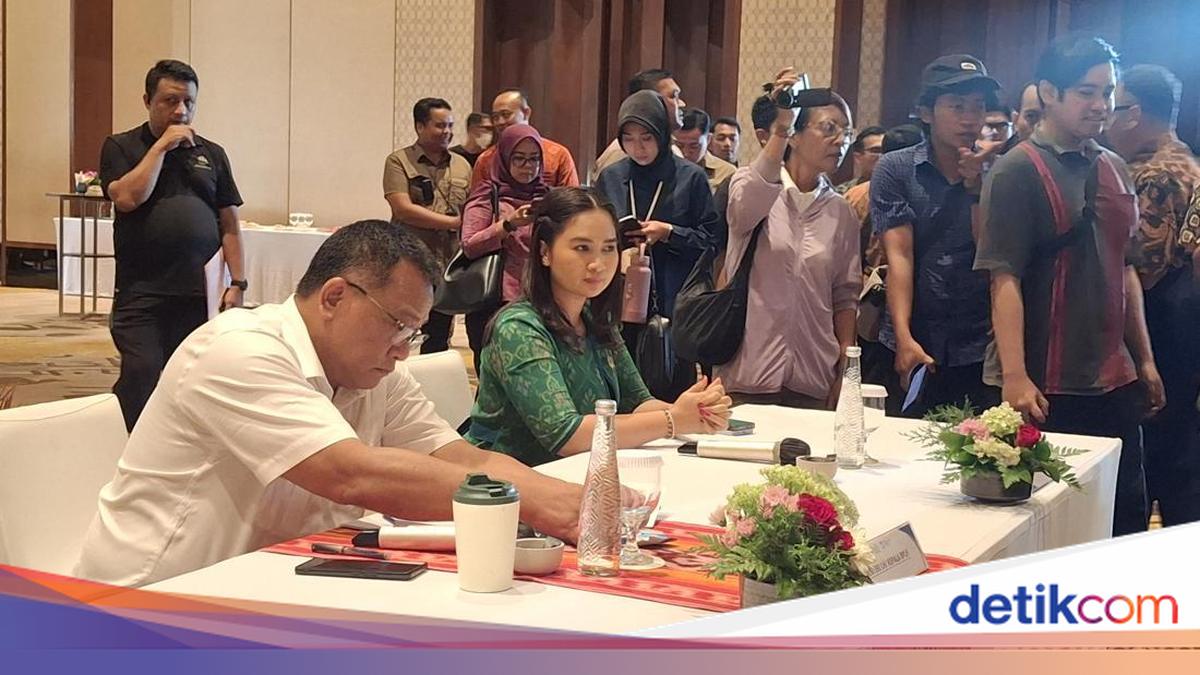
The Deputy Minister of Tourism, Ni Luh Puspa, stated that most tourism businesses currently rely on third-party services to manage the waste they generate. This was revealed during a Coordination Meeting on Optimising the Role of HOREKA (Hotels, Restaurants, and Cafes) in Waste Management in Denpasar.
“Based on our findings, more than 67% of industries have used private third-party services for their waste management,” said Puspa on Tuesday (9/6/2026).
According to her, this dependence on third parties is a major challenge for the HOREKA sector, as not all waste management vendors possess processing systems that comply with current regulations. Consequently, business operators require information regarding waste management companies that are certified and meet established standards.
“Business operators strongly hope to obtain information regarding third parties certified by the local Environmental Office, to ensure that the chosen vendors do not violate or ignore existing waste management regulations,” she explained.
Meanwhile, the Regent of Badung, I Wayan Adi Arnawa, explained that approximately 55.5 per cent of waste generated in Badung comes from households, while about 45.5 per cent originates from the HOREKA sector. He noted that the issue arises because many businesses delegate waste management to third parties that focus solely on collection and disposal.
“HOREKA has long been handled by third parties whose principle is simply ‘collect, transport, and dump.’ When we talk about collecting and transporting, where is it being taken? It is ultimately taken to the landfill,” he added.
He assessed that this situation becomes critical as the government begins to restrict waste disposal at the Suwung Landfill (TPA). Many waste management vendors lack alternative processing methods other than transporting waste to the landfill.
“Now that there is a policy to close the landfill, we are all in a difficult position. Meanwhile, the waste handled by the community is being managed mid-stream through the construction of TPS3R and TPST facilities,” he said.
He maintained that as long as business operators remain dependent on third parties that lack processing facilities, the waste problem will never be resolved. Adi emphasised that waste management efforts must go beyond technical guidance and include stricter implementation and supervision.
“I believe technical guidance is no longer enough. It must be followed by implementation and follow-up. The follow-up should involve law enforcement, so that HOREKA parties are compelled to manage their own waste,” he concluded.
HOREKA Operators Struggle with Waste Management Due to Lack of Land
The Chairman of the Indonesian Hotel and Restaurant Association (PHRI) Bali, Tjok Oka Artha Ardhana Sukawati, admitted that HOREKA operators still face obstacles in managing waste independently due to a lack of land.
“Some of our members who happen to have sufficient and adequate land have already implemented it. However, not all our members have adequate land, particularly in urban areas,” he said on Tuesday (9/6/2026).
He revealed that business operators have only recently learned that the waste sorting system is now divided into five categories: organic, reusable, recyclable, hazardous and toxic waste (B3), and residual waste. Previously, many operators were only aware of three categories.
“Their capability is currently only at the sorting stage. We also only recently learned that there are five clusters, whereas previously we knew of only three,” he added.
Known as Cok Ace, he added that problems arise even after waste is successfully sorted, as not all operators are capable of processing organic waste at the source.
Meanwhile, waste collection vendors working with these businesses expressed uncertainty regarding waste management following the proposed closure of the Suwung Landfill. “Since we cannot all process organic waste at the source, my question is: once this waste is sorted, where do we take it? The vendors working with us have stated they can only operate until Suwung Landfill is closed,” he said.
Responding to this, the Minister of Environment, Jumhur Hidayat, clarified that the government is not closing the Suwung Landfill operations entirely. Rather, it is the practice of ‘open dumping’—uncontrolled disposal—that is being halted.
“The landfill is not closed; what is being closed is open dumping. Sending inorganic waste to Suwung Landfill is outdated. However, residual waste is still permitted,” he said.
According to Jumhur, organic waste should be resolved at the source level or through processing facilities at the village or regional level, such as TPS3R and TPST.
“If organic waste is resolved at the source or mid-stream—as I saw at the Wangi TPS3R, where it is sorted and used for fertiliser—the problem is solved. Only residual waste should be sent to Suwung Landfill,” he stated.
He added that if organic and inorganic waste management is optimised, the demand for landfill space will decrease drastically, as only residual waste will remain for burial.
“Perhaps from the original 30 hectares, only 5 hectares will remain. The remaining 25 hectares could become golf courses, hotels, or other developments,” he concluded.
Source: jawawa.id (https://jawawa.id/newsitem/67-of-tourism-businesses-rely-on-third-parties-for-waste-management-amid-land-shortages-1781013307)
Originally published by detikBali (https://www.detik.com/bali/wisata/d-8525223/67-pelaku-pariwisata-serahkan-sampah-ke-pihak-ketiga-kurang-lahan-jadi-kendala), translated from Indonesian