
636,000 Scam Reports Recorded Until July, Highlighting Urgent Need for Financial Literacy
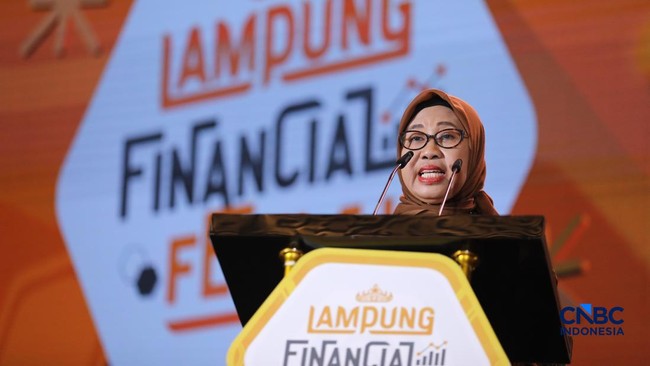
The Rector of the University of Lampung, Lusmeilia Afriani, has highlighted the gap between national financial literacy and financial inclusion. This implies that although financial access is high, not everyone understands the costs, benefits, rights, obligations, and risks involved. Based on national survey results, financial inclusion in the country has reached 93.61%, yet literacy remains at only 69.57%, leaving a 24-point disparity.
“Access (to finance) is right there on our mobile phones. The question is, are we sufficiently capable of making sound decisions when using them?” said Lusmeilia during the Lampung Financial Festival on Saturday (5/9/2026).
“I then asked everyone in attendance: have we ever received investment offers with high returns? Profitable ‘paylater’ discounts? Messages requesting immediate transfers that were not properly verified? If so, that is why financial literacy is so vital,” she added.
She emphasised that increasing financial literacy is extremely urgent. According to data from the Indonesia Anti-Scam Centre, there were 636,000 reports of suspicious financial transactions, and Rp 723 billion of victims’ funds were successfully blocked as of 30 July.
“Behind those numbers, there are families losing their savings and business owners losing their capital. I hope the younger generation does not face this,” Lusmeilia stated firmly.
According to her, there are three essential steps that can be undertaken collectively. First, introducing decision-based learning, which involves budgeting, calculating debt costs, recognising legal investments, understanding protections, and developing digital skills.
Second, building easily accessible protection pathways, especially when encountering suspected fraud. She believes there must be a place to ask questions and channels to report suspected financial fraud.
Third, bringing research out of the university. Higher education institutions can assist schools, MSMEs, villages, farmers, and communities to ensure that access to financing is used healthily and productively.
“Universities do not work alone; the OJK (Financial Services Authority), local governments, LPS (Deposit Insurance Corporation), BI (Bank Indonesia), the banking sector, and the media all have different roles, but the same goal: a society that is capable, protected, and able to grow,” she concluded.
Source: jawawa.id (https://jawawa.id/newsitem/636-000-scam-reports-recorded-until-july-highlighting-urgent-need-for-financial-literacy-1788587644)
Originally published by CNBC Indonesia (https://www.cnbcindonesia.com/mymoney/20260905113110-72-765197/ada-636-ribu-laporan-scam-hingga-juli-literasi-keuangan-kian-mendesak), translated from Indonesian