
61 Government Spending Programmes for 2027: From Free Nutritious Meals to National Car Development
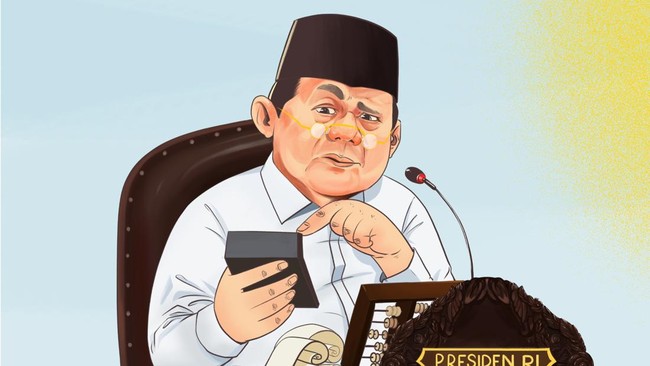
The government and the House of Representatives (DPR), assembled in the working committee for the preliminary draft of the 2027 State Budget (RAPBN), have agreed on 61 programmes that will form the basis for calculating government spending requirements in 2027. These 61 programmes are divided into eight clusters of national priority work programmes under the administration of President Prabowo Subianto: the Food Sovereignty Cluster; the Energy and Water Independence Cluster; the Education Cluster; the Health Cluster; the Downstreaming and Industrialisation Cluster; the Infrastructure, Housing, and Disaster Resilience Cluster; the People’s Economy and Village Cluster; and the Poverty Reduction Cluster. “Central Government Expenditure must be accompanied by a logical framework that shows the connection between policy direction, programmes in ministries/agencies, activities, budget, and the achievements to be attained,” the committee’s report stated. All expenditure will refer to the 2027 macro-fiscal posture, with state spending agreed to be in the range of 13.81–14.80% of GDP, comprising central government spending of 11.26–12.01% of GDP and transfers to regions of 2.55–2.79% of GDP. The 61 programmes include: Food Sovereignty initiatives such as the Merah Putih Fishermen’s Village and integrated shrimp pond modelling; Energy Independence projects like the B50 biodiesel mandate, a 100 GW solar power plant programme, and conversion of combustion engine motorcycles to electric; Education programmes headlined by Free Nutritious Meals for schoolchildren and the establishment of a new Medical University based on STEMM; Health programmes including Free Nutritious Meals for pregnant women, breastfeeding mothers, and toddlers; Industrialisation efforts such as semiconductor industry development and the National Car Development programme; and Infrastructure projects like the Giant Sea Wall. Foundational support for these targets includes strengthening defence and security stability, as well as law enforcement oversight, through a National Data Centre and the eradication of online gambling and scamming.