
600,000 Take to the Streets in France as Protests Over the Cost of Living Continue
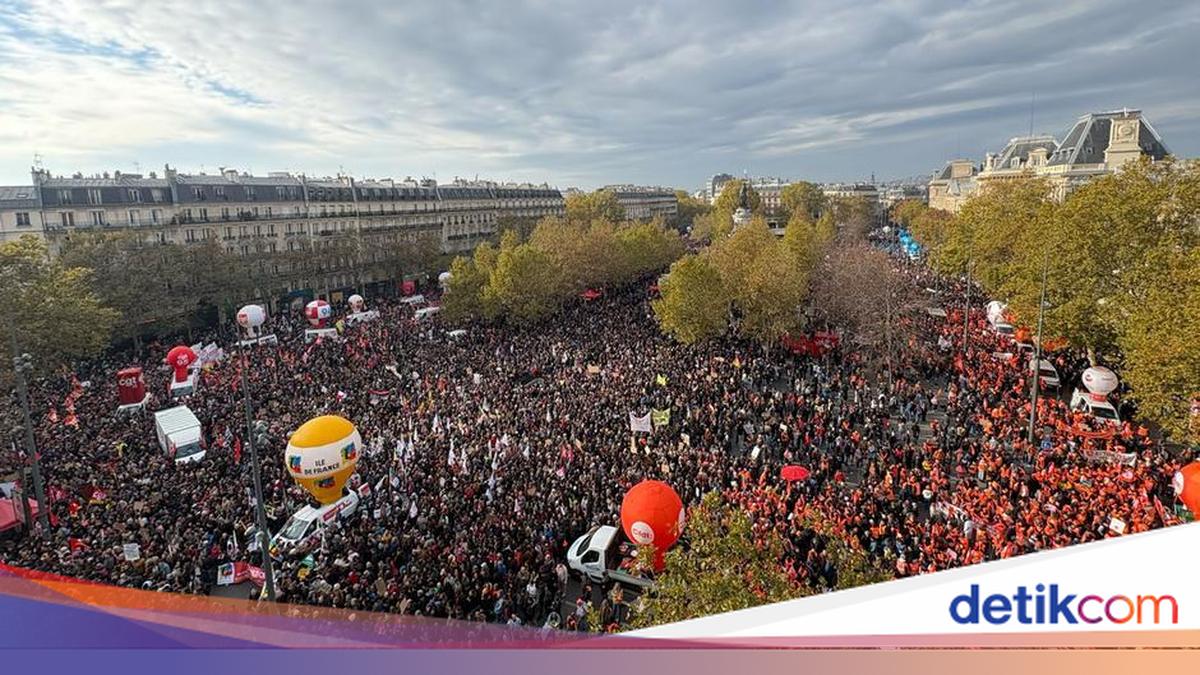
Hundreds of thousands of people filled streets in cities across France on Thursday (5 November) in a new wave of protests over the rising cost of living.
Interior Minister Laurent Nunez said the number of demonstrators grew throughout the afternoon, rising from 270,000 to 600,000 by evening.
The five trade unions organising the demonstrations represent both the public and private sectors. They urged the government to address deteriorating public services and the high cost of essential goods.
Public- and private-sector workers joined students who have staged a series of protests over the past month.
One of the largest student demonstrations in October turned violent. Suspected rioters damaged shops, while flames were seen coming from the roof of Limoges town hall in central France.
President Emmanuel Macron blamed far-left groups for the violence and pledged to deploy more security personnel at protest sites.
Cost-of-living protests spread across major French cities
As in October, large demonstrations took place in Paris, Lyon, Marseille and several other cities. Around 70,000 police officers and security personnel were deployed across France.
Most protests remained peaceful, although clashes between riot police and demonstrators were reported in Lyon.
There were also reports of tensions in Paris. The Eiffel Tower was closed for the day, and at one point police fired tear gas at demonstrators in the French capital.
Reports of violence in several cities
Demonstrations began on Thursday morning in southern cities including Marseille and Lyon, as well as Nantes in the west.
Local authorities in Brittany said that “a group of masked people” had tried to block roads in the city of Rennes.
Broadcaster BFM TV reported that a secondary school near Toulouse, in south-western France, had been set on fire.
The main demonstration in Paris began at 2pm local time. Newspaper Le Monde reported that demonstrators began dispersing towards evening.
Reuters reported that secondary-school pupils and other protesters clashed with riot police in the capital on Thursday morning after blocking a road with rubbish bins.
Public services join the strike
Trade unions in both public and private education called for a strike. Similar calls were made by unions representing railway workers, public hospitals and postal services.
They are demanding an increase in the minimum wage, across-the-board pay rises, tax reform and better learning conditions for young people.
The Education Ministry said that more than 15% of teachers in France had joined the strike. Unions representing electricity workers also took part, according to state-owned utility EDF.
About a third of secondary schools in France were closed, either because of student blockades or because teachers were on strike.
Media reports said national railway operator SNCF expected disruption to long-distance train services to be limited.
Government response to concerns over living costs and public services
The government is reportedly considering an increase in the minimum wage, which has stood at about Rp27 million a month since June. It was raised then by about Rp638,000 to reflect higher inflation.
France’s largest trade union, CFDT, is demanding an increase of at least about Rp1.8 million a month.
So far, the government has rejected major measures to ease demonstrators’ anger over the cost of living, as it continues efforts to control the budget deficit.
For students, the government has promised to assign about 3,000 qualified teachers who have not yet started work to help fill staffing shortages. It has also pledged to reduce class sizes, recruit more teachers next year and provide about Rp73 trillion in loans to renovate schools.
Will the wave of protests affect the 2027 presidential election?
President Emmanuel Macron is due to leave office at next year’s election after a decade in power. Several polls suggest the unrest is benefiting far-right presidential candidate Marine Le Pen, who currently leads surveys on who should succeed him and is known for taking a tough stance on law and order.
Radical-left candidate Jean-Luc Melenchon has also gained support in several polls, despite government criticism of his backing for the demonstrators’ demands, his attacks on the authorities’ handling of the crisis and his failure to condemn the violence unequivocally. He has said Macron must meet the demonstrators’ demands or resign.
Macron’s former prime minister, Edouard Philippe, who is now running as a centre-right candidate, remains well behind Le Pen and Melenchon. This leaves Philippe at risk of failing to reach the second round on 2 May unless he can regain momentum.
Source: jawawa.id (https://jawawa.id/newsitem/600-000-take-to-the-streets-in-france-as-protests-over-the-cost-of-living-continue-1793958672)
Originally published by detikcom (https://news.detik.com/dw/d-8741369/600-ribu-orang-turun-ke-jalanan-prancis-protes-biaya-hidup-terus-disuarakan), translated from Indonesian