
60,000 Mangroves Planted to Strengthen East Kalimantan's Coastal Resilience
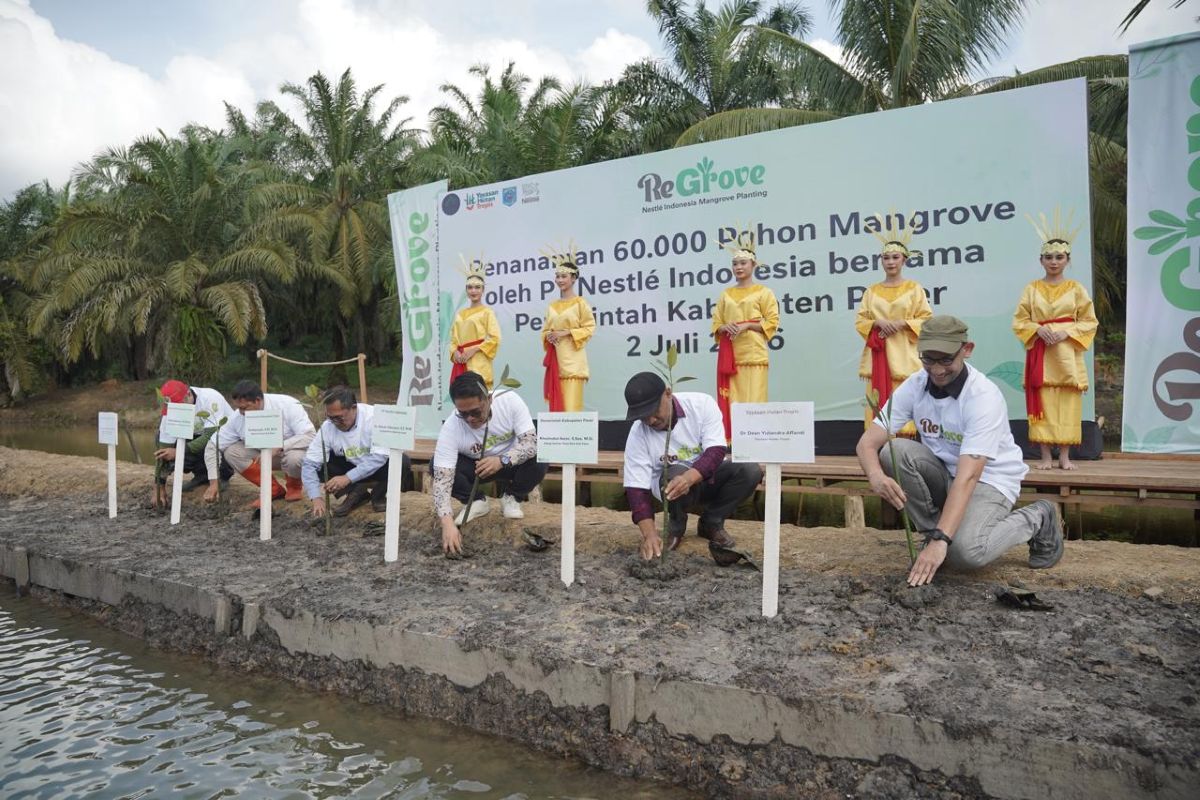
Mangrove planting continues to be promoted as a nature-based solution to strengthen the resilience of coastal areas whilst supporting climate change mitigation efforts. In addition to protecting coastlines from abrasion and seawater intrusion, mangrove ecosystems also play an important role as habitats for various species and as effective natural carbon sinks.
As the country with the largest mangrove areas in the world, Indonesia continues to develop various rehabilitation programmes to safeguard the sustainability of coastal ecosystems. These efforts are expected to strengthen coastal regions’ resilience to the impacts of climate change whilst supporting national emissions reduction targets.
One such initiative was realised through the planting of 60,000 mangrove trees on 20 hectares of land in Modang Village, Kuaro District, Paser Regency, East Kalimantan, on Thursday (2 July). The activity resulted from collaboration between the regional government, the private sector, environmental organisations and local communities in support of coastal ecosystem restoration.
Fajar Dewantara, Director of Corporate Affairs at PT Nestlé Indonesia, said environmental conservation is part of the company’s long-term commitment during its operations in Indonesia.
“For more than fifty years in Indonesia, Nestlé Indonesia has consistently strived to create shared benefits for individuals and families, communities, and the planet,” said Fajar.
According to him, the planting of tens of thousands of mangroves in Paser Regency is part of efforts to strengthen coastal ecosystems and improve environmental resilience in the face of climate change.
“We believe environmental conservation requires close collaboration between government, partners, communities and the private sector so that it can deliver lasting benefits for both current and future generations,” he said.
The Head of the Paser Regency Fisheries Office, Rudiansyah, appreciated the involvement of various parties in supporting mangrove rehabilitation in his region. According to him, the collaboration contributes not only to environmental conservation but also strengthens climate change mitigation efforts.
“This is a concrete step that not only supports environmental conservation and climate change mitigation, but also demonstrates the importance of collaboration between government, the private sector and communities,” he said.
Echoing this view, Dean Yulindra Affandi, Secretary-General of the Tropical Forest Foundation, noted that successful mangrove rehabilitation does not stop at the planting stage, but requires sustainable management and active community participation.
He said mangroves play a vital role in restoring coastal ecosystems, increasing carbon absorption capacity and preserving habitats for various flora and fauna.
“We hope this collaboration can deliver sustained positive impact and serve as an example for more parties to participate in environmental restoration efforts,” he said.
Abdul Azis, Chairman of the Paser Regency Mangrove Care Community, added that mangroves are an important part of life for the people of Modang Village, as they sustain the balance of coastal ecosystems that serve as residents’ source of livelihood.
“We hope collaborations like this continue and that more communities become involved in preserving coastal ecosystems,” he said.
The programme in Paser Regency continues various mangrove rehabilitation initiatives previously carried out in a number of regions, including the planting of 30,000 trees in Siak Regency, Riau, and 15,000 trees at Mangunharjo Beach, Semarang. This collaborative approach is expected to accelerate the recovery of coastal ecosystems whilst delivering long-term benefits for the environment and local communities.
Source: jawawa.id (https://jawawa.id/newsitem/60-000-mangroves-planted-to-strengthen-east-kalimantans-coastal-resilience-1783612248)
Originally published by Media Indonesia (https://mediaindonesia.com/humaniora/909345/penanaman-60000-mangrove-perkuat-ketahanan-pesisir-kalimantan-timur), translated from Indonesian