
6 Prayer Sites Where Duas Are Most Likely to Be Answered During Hajj
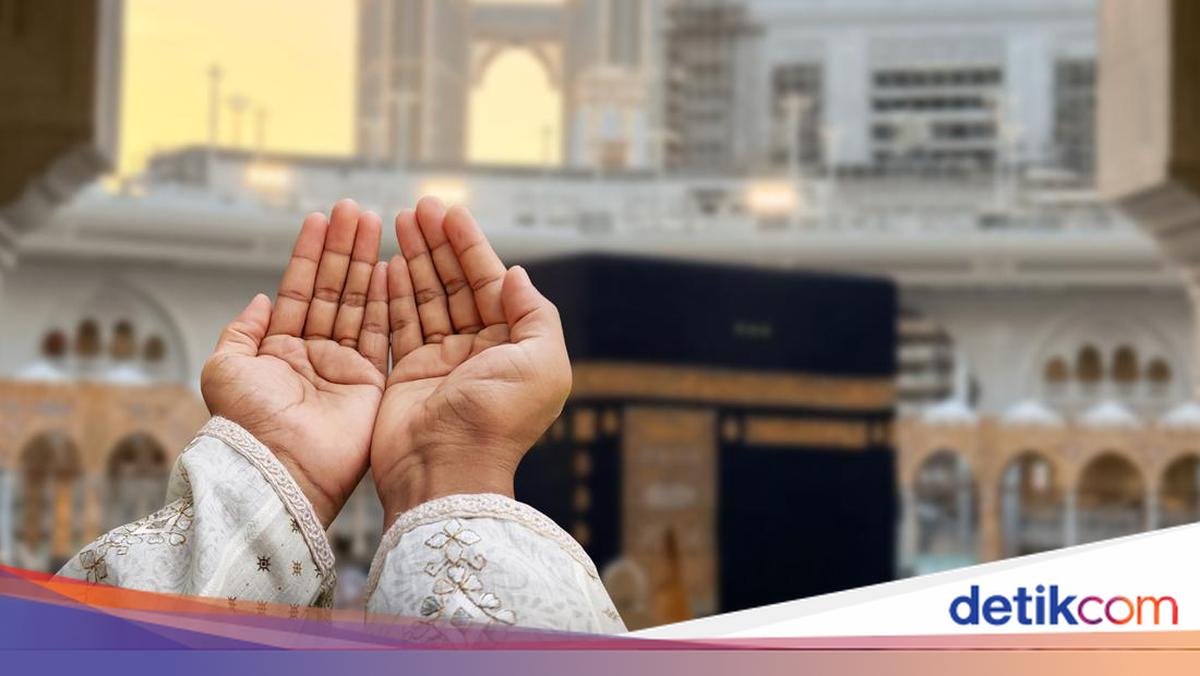
Hajj is not merely a physical journey, but a spiritual one aimed at returning as a purer, more sincere, and closer-to-Allah individual. Every act of worship carries hope for a better future.
The Indonesian Ministry of Hajj and Umrah (Kemenhaj) has identified six locations where prayers are most likely to be answered during Hajj. Here’s a breakdown.
- Multazam
Multazam is the section of the Ka’bah wall between the Black Stone (Hajar Aswad) and the Ka’bah’s entrance. It is renowned as a highly effective spot for prayer, where pilgrims press their chests, faces, and hands against the wall while supplicating to Allah. The term ‘Multazam’ derives from the Arabic ‘iltazam’, meaning ‘to cling or hold firmly’. As narrated in hadiths by Abu Dawud, Ahmad, and others: ‘I saw the Messenger of Allah (PBUH) pressing his face and chest against the Multazam.’
- Hijr Ismail
Hijr Ismail is a semi-circular area next to the Ka’bah, bounded by a low wall. It is considered part of the Ka’bah itself. Due to this, prayers and supplications offered here hold special significance, with many pilgrims using it for voluntary prayers and increased supplication. As stated in a hadith by Tirmidzi: ‘If you wish to enter the Ka’bah, pray in the Hijr, for it is part of the Ka’bah.’
- Tawaf
Tawaf is a key ritual in Hajj and Umrah. During tawaf, pilgrims are encouraged to increase their supplications, remembrance of Allah (zikir), seeking forgiveness (istigfar), and reciting the Quran. One highly recommended spot for prayer is between the Yemeni Corner (Rukun Yamani) and the Black Stone. The Prophet Muhammad (PBUH) often recited: ‘Our Lord, grant us good in this world and good in the Hereafter, and protect us from the punishment of the Fire.’ (Abu Dawud)
- Padang Arafah
Arafah is the pinnacle of Hajj. The standing (wuquf) at Arafah is one of the most essential pillars of Hajj. The Day of Arafah is also widely regarded as one of the best times for supplication. The Prophet Muhammad (PBUH) stated that the best prayer is that offered on the Day of Arafah, when millions of pilgrims gather to seek Allah’s forgiveness. As recorded in a hadith by Tirmidzi: ‘The best prayer is that on the Day of Arafah.’ This day is profoundly emotional for pilgrims, seen as a prime opportunity for absolution of sins and spiritual renewal.
- Muzdalifah
After leaving Arafah, pilgrims proceed to Muzdalifah to rest and collect pebbles for the stoning ritual. The Prophet Muhammad (PBUH) also engaged in increased remembrance and prayer there. He then halted at Masy’ar al-Haram, where he prayed, glorified Allah (takbir), declared His oneness (tahlil), and affirmed His unity (HR. Muslim). The serene atmosphere of Muzdalifah at night is often utilised by pilgrims for self-reflection and increased seeking of forgiveness (istigfar).
- Mina and after stoning the jumrah
In Mina, the Prophet Muhammad (PBUH) demonstrated prolonged prayer after throwing the first and second jumrah pebbles. As narrated in Bukhari: ‘After throwing the first and second jumrah, he stood facing the qibla for an extended period while supplicating.’ This underscores that the jumrah ritual is not merely about casting stones, but also an opportunity to increase supplication and draw closer to Allah SWT.