
6 Most Resilient Plants: Surviving Eruptions, Floods, and Fires
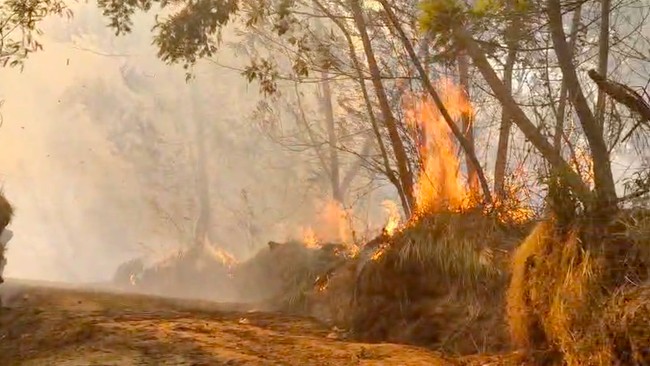
Indonesia faces various disaster threats, ranging from forest and land fires, floods, and droughts to earthquakes and volcanic eruptions. Data from the National Disaster Management Agency (BNPB) shows that most disasters in Indonesia belong to the hydrometeorological group, such as floods, extreme weather, droughts, and forest fires.
The risk is increasingly relevant this year as the Meteorology, Climatology, and Geophysics Agency (BMKG) predicts that El Niño will continue at least until early 2027, with almost half of Indonesia’s land area experiencing a longer-than-normal dry season. On the other hand, Indonesia’s position in the Ring of Fire means threats from earthquakes, tsunamis, volcanic eruptions, and landslides also continue to loom.
In the midst of these conditions, several plants have been found to possess the ability to adapt to extreme environments, from burnt lands and coasts battered by waves to regions experiencing drought or prolonged flooding.
Resilient Plants Facing Disasters
- Tumih (Combretocarpus rotundatus)
A study by the National Research and Innovation Agency (BRIN) and Gadjah Mada University (UGM) published in the journal “The Effects of Fire Severity on Peat Swamp Forest Stand Composition and Its Implications for Forest Restoration” found that the more severe the fire, the more the plant community is dominated by fire-tolerant pioneer species, particularly Tumih and Geronggang.
Even in locations with high-severity fire, only two species were recorded at the seedling stage: Combretocarpus rotundatus and Cratoxylum glaucum. Tumih possesses several characteristics that aid its post-fire recovery. The study mentions wind-dispersed seeds, relatively thick bark, the ability to grow in disturbed peatlands, and dense, fibrous roots that help stabilise the peat surface.
- Pucuk Idat or Geronglag (Cratoxylum glaucum)
Geronggang is also one of the species that survives and thrives after severe peat fires. The BRIN-UGM study noted that areas with heavy fires become increasingly dominated by Geronggang and Tumih after fire-sensitive species disappear. Interestingly, this does not mean they are unburnable; rather, both species possess better colonisation and recovery capabilities in peat habitats following a fire compared to many other species.
- Mangrove (Rhizophora stylosa)
Mangroves are coastal plants capable of both surviving and helping to dampen the impact of waves. A study in the journal Coastal Engineering in 2025 testing Rhizophora stylosa directly stated that mangroves can dampen tsunamis, storm surges, and waves, thereby playing a role in reducing hazards in coastal areas. Rhizophora stylosa also produces the highest wave attenuation among the three mangrove species tested. This capability is primarily supported by its complex stilt root structure, which increases resistance to water flow and helps reduce wave energy.
- Sikil (Dodonaea viscosa)
UGM research in 2025 identified Dodonaea viscosa as one of the native pioneer species in Mount Merapi National Park following the 2010 eruption. This means the plant is capable of regrowing in landscapes disturbed by eruptions and has the potential to act as a nurse tree to assist the recovery of other vegetation. However, this plant cannot be called “eruption-resistant” in the sense of surviving lava or pyroclastic flows; the findings instead demonstrate its ability to colonise and support ecosystem recovery post-disaster.
- Cantel (Sorghum bicolor)
Cantel is a food crop with a high ability to adapt to dry conditions. Research from Gadjah Mada University (UGM) in 2025 identified sorghum as a promising cereal crop due to its ease of adaptation, drought resistance, and high productivity. This capability makes sorghum relevant amidst the increasing risk of drought in Indonesia. BMKG has identified drought as a risk to be anticipated during the 2026 dry season, especially as periods without rain lengthen and water availability for crops decreases. The drought resistance of sorghum makes it a potential alternative food source in regions increasingly vulnerable to water scarcity.
- Taro (Colocasia esculenta)
Taro is a food crop capable of adapting to contrasting environmental conditions. Professor Edi Santoso from the Bogor Agricultural University (IPB) refers to taro as an “amphibious” plant because it can grow well in both dry and wet conditions, while remaining adaptive to climate change. This capability makes taro relevant amidst the increasing risks of floods and droughts. Taro can adapt to both dry and wet conditions, making it more resilient to changes in water availability compared to many other food crops. In Kubu Raya, West Kalimantan, communities have even developed taro in peat swamp areas and successfully harvested it without land burning.
The ability of various plants to survive extreme conditions demonstrates that biodiversity is not only important for ecosystems but also for disaster resilience. This role becomes increasingly vital as climate change increases pressure through droughts, changing rainfall patterns, floods, and fires, while Indonesia simultaneously continues to face geological risks such as earthquakes, tsunamis, and volcanic eruptions.