
5G to Be Aggressively Built Across Indonesia to Support AI
The Ministry of Communication and Digital (Komdigi) is accelerating the 5G network roadmap to support the needs of an artificial intelligence (AI)-based digital economy. The government is targeting 5G service coverage to approach national coverage by 2029.
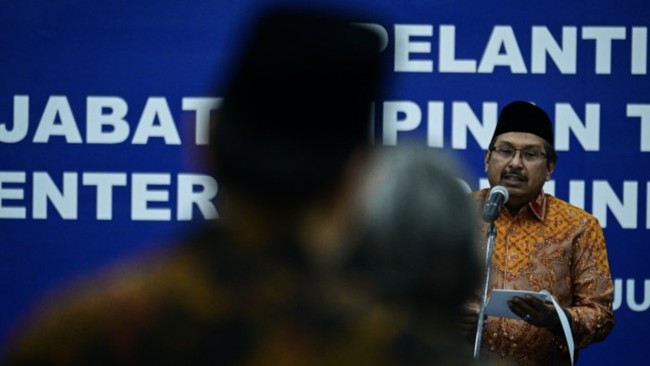
Secretary General of the Ministry of Communication and Digital Ismail stated that the development of AI has changed the direction of telecommunications infrastructure development in Indonesia. According to him, connectivity is no longer just a means of communication, but has become the foundation for productivity, innovation, and national competitiveness.
“The 5G roadmap must be accelerated. We hope that by 2029, 5G coverage in Indonesia will continue to expand to remote corners of the country. This is important because the world is moving towards an AI-based economy, so digital infrastructure must be able to keep pace with these needs,” Ismail said in a written statement.
Ismail noted that Indonesia already possesses a strong digital infrastructure foundation. The national fibre optic network stretches over one million kilometres, including submarine cables connecting various islands across Indonesia. He said the next phase of development is focused on increasing network capacity, quality, and resilience to support new-generation digital services.
“Our challenge is no longer just expanding the basic network. What we are building now is infrastructure capable of supporting the growth of an AI-based digital economy,” he said.
He explained that the rise of AI is also changing how the telecommunications industry builds networks. Whereas operators previously focused on providing bandwidth capacity, networks must now be able to support AI cloud services, high-performance computing, the Internet of Things (IoT), and various digital applications that enhance the productivity of society and businesses.
“Previously, operators sold bandwidth. Now, the network must be able to support AI cloud services and various productive applications that provide added value for society and industry,” he said.
To accelerate the implementation of the 5G roadmap, the government is preparing policies that provide investment certainty for telecommunications operators. This includes the provision of 700 MHz and 2.6 GHz frequency spectrum with a more affordable fee scheme. “We have just released the 700 MHz and 2.6 GHz spectrum at a more affordable cost than before. The government must be present to provide room for digital infrastructure investment to grow faster,” Ismail explained.
Beyond spectrum, the government is also preparing regulations to ensure long-term investment certainty. Ismail encouraged telecommunications operators to transform their business models, stating that digital infrastructure should no longer just provide connectivity but also drive digital solutions in strategic sectors such as agriculture, mining, manufacturing, health, education, and finance.
“We want operators to not only provide networks but also deliver solutions that create added value for various economic sectors,” he said.
As an archipelagic nation, Indonesia is also developing a connectivity approach that integrates terrestrial and satellite networks through non-terrestrial networks. This integration is necessary so that high-speed digital services can reach all regions of Indonesia more efficiently and equitably.