
5G, Indonesia's Digital Economy Future at Stake
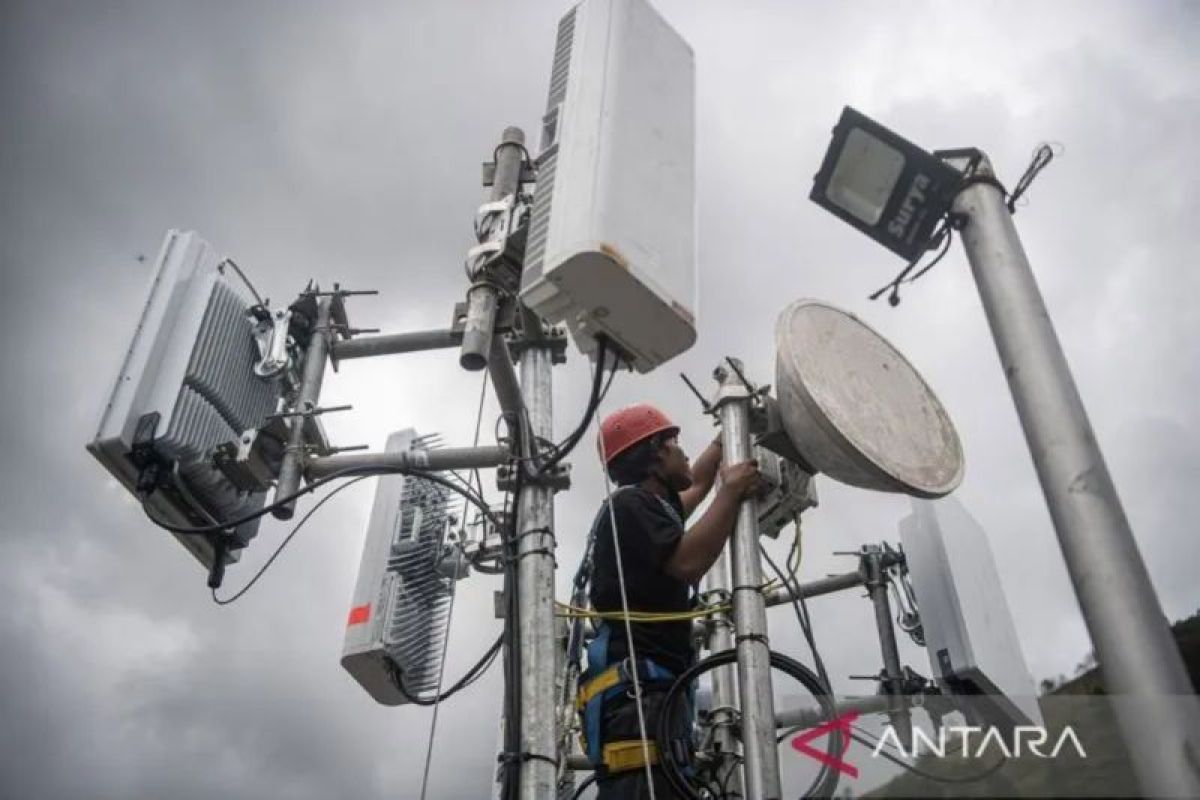
Discussions about 5G are not merely about internet speed on mobile phones, but about a country’s ability to build a more efficient and productive economic system.
Jakarta (ANTARA) - For years, discussions on Indonesia’s digital economy have primarily focused on the growth of applications, the proliferation of e-commerce, or the rise in technology-based financial transactions.
However, behind all this, there is one fundamental aspect that often escapes public attention: the quality of network infrastructure supporting all these digital activities.
In an era where nearly all sectors depend on data and connectivity, networks are no longer just communication tools, but the new foundation for economic development.
Therefore, discussions on accelerating the implementation of the latest internet technology, 5G, are becoming increasingly prominent. The implementation of 5G has also been widely discussed in various forums, including the recent Indotelko Forum 2026 in Jakarta.
When various stakeholders gathered to discuss the future of digital connectivity in the country, the message that emerged is that 5G can no longer be seen as a supplementary technology or merely a symbol of modernisation.
This technology has evolved into a strategic necessity that will determine Indonesia’s ability to compete in an increasingly digitalised global economy.
This view is supported by issues in recent years related to the very dynamic and rapidly changing societal behaviour. Work, learning, transacting, and accessing public services now heavily rely on the internet.
At the same time, developments in artificial intelligence-based technology are increasing the need for much faster, more stable networks with low latency. Without adequate infrastructure, various digital innovations will remain mere discourse.
President Director of Ericsson Indonesia, Nora Wahby, emphasised that 5G has become crucial national infrastructure. According to her, this technology will accelerate Indonesia’s digital transformation through high-speed, reliable, and low-latency networks that are essential to support advanced digital applications and new technologies across various industrial sectors.
This shows that discussions about 5G are truly not just about internet speed on mobile phones, but about a country’s ability to build a more efficient and productive economic system.
When the manufacturing industry begins using sensor-based automation, when the logistics sector requires precise real-time tracking, when healthcare services move towards remote technology utilisation, and when the energy sector starts relying on complex digital monitoring systems, network quality becomes a determining factor.
Based on 5G