
5G-A Experience Monetisation Forum Showcases Key Achievements, Accelerates Device-Network-Business Synergy
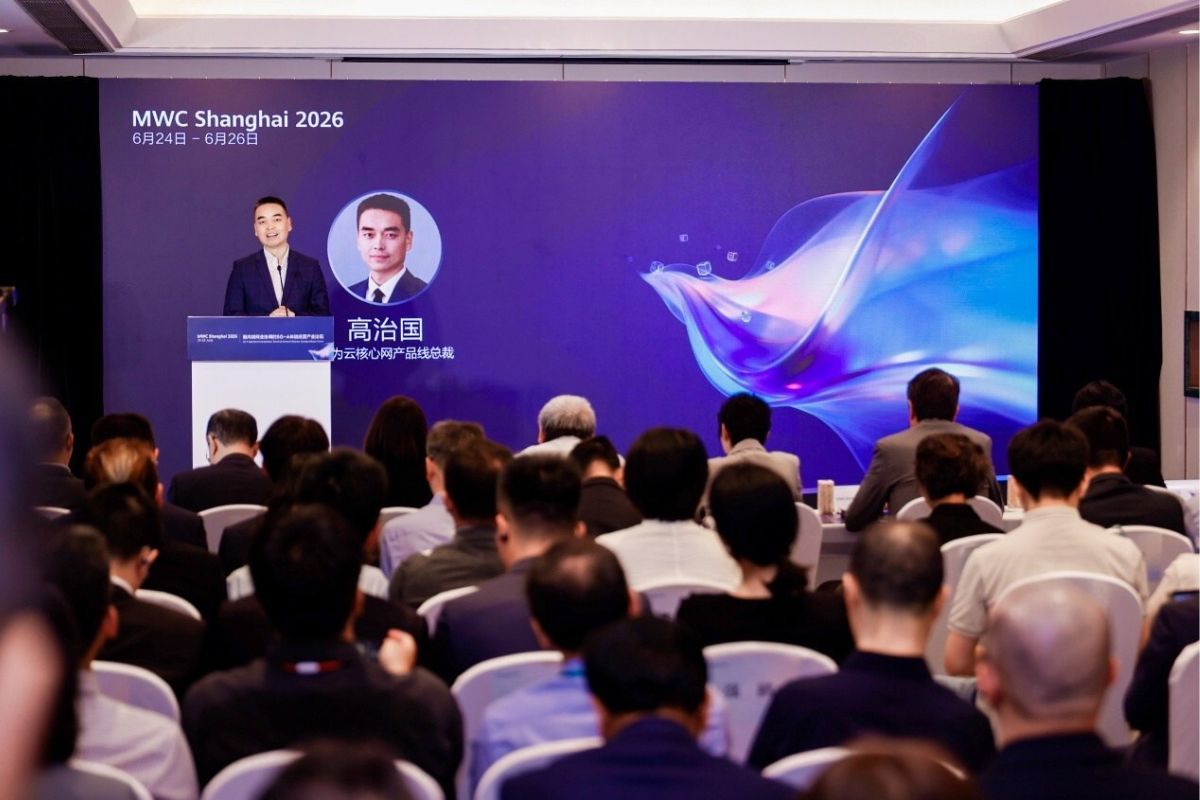
An industry forum titled ‘5G-A Experience Monetization: Terminal-Network-Business Synergy’ was recently held in Shanghai. Industry leaders from CAICT, GSMA, China Mobile, Huawei, 3GPP, GSMA Intelligence, and various ecosystem partners gathered to discuss the commercialisation of 5G-A, technological developments, and cross-ecosystem collaboration. The forum highlighted several key achievements that further unify industry perspectives and pave the way for widespread 5G-A adoption and next-generation network development.
High-speed rail networks are now supported by 5G-A technology. GSMA, China Mobile, and Huawei introduced the 5G-A High-Speed Railway Network Acceleration Service, a solution designed to deliver an enhanced mobile connectivity experience for high-speed train passengers. This service will be commercially available in China from August 2026 and is built around a ‘1+3+5’ concept: one exclusive identity, featuring a dynamic high-speed rail VIP logo displayed on the phone screen via a UE logo solution; three cutting-edge technologies, including a dedicated high-speed rail broadband network with high capacity and speed, an AI-native core network, and a universal intelligent service processing unit based on wireless technology; and five key service scenarios, enabling smooth live streaming, video conferencing, online gaming, AI calling, and AI office applications.
The forum also saw the launch of two industry white papers. The ‘UE Logo 2.0 White Paper’, jointly produced by the China Mobile Research Institute and Huawei, explores synergy between devices, networks, and business models, leveraging intelligent analytics, scenario-based interaction, and precision marketing. It introduces a comprehensive service framework that links user engagement with closed-loop marketing processes, offering new approaches to network utilisation, service access, and experience-centric operational activities. The ‘Agentic Core White Paper’, published by GSMA Intelligence, outlines an AI-native intelligent core network architecture. This framework features four key attributes for business value creation: enhanced user experience, advanced services, network capability exposure, and AI agent-based service assurance. The paper also supports the development of a new generation of communication services centred on AI agents, opening broader innovation opportunities.
A ‘Connection Agent’ and an Intent Openness Gateway were introduced on the ‘China Mobile Bixing Agent Platform’. Designed with a scalable, modular architecture, this solution enables various AI agents to connect and interact seamlessly while receiving tailored network services for each agent. Its introduction sets a new standard for intelligent connectivity development, marking a shift from conventional rule-based service models to AI agent-driven service orchestration. This paves the way for a new generation of intelligent connectivity, and the solution has already been deployed in several regions across China to support the development of various innovative services.
To strengthen cooperation among stakeholders, the forum also launched a Terminal-Network-Industry Collaboration Initiative aimed at promoting coordinated development across technology, business, and ecosystem dimensions. Technologically, it focuses on accelerating device ecosystem adaptation and standard certification to ensure broader interoperability. From a business perspective, it prioritises high-value application scenarios and explores more diverse monetisation models. On the ecosystem front, it brings together partners from various industrial sectors to build a collaborative community that leverages shared resources, collective capability development, and balanced risk and benefit sharing. Looking ahead, industry players will continue to advance mobile AI collaboration technologies and strengthen the foundations of next-generation digital productivity. Through these efforts, communications infrastructure is expected to evolve into an intelligent platform that supports ubiquitous connectivity and cross-sector collaboration, unlocking new opportunities in the mobile AI era.