
58th Anniversary: BPJS Kesehatan Sustains Hope Through Mutual Cooperation for Health
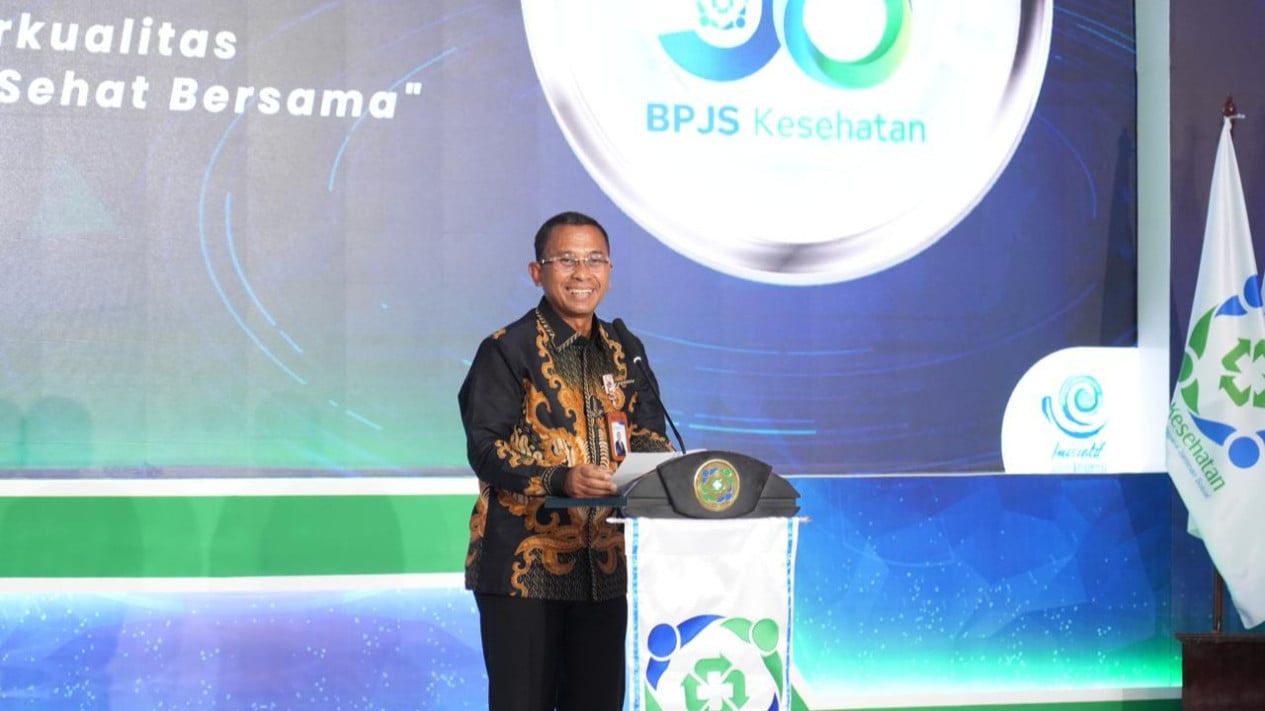
Jakarta, VIVA – The journey of health insurance in Indonesia has spanned decades and passed through various phases of development. It began with an organisation established on 15 July 1968, the Health Care Maintenance Fund Management Agency (BPDPK), followed by institutional transformations through Perum Husada Bakti and PT Askes (Persero), before becoming BPJS Kesehatan on 1 January 2014, which manages the National Health Insurance Programme (JKN).
On the occasion of its 58th anniversary, BPJS Kesehatan reflected on the development of health insurance provision that has evolved to meet public needs while strengthening service quality for JKN participants, who now number 285 million.
To date, the JKN programme has become one of the nation’s strategic programmes, providing health protection for the majority of Indonesia’s population. Various improvement efforts have been made, ranging from strengthening services at health facilities, developing digital services and simplifying administrative processes, to improving access to services for participants.
President Director of BPJS Kesehatan, Prihati Pujowaskito, said the long journey of health insurance provision in Indonesia demonstrates the importance of collaboration among all parties in sustaining the programme. The achievements made are the result of joint work by all stakeholders who support access to health services for the public.
“Over 58 years, health insurance provision has adapted to the times and society’s needs. That journey has brought us to the JKN programme, which has now entered its 13th year. Our thanks go to President Prabowo for his continued support of the JKN programme’s sustainability. With ever-stronger collaboration, we are optimistic the JKN programme can nurture a healthy generation for a Golden Indonesia 2045,” said Pujo during the 58th anniversary seminar at BPJS Kesehatan headquarters on Wednesday (15/07).
Pujo also revealed that the sustainability of the JKN programme is BPJS Kesehatan’s main focus in shaping its future policy direction and organisational strategy. According to him, the various transformation steps taken must maintain a balance between service quality, membership expansion and the programme’s financial health.
“The JKN programme’s claims ratio has now reached 108 per cent. This shows that health financing challenges are growing. A private insurance company might reprice once claims reach 95 per cent to keep its business going. We hope policy support through new regulations can strengthen the JKN programme’s sustainability so that its benefits continue to be felt by the public over the long term,” said Pujo.
Nevertheless, BPJS Kesehatan sees potential for strengthening programme funding through improved compliance and membership coverage. It has also drawn up a sustainability-oriented strategic plan. Various policies will be directed not only at operational aspects but also at strengthening the financial foundation and service quality.
To that end, BPJS Kesehatan has prepared a strategic plan focused on increasing membership, strengthening funding and transforming services. One effort to be pursued is integrating JKN membership with public services, accompanied by the development of non-face-to-face services using digital technology to make access easier and more efficient.
Head of the Presidential Staff Office of the Republic of Indonesia, Dudung Abdurachman, commended BPJS Kesehatan’s role in strengthening the national social protection system through the JKN programme. In his keynote speech at the anniversary seminar, he noted that the JKN programme is a main pillar of public health, aligned with the national health development vision and the President’s Asta Cita.
“We also appreciate BPJS Kesehatan’s various programmes that pay attention to the government’s four priority collaborative programmes. These range from health monitoring of students and SPPG staff through P-Care for the Free Nutritious Meals (MBG) programme, health screenings at three community schools, the development of JKN Healthy Villages together with the Red and White Village Cooperatives as health insurance facilitator agents, and the JKN 3T programme through cooperation with TNI AL hospital assistance ships and the deployment of health workers to remote, outermost and underdeveloped (3T) regions,” said Dudung.
Nevertheless, Dudung reminded that challenges remain to be faced together, such as the sustainability of social insurance funding, participant compliance and synergy with health facilities. He therefore emphasised the importance of strong commitment and collaboration between the government, BPJS Kesehatan, health facilities and the public to sustain and improve the quality of JKN programme services.
At the peak of the 58th anniversary celebrations, BPJS Kesehatan also obtained ISO 37001 Anti-Bribery Management System certification, specifically for its Procurement and Investment functions, as well as ISO 37301 Compliance Management System certification. BPJS Kesehatan is committed to strengthening its organisational culture of integrity and compliance through the implementation of an Anti-Bribery Management System based on ISO 37001 and a Compliance Management System based on ISO 37301.