
55 Hazardous Points on Bandung Railway District Identified, KAI Deploys Mitigation Measures for 2026 Eid Travel
The railway line in the Bandung Operational Area (Daop 2) has been identified as the region with the highest concentration of hazardous accident and natural disaster points in Indonesia. Ahead of the 2026 Eid travel season, PT Kereta Api Indonesia (Persero) has implemented enhanced surveillance protocols at 55 hazardous points distributed across this region.
Awan Hermawan Purwadinata, Director of Operations at PT KAI (Persero), emphasised that the terrain dominated by mountains and hills makes the railway line in Daop 2 highly vulnerable to landslides, flooding and ground subsidence.
KAI has mapped specific locations requiring round-the-clock surveillance. Primary focus is given to lines with a history of disruptions during extreme weather conditions.
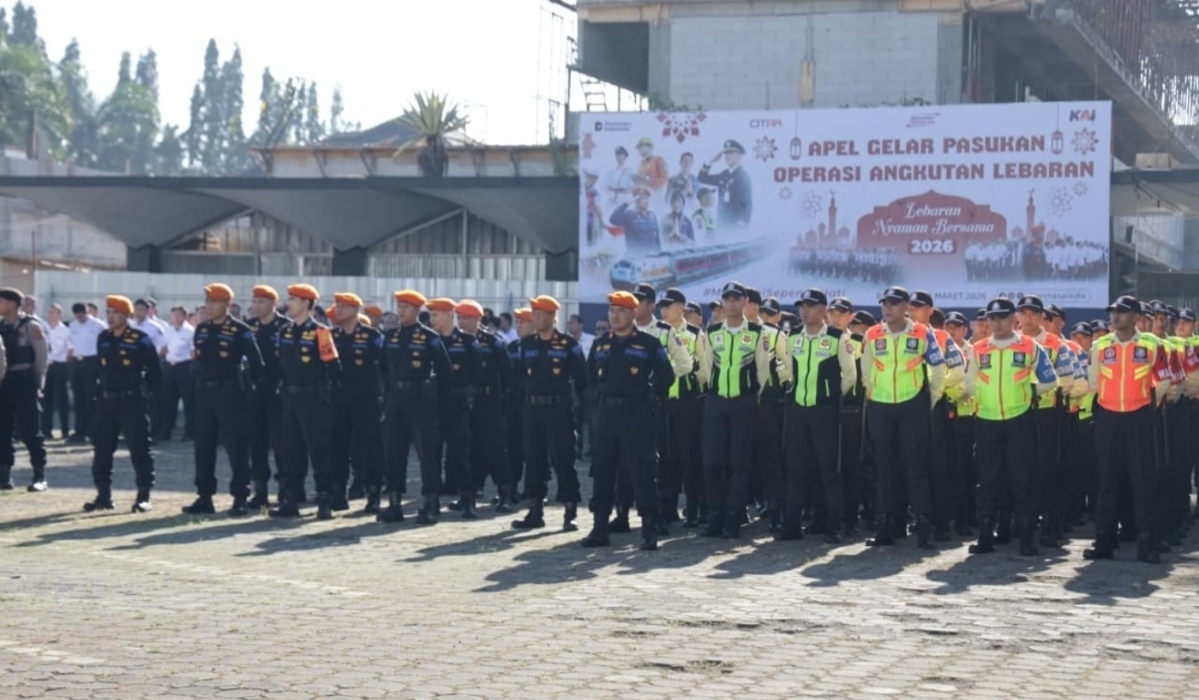
“There are 55 hazardous points in Daop 2. It is indeed the region with the highest concentration of hazardous points compared to other areas,” said Awan during the 2026 Eid Transport Operation briefing in Bandung on Friday, 13 March 2026.
To minimise risks, KAI has deployed 150 additional staff members stationed specifically in hazardous areas. Their duty is to monitor rail conditions in real-time and report potential hazards before trains pass through.
KAI predicts that peak homeward travel will occur on Sunday, 15 March 2026. To date, railway tickets for departures from Daop 2 Bandung have sold 233,872 tickets, or 67.6 per cent of the total quota of 345,840 seats.
There are 28 railway journeys daily, including 4 additional trains such as the KA Lodaya Tambahan, KA Tambahan Kiaracondong-Surabaya Gubeng, and KA Kutojaya Selatan Tambahan. Economy-class trains such as KA Kahuripan and KA Cikuray remain popular amongst passengers this year.
The public is urged to continually monitor weather conditions and plan travel times to railway stations to avoid disruptions caused by potential road congestion or weather-related hazards at these vulnerable points.