
504 Free Nutritious Meal Kitchens Permanently Closed, 3,000 More Await Fate
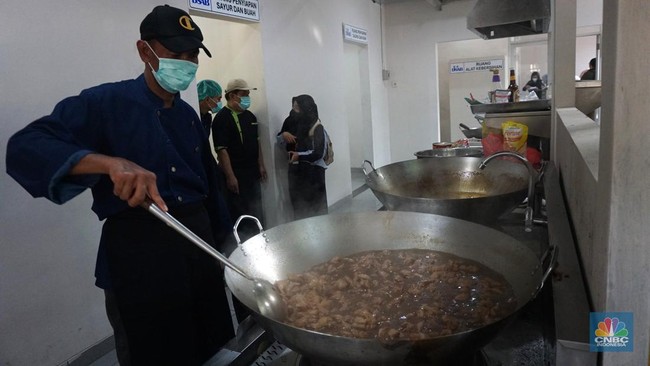
The National Nutrition Agency (BGN) has taken firm action to tighten oversight of the Free Nutritious Meal (MBG) programme. A total of 504 MBG kitchens, or Nutrition Service Fulfilment Units (SPPG), have been permanently closed after being deemed not to meet sanitation and hygiene standards.
BGN Head Sudaryono said the closures were carried out after the government set a deadline for operating MBG kitchens to obtain the Hygiene and Sanitation Eligibility Certificate (SLHS).
He explained that MBG kitchens already in operation but lacking an SLHS were given a deadline of 10 August 2026. If the requirements were not met by that date, the kitchens could be permanently closed.
“As we have stated, we gave a deadline until 10 August for kitchens already in operation. Some had been operating for more than a year without an SLHS, and those we could close permanently,” Sudaryono said at a press conference at the Ministry of Home Affairs office in Jakarta on Thursday (13/8/2026).
Evaluation results showed that 504 kitchens were declared unfit in terms of sanitation and hygiene. The closures were based on reports from health offices across Indonesia submitted through the Ministry of Health.
“As of today, based on reports dated 10 August, there are 504 kitchens according to reports from health offices across Indonesia submitted through the Ministry of Health, which we have permanently closed because they were declared unfit in terms of sanitation and hygiene,” he said.
In addition to the 504 kitchens already closed, Sudaryono revealed that around 3,000 kitchens have applied for SLHS and are currently being inspected by regional health offices.
“The remaining around 3,000 have registered and are now being checked by their respective health offices, which we are waiting for,” he said.
BGN has asked regional governments to speed up the inspection process. However, Sudaryono stressed that acceleration must not compromise food safety standards, as the health of children receiving MBG is at stake.
“If a kitchen is not fit, then I apologise, but this is a matter of someone’s life, the lives of our children. That is non-negotiable,” he asserted.
He said BGN is paying special attention to the SLHS issuance process, as the inspection and certification are carried out by regional health offices.
“We ask for support from regional heads, because it is the health offices that carry out the certification checks. We ask regional heads to help push for this to be accelerated,” Sudaryono said.
The deadline, he continued, has led to an increase in SLHS applications. The government will now review the inspection results for the thousands of kitchens still in process.
“We know that previously not many applied, but because we set a deadline, suddenly dozens of kitchens submitted SLHS applications. Those are probably the ones we are checking now. In a week or two we will see what the results look like,” he said.
BGN Targets Zero Poisoning Cases
The closure of hundreds of kitchens is part of BGN’s overhaul of MBG governance, particularly in ensuring that food provided to beneficiaries meets safety and nutritional quality standards.
Sudaryono stressed that BGN applies a zero-tolerance principle towards poisoning cases in the implementation of MBG.
“We are improving this, from the governance side. First, there must be no poisoning, and second, the quality of MBG food as a nutritional intervention for our children must meet our expectations,” he said.
BGN is also strengthening oversight through mandatory food inspections before consumption. Sudaryono said this measure has helped prevent spoiled food from being consumed by students.
“We have also introduced time-limit labels on food containers, stating that food cannot be taken home and must be consumed before a certain time. Thank God, in several regions this has helped prevent poisoning,” Sudaryono said.
He cited an example of food found to be spoiled at a school in West Kalimantan. After an inspection before consumption, the food was declared unfit and withdrawn.
“This is good progress, something that may not have received much attention before. We have now made organoleptic testing mandatory,” he said.
According to Sudaryono, the success standard for MBG is not just ensuring no poisoning occurs. The government must also ensure menu quality and nutritional content align with the programme’s objectives.
“However, we want not only no poisoning, but also menu improvements and nutritional improvements as we expect,” he concluded.