
50 Years of Palapa A1: Komdigi Declares Momentum for National Digital Sovereignty Revival
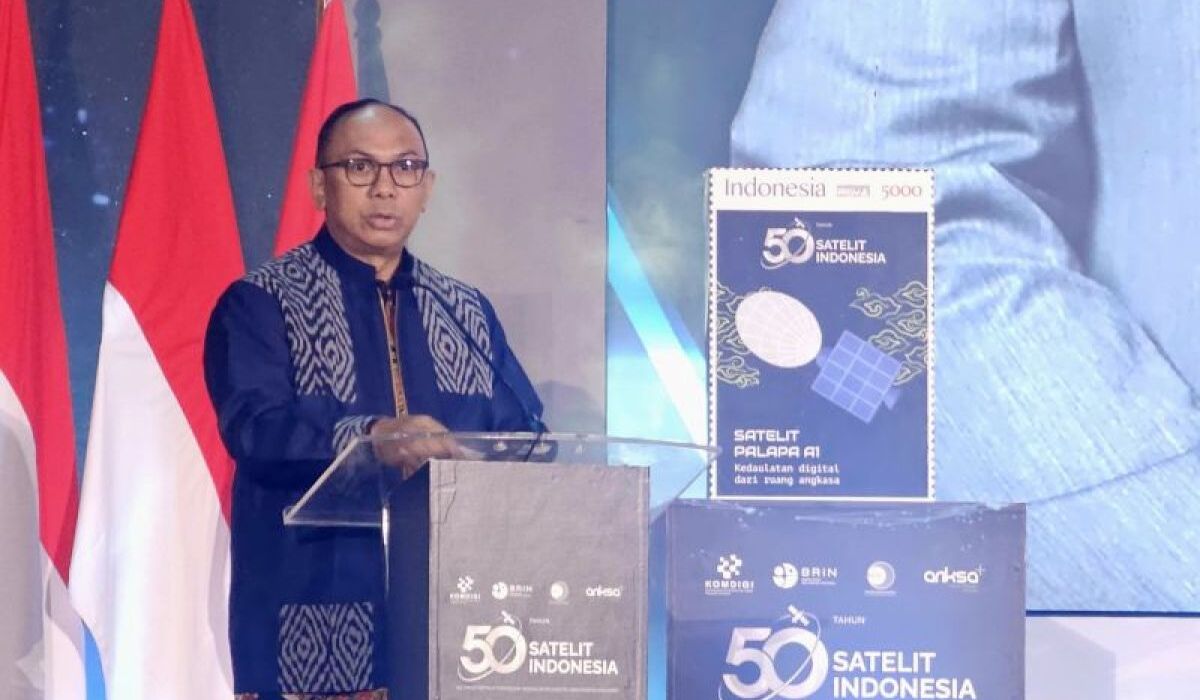
Director General of Digital Infrastructure at the Ministry of Communication and Digital Affairs (Komdigi), Wayan Toni Supriyanto, asserted that the 50th anniversary of Indonesia’s satellite programme must serve as a new starting point for the growth of the national satellite industry. The statement was made during the commemoration of 50 years of Indonesian satellites at the BJ Habibie BRIN Building in Central Jakarta on Wednesday.
Wayan recalled Indonesia’s success in launching the Palapa A1 satellite on 8 July 1976 as the first domestic satellite, achieved despite financing and manufacturing limitations at the time. He argued that in the current digital era, the national satellite industry should be able to rise and become master of its own domain.
“The momentum of 50 years of Indonesian satellites must be used as a new starting point, not just to reminisce about past glories but to ignite the spirit to stand on our own feet in the satellite sector,” Wayan stated.
Historically, the Palapa A1 satellite made Indonesia the third country in the world to have a domestic satellite, after the United States and Canada. Beyond its technological significance, the satellite served as a unifying force for the world’s largest archipelagic nation.
In the digital age, the relevance of satellites remains crucial, especially for regions not yet reached by fibre optic or cellular networks. The presence of satellites in frontier, outermost, and disadvantaged (3T) regions ensures that communities have access to education, health, disaster management, and defence services.
Wayan acknowledged that the current industry landscape is vastly different from five decades ago. The entry of global players and a shortage of innovation talent pose real challenges. Consequently, Komdigi is encouraging collaboration between industry players, research institutions, academics, and relevant ministries to rebuild satellite self-sufficiency.
The development focus includes technology research, domestic manufacturing of components and space vehicles, as well as long-term policy. “Satellite connectivity is not merely a technical matter but a matter of sovereignty. Whoever controls their own satellite infrastructure controls the future of their nation’s information and communication resilience,” he stressed.
To support this ecosystem, Komdigi plays an active role as the spectrum frequency manager and coordinator for orbital slot availability in international forums. Additionally, the ministry is focusing on formulating policies that stimulate the growth of the domestic industry.
As a tribute to this history, the government, through POS Indonesia, launched a special edition stamp commemorating 50 years of Indonesian satellites. The launch symbolises that five decades of satellite achievement deserve to be preserved as a legacy for future generations.