
50 US Companies Reject OKXICE Stock Tokenisation: What Issuer Rights Mean for Investors
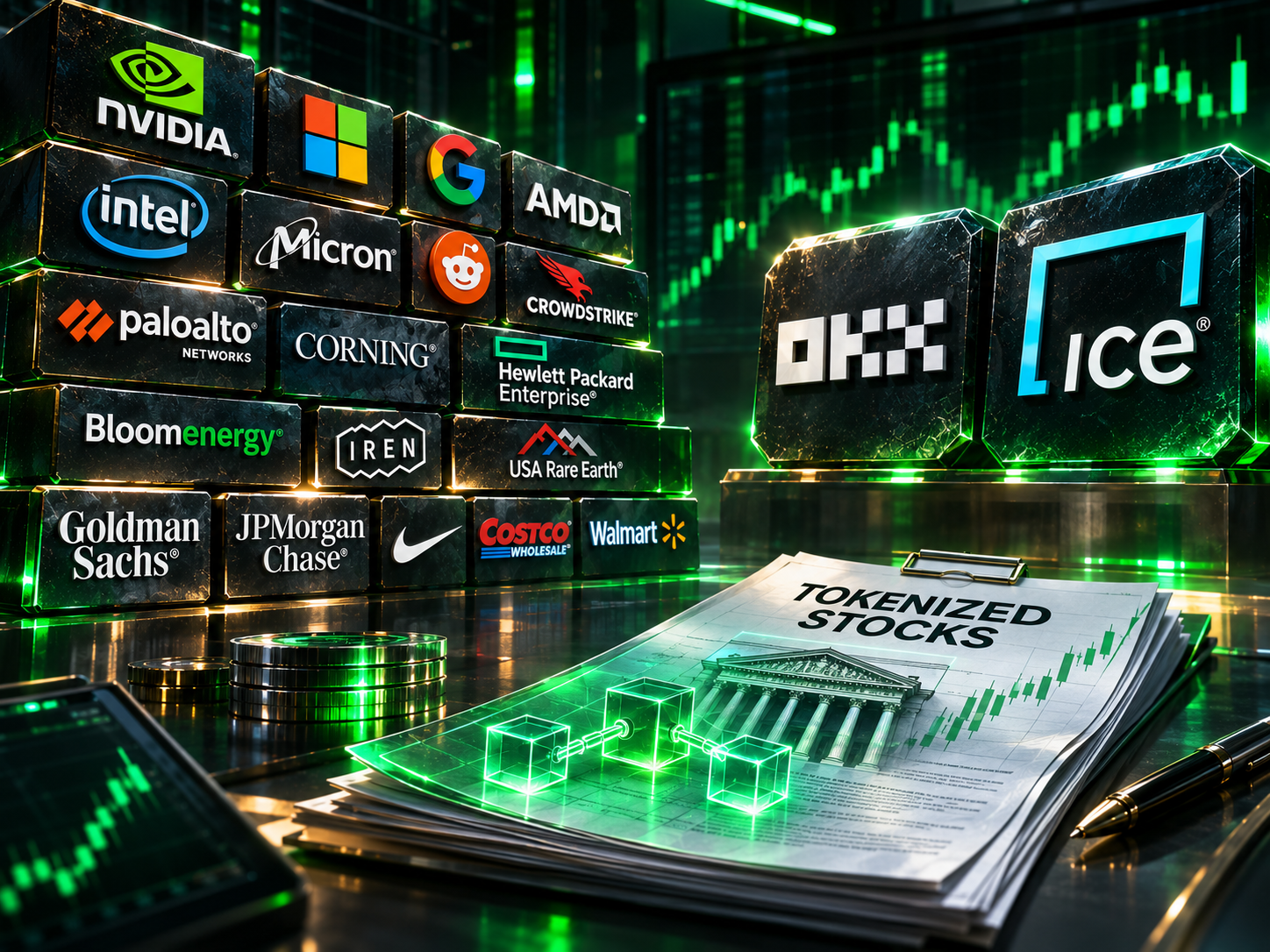
Fifty publicly listed US companies, including Nvidia, Microsoft and Nike, have formally rejected the tokenisation of their shares by the OKXICE platform. The objections do not signal an end to stock tokenisation; rather, they show that issuers have the right to decide who may issue tokenised versions of their shares.
A report published on Sunday, 1 November, noted that 12 more issuers had exercised their right to object under rules set by the Securities and Exchange Commission (SEC), the US capital markets regulator. Stock tokenisation is the process of creating digital representations of shares on a blockchain network, allowing them to be traded like crypto tokens.
OKXICE is a joint venture between crypto exchange OKX and Intercontinental Exchange (ICE), the owner of the New York Stock Exchange. The platform initially registered 62 companies for 24-hour trading of their shares as tokens on the XLayer network. Under SEC rules, issuers have 30 days to object to third-party involvement; an objection legally prevents OKXICE from tokenising the issuer’s shares.
From technology to retail, major issuers object
Most of the companies that objected are major technology firms, including Nvidia, Microsoft, Alphabet (Google), AMD, Intel, Micron, Reddit, CrowdStrike, Palo Alto Networks, Corning, Hewlett Packard Enterprise, Bloom Energy, IREN and USA Rare Earth. Financial firms Goldman Sachs and JPMorgan Chase also objected, along with retailers and consumer companies Nike, Costco and Walmart.
Nevertheless, some of these companies already have tokenised shares issued by Ondo or Backed Finance (xStocks), including NVDAX, MSFTON, GOOGLX and AMDON. Some of these US stock tokens are also available on Bareksa Crypto.
Exchange rivalry and issuer-approved tokenisation
CryptoWave said the wave of objections has been accompanied by concerns about competition between exchanges. Nasdaq representatives are suspected of encouraging companies listed on its exchange to reject OKXICE’s third-party model. Meanwhile, Nasdaq and Kraken are preparing their own issuer-led stock-tokenisation model, which requires issuer approval and is targeted for launch in 2027.
The debate, therefore, is not about whether stocks should be tokenised, but who has the right to issue the tokens. Bareksa has also explained the differences between tokenised US shares and direct US share ownership, including ownership rights and tax treatment.
What this means for investors
Issuer approval is becoming increasingly important: the case shows that US companies can reject the tokenisation of their shares by third parties. Before buying a stock token, investors should check who issued it and how the underlying shares are held.
Understand the rights attached to the product. Stock tokens generally provide exposure to price movements, but do not necessarily confer the same rights as direct shareholders. Read the product details carefully before trading.
Tokenisation continues to develop. Nasdaq and Kraken’s plans show that major exchanges are still preparing official channels for tokenisation. This is part of the real-world asset (RWA) tokenisation trend, which connects crypto with traditional assets.
Investors should remain disciplined: use crypto-asset platforms registered with and supervised by the Financial Services Authority (OJK), keep high-risk assets to a small proportion of the portfolio, and consider regular investing rather than investing a lump sum.
Risk factors
Product availability risk: stock tokens may be cancelled or discontinued if an issuer objects, so the range of available shares can change.
Regulatory risk: rules governing stock tokenisation are still evolving in the US and elsewhere.
Third-party risk: under models that do not involve the issuer, investors depend on the token issuer and the custodian of the underlying shares.
Market risk: stock-token prices remain subject to movements in the underlying shares and market sentiment.
Conclusion
The objections by 50 US-listed companies to OKXICE’s stock-tokenisation plan underline the central role issuers play in the process. At the same time, Nasdaq and Kraken’s plan to introduce an issuer-approved model in 2027 shows that tokenisation is continuing through a more formal route. Investors should understand the products, choose registered platforms and keep their investments in line with their risk profile.
Source: jawawa.id (https://jawawa.id/newsitem/50-us-companies-reject-okxice-stock-tokenisation-what-issuer-rights-mean-for-investors-1793728237)
Originally published by bareksa.com (https://www.bareksa.com/berita/kripto/2026-11-03/50-perusahaan-as-tolak-tokenisasi-saham-okxice-ini-arti-hak-emiten-bagi-investor), translated from Indonesian