
50% of Official Trips Cut to Save State Budget
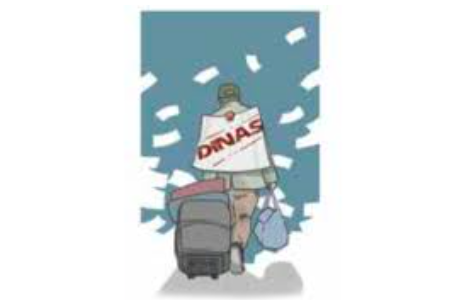
The government has officially implemented efficiency measures on domestic official trips by up to 50%. Meanwhile, for international official trips, the government is enforcing efficiency up to 70%.
Coordinating Minister for the Economy Airlangga Hartarto, in a virtual press conference in Jakarta on Tuesday (31/3), explained that this policy is part of adaptive steps to encourage a more efficient, productive, and digital-based work culture transformation.
In addition to official trips, the government is also implementing mobility efficiency through restrictions on official vehicle use by up to 50%, except for operational needs and electric vehicles. On the other hand, the government is urging greater use of public transport.
“So, reducing official vehicles and maximising the use of public transport,” said Airlangga.
Not only at the central level, regional governments are also urged to adjust mobility control policies according to their respective regional characteristics, including expanding the implementation of car-free days.
“Specifically for regions, there is an urging to increase the number of days, times, and coverage of roads in car-free days according to each region’s characteristics, and this will be regulated by a circular from the Minister of Home Affairs,” he added.
Besides mobility efficiency, the government is also urging the public to save energy in daily activities, both at home and at work, and to prioritise public transport.
These policies and urgings are part of the eight pillars of national work culture transformation launched by the government. One of them is the implementation of work from home (WFH) for civil servants every Friday, as well as similar urgings for the private sector adjusted to each sector’s needs.
This policy will take effect from 1 April and will be evaluated after two months of implementation. Technical regulations will be outlined in circulars from the Minister of State Apparatus Empowerment and Bureaucratic Reform (PANRB), the Minister of Home Affairs, and the Minister of Manpower.
Furthermore, from the fiscal side, the WFH policy is estimated to save the State Revenue and Expenditure Budget (APBN) by Rp6.2 trillion, as well as potential savings in public fuel consumption of up to Rp59 trillion.
In addition, the government is also carrying out refocusing of ministry and agency expenditures, as well as promoting energy policies through the implementation of B50 starting from 1 July 2026.
On the other hand, the optimisation of the free nutritious meal programme (MBG) is also being continuously promoted, with potential savings of up to Rp20 trillion.