
50,000 Rupiah to Safeguard Lives at an Unguarded Railway Crossing
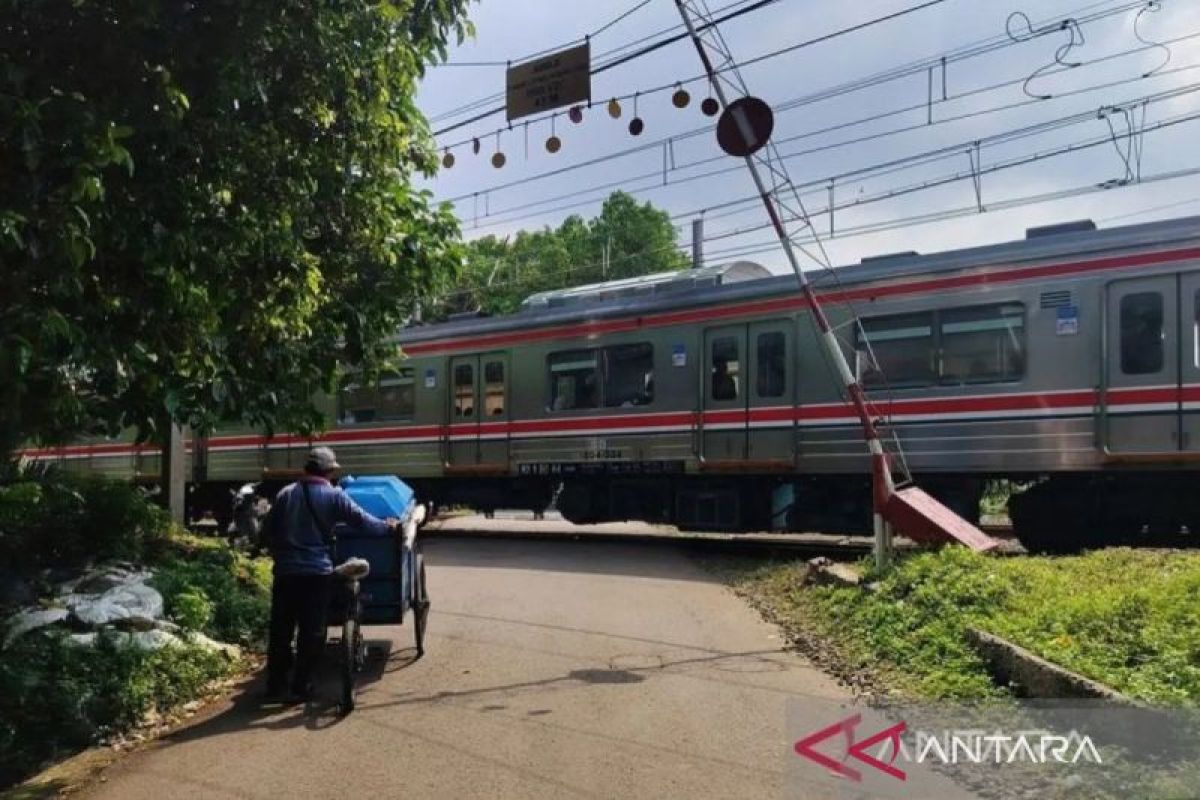
Jakarta (ANTARA) - The unguarded railway crossing near the Tanah Kusir Public Cemetery in Kebayoran Lama, South Jakarta, serves as both the starting and ending point of the day for Ocim (53) in earning his livelihood. He does not work in an office wearing a lanyard while being cooled by air conditioning. With just a simple T-shirt and sensitivity to the wind’s direction, Ocim manages to pocket around Rp50,000 every day. His ears seem immune to the noisy roar of motor vehicles clashing with the rumbling trains that pass continuously without pause. The gaze in his eyes remains sharp under the scorching sun, matching the weight of the responsibility he shoulders. For more than 15 years, Ocim has guarded the crossing on a voluntary basis. Without a fixed salary, without adequate equipment, and without safety guarantees, he and his nine colleagues take turns on duty for one goal: to prevent accidents right before their eyes. “People think we’re paid, but we’re not. This is just a community initiative to avoid incidents,” said Ocim. The crossing he guards is not an official route with complete facilities. There are no automatic barriers, no sirens, and even the guard post that once stood there has now disappeared. All that remains are two pieces of scrap metal from the former barriers that no longer function. Amid these limitations, Ocim relies only on instinct. He reads the signs of an approaching train from the sound of the horn, the vibration of the cables, to intuition honed over years. “We have to be alert. Sometimes the sound isn’t heard, so we look at the cables moving,” he said. The task is not easy because the rail line at the location is winding, limiting visibility. In certain conditions, a train can arrive without being visible from afar. Every few minutes, KRL trains pass from the direction of Rangkasbitung or Tanah Abang. In between, vehicles keep coming, especially in the morning when students and workers crowd the alternative road connecting Ulujami and Bintaro. It is at this point that tension often arises. Ocim admits that the biggest challenge is not just the infrastructure conditions, but also the behaviour of drivers. “Sometimes even after being stopped, they still force their way through,” he said. According to him, many accidents at unguarded crossings occur because drivers force their way across, even when a train is approaching. He once witnessed a car being hit by a train a few years ago. The vehicle was flung, though it did not cause any fatalities. “We had warned them, but they still forced it,” he said. The train accident in East Bekasi that killed more than a dozen people some time ago was, for Ocim, not a surprising incident. For him, such tragedies can happen at any time if vigilance is ignored. “Bad luck isn’t on the calendar,” he said softly. His eyes gazed far along the tracks that are never truly free from threats. Despite often facing risky situations, Ocim persists. His income comes only from voluntary contributions from road users, ranging from Rp30,000 to Rp50,000 per day. But for him, safeguarding safety is far more important than the reward. At that crossing, he is not just a road guard, but the last line between life and death for many people passing through.