
5 pieces of personal data that should not be shared on social media
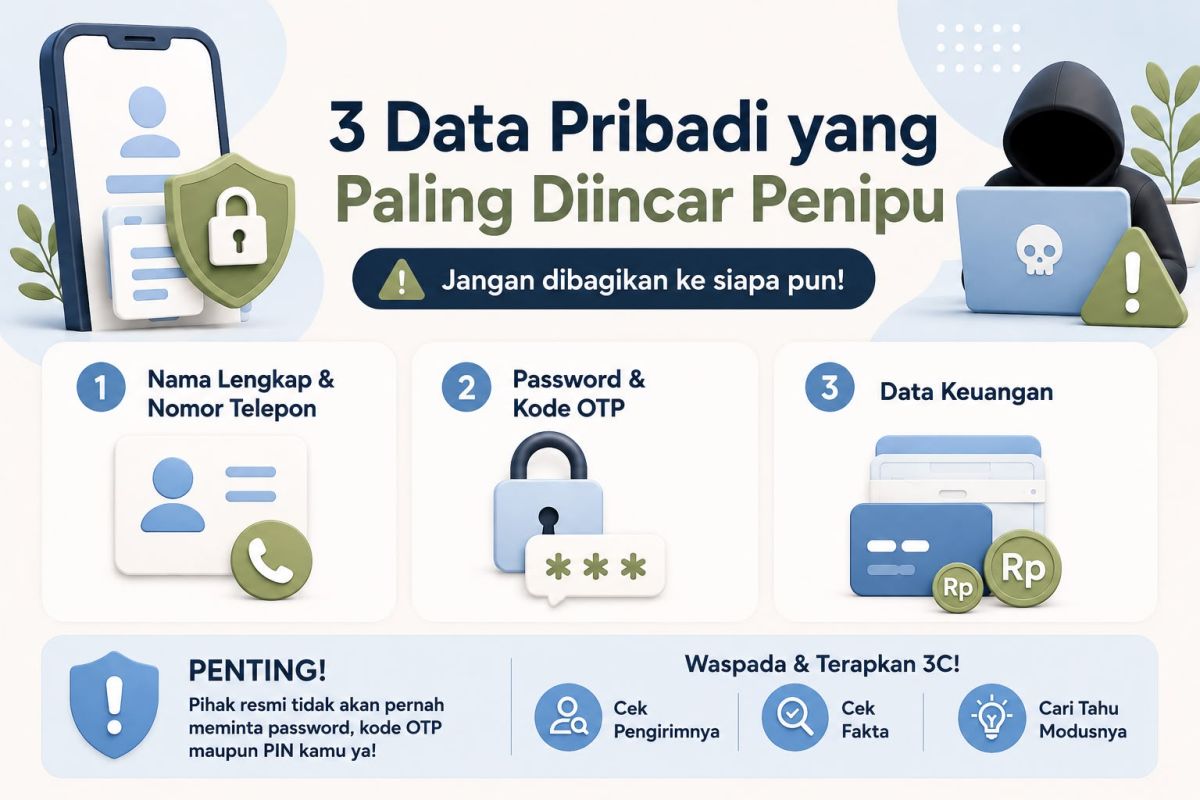
Jakarta (ANTARA) - Social media allows individuals to share various activities within seconds. Photos, daily stories, and even personal information often become part of posts without the realisation that some of this data is actually quite sensitive.
The habit of sharing personal information openly can increase the risk of data misuse. A Digital Literacy Index survey of 10,000 respondents in Indonesia shows that 61.3 per cent of respondents list their personal mobile numbers on social media, while 58.1 per cent list their dates of birth. Additionally, 38.9 per cent include their home addresses.
Law Number 27 of 202 none 22 concerning Personal Data Protection classifies several types of information as personal data that must be protected, including personal financial data, biometric data, full names, nationality, and other information that can be used to identify an individual.
So, what data should not be exposed on social media? Here is the explanation.
- ID numbers, Family Cards, and identity documents
Photos of ID cards (KTP), Family Cards (KK), passports, driver’s licences, or other identity documents should not be uploaded openly to social media. These documents contain a range of information that can be used to recognise an individual.
The Ministry of Communication and Digital also reminds the public not to indiscriminately hand over data such as National Identity Numbers (NIK) and Family Cards to third parties. The risk of misuse grows larger when such documents are freely accessible on the internet. When uploading documents for specific purposes, unnecessary information should be redacted according to necessity.
- Phone numbers and home addresses
Phone numbers and home addresses are among the pieces of information that should not be shared openly. This data can be exploited to contact someone incessantly, conduct fraud, or help perpetrators determine someone’s location.
Data from the Ministry of Communication and Digital shows that many users still list this information on social media. Specifically, 61.3 per cent of respondents list their personal mobile numbers and 38.9 per cent list their home addresses. Therefore, account privacy settings are crucial, especially if phone numbers or location information have no reason to be known by the public.
- Bank account details, cards, and OTP codes
Account numbers, debit or credit card numbers, PINs, CVV or CVC, and One-Time Password (OTP) codes are pieces of information that should never be shared through posts or messages to others.
The Ministry warns that OTP is vital information that must be kept secret. Perpetrators can use these codes to hijack access to a victim’s financial services or digital accounts. Even if someone claims to be a bank official or a service representative and requests an OTP, the code must never be provided.
The risk of fraud via social media remains high. The Federal Trade Commission (FTC) noted that consumers reported losses of 2.1 billion USD due to fraud originating from social media throughout 2025.
- Real-time locations
Sharing live locations while at a certain place also requires consideration. Posts showing the location of a home, workplace, school, or a current destination can provide information regarding a person’s whereabouts to strangers.
The Digital Literacy Index survey shows that 30.2 per cent of respondents have included real-time location information when uploading content to social media. While not every location post is inherently dangerous, limiting who can see this information can reduce the risk of strangers learning an individual’s activity patterns or whereabouts.
- Dates of birth and family information
Dates of birth, full names of family members, parents’ names, and even information regarding family relationships should not be shared excessively. While this information may seem simple, when combined with other data available on the internet, it can help someone create a profile of the user’s identity. The Ministry’s data shows that 58.1 per cent of respondents list their date of birth on social media and 18.2 per cent list family members’ names along with their relationships or occupations.
Therefore, the less sensitive information available to the public, the less data can be collected by parties intending to misuse it. The FTC also suggests that users limit who can see their posts and contact lists on social media to reduce the information available to fraudsters.
In conclusion, not all information about oneself must be hidden from the internet. However, before uploading anything, it is important to consider whether the information truly needs to be public and what the risks are if it spreads beyond your control.