
5 Longest Train Routes in Indonesia: Blambangan Ekspres Exceeds 1,000 Km
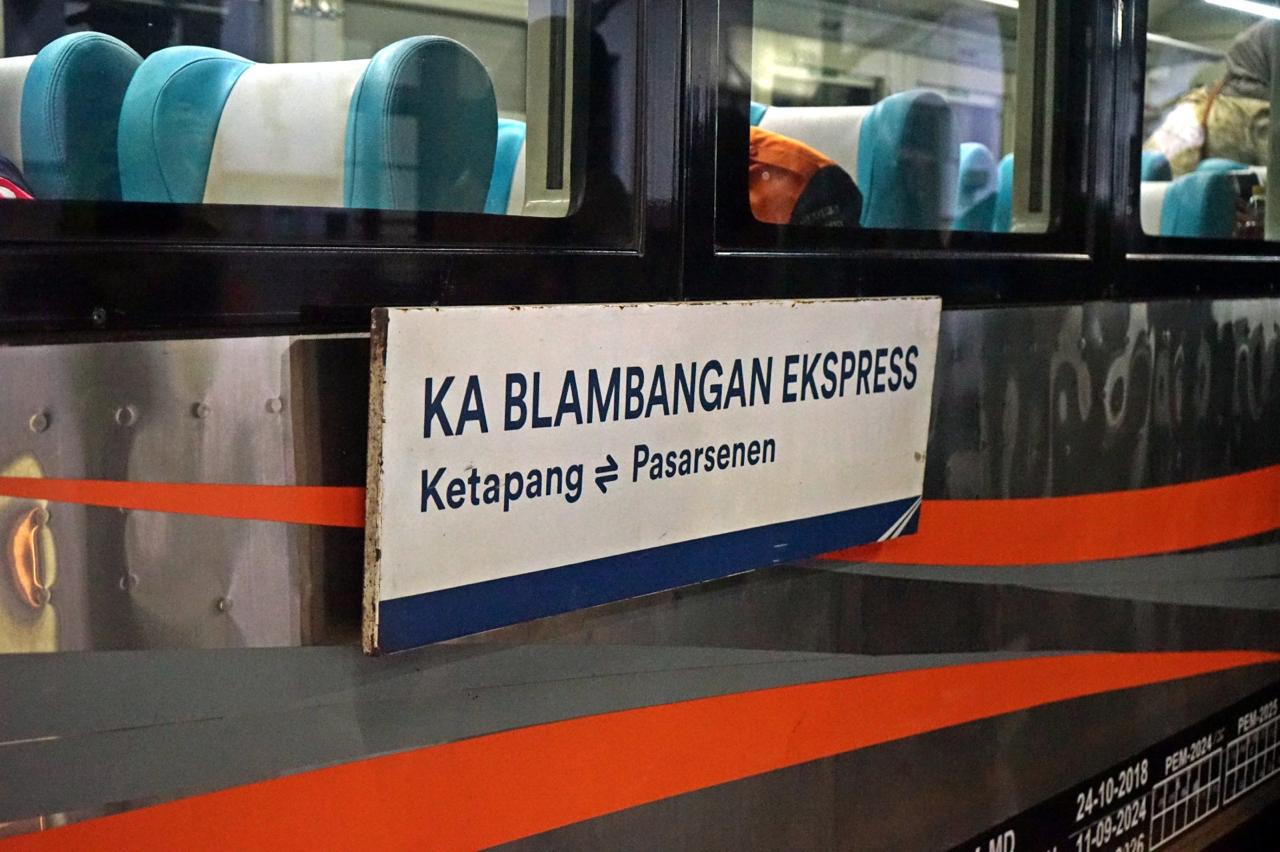
PT Kereta Api Indonesia (Persero), or KAI, offers a range of long-distance rail services connecting numerous cities on the island of Java. Among these, five services have the longest routes in Indonesia, covering distances from around 825 kilometres to more than 1,000 kilometres.
These long-distance journeys serve not only as intercity transport but also offer passengers the experience of taking in varied landscapes along the way. Travellers can watch the scenery shift from urban areas and rice fields to mountains, coastal regions and the eastern part of Java.
Anne Purba, Vice President of Corporate Communication at KAI, said the long-distance services give the public more travel options, including routes exceeding 1,000 kilometres.
“Each train has its own journey character, stopping points and destinations. People can choose the service that suits their needs, whether for holidays, visiting family, work, education or business,” Anne said.
Based on the latest operational data, here are the five longest rail services operated by KAI:
The Blambangan Ekspress holds the longest route in Indonesia. Its Pasarsenen–Ketapang route covers approximately 1,030 kilometres. Throughout 2025, the service carried 533,988 passengers, while in the first half of 2026 it served 247,142 customers.
The train connects Jakarta with Ketapang in Banyuwangi via Java’s northern and eastern coastal corridor, passing through Cirebon, Semarang, Cepu, Bojonegoro, Surabaya, Probolinggo and Jember. Passengers can continue onwards to popular destinations such as the Ijen Crater or the ferry crossing to Bali.
Second place goes to the Sangkuriang, whose Bandung–Ketapang route spans about 1,002 kilometres. Since it began operating between May and June 2026, the Sangkuriang has served 133,119 passengers.
The service runs along Java’s southern route, stopping at Tasikmalaya, Banjar, Kroya, Yogyakarta, Solo, Madiun, Surabaya and Banyuwangi. It expands direct travel options for West Java residents heading to East Java without needing to change trains.
The Pandalungan ranks third with its Gambir–Jember route of around 919 kilometres. In 2025, it served 409,200 passengers, while in the first half of 2026 the figure reached 211,325.
It links Jakarta with the Tapal Kuda region via Cirebon, Semarang, Bojonegoro, Surabaya, Sidoarjo, Pasuruan and Probolinggo. The route supports mobility towards educational and tourist centres in and around Jember.
In fourth place is the Gajayana, serving the Gambir–Malang route of approximately 904 kilometres. During 2025, the Gajayana carried 308,106 passengers, while the first half of 2026 recorded 162,379 customers.
The route travels along Java’s southern line, passing Purwokerto, Yogyakarta, Solo, Madiun and Kediri before arriving in Malang. It serves as the main access to various historical and mountain destinations in East Java.
The Gaya Baru Malam Selatan completes the top five with its Pasarsenen–Surabaya Gubeng route of 825 kilometres. In 2025, the service carried 389,736 passengers, and in the first half of 2026 it reached 198,582 customers.
The train runs via Cirebon, Purwokerto, Kutoarjo, Yogyakarta, Madiun, Jombang and Mojokerto, making it a favourite for both business and family travel along the southern corridor.
Regional economic impact
Anne Purba added that the long-distance services boost downstream transport, accommodation, culinary businesses and micro, small and medium enterprises (MSMEs) around destination stations. KAI encourages the public to plan their journeys through the Access by KAI application to ensure ticket availability and travel comfort.
“KAI will continue to evaluate services at stations and during journeys so that people can reach cities across Indonesia more easily, safely and comfortably,” Anne concluded.