
5 Key Points from The Fed Meeting: Rates Held, Markets on Edge
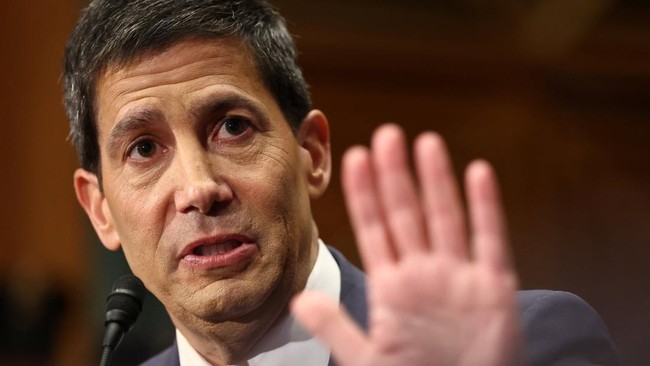
The Federal Reserve (The Fed) held its benchmark interest rate steady in its meeting on Wednesday (29/7/2026) local time, in line with market expectations. The decision marks a continuation of the US central bank’s cautious stance in determining the direction of monetary policy. Although rates were unchanged, the meeting drew significant attention as it featured three dissenting votes from members of the Federal Open Market Committee (FOMC). At the same time, Fed Chair Kevin Warsh offered no clear signal regarding the likely policy direction for the upcoming September meeting. Warsh stressed that differing views within the central bank are part of a healthy decision-making process. ‘I expected a healthy family squabble, and I got it. That’s the point. That’s the design feature,’ Warsh said. He noted that the debate among policymakers reflects increasingly active discussions within the FOMC. Here are five key points from The Fed meeting: First, the meeting recorded three dissenting votes against the decision to hold rates. Lorie Logan of Dallas, Neel Kashkari of Minneapolis, and Beth Hammack of Cleveland voted in favour of a 25-basis-point rate hike. All three dissenting votes came from regional central bank presidents who had previously expressed more aggressive views on monetary policy. Second, The Fed maintained a brief policy statement format with minimal changes. Warsh said this approach was deliberately chosen because the central bank only wants to convey facts without providing excessive projections amid economic uncertainty. ‘This policy statement just states the facts. It avoids forecasts, a choice we consider very wise in these uncertain times. But uncertainty does not mean a lack of clarity,’ he said. Third, Warsh reaffirmed The Fed’s commitment to controlling inflation. However, he cautioned that the process cannot be completed in a short period. ‘We don’t have a magic wand. This is not something we can solve in a matter of days or weeks,’ he stated. Fourth, the market response showed scepticism towards The Fed’s message. Long-term US government bond yields surged, while short-term yields fell. The 30-year bond yield jumped 11.5 basis points to 5.211%, its highest level since 2007, reflecting investor concerns about long-term inflation prospects. Fifth, The Fed provided no guidance on the policy steps for the FOMC meeting on 15-16 September. Neither the official statement nor Chair Warsh’s press conference contained forward guidance on the next direction for interest rates. ‘I am fully aware that withdrawing forward guidance requires a transition period. Reform is not easy, but our collective judgement will help us make better decisions,’ Warsh said. Several economists believe the September meeting will be the real test of Warsh’s leadership. Evercore ISI’s Global Policy and Central Bank Strategy Head, Krishna Guha, said the decision will be heavily influenced by inflation developments and the impact of war and energy prices over the summer. Meanwhile, Fwdbonds Chief Economist Chris Rupkey assessed that the bond market has not received the answers it hoped for from The Fed regarding its strategy to tackle inflation risks, meaning the central bank’s credibility will continue to be tested in the coming months.