
5 Facts on US-Iran Peace Negotiations: Host Exempts City-Lebanon
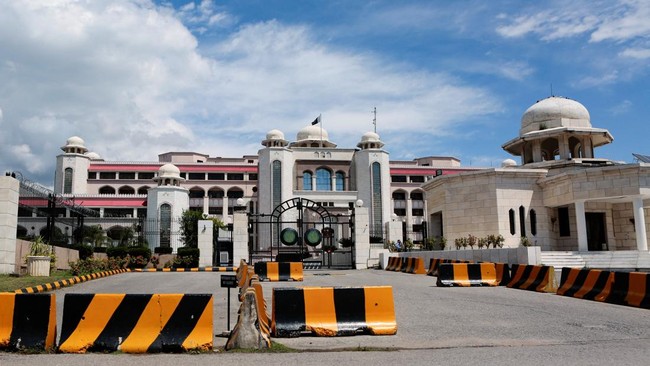
The United States and Iran governments are scheduled to hold a high-level meeting in Islamabad, Pakistan, this weekend to discuss ceasefire conditions aimed at ending the war in Iran. The White House describes these talks as an ongoing process, although a final agreement is considered highly fragile due to continued fighting in various parts of the Middle East.
Quoting The Hill, White House spokesperson Anna Kelly stated that President Donald Trump believes the current planning document provides a workable foundation for achieving lasting peace. Kelly emphasised that the US will not negotiate through the press regarding the details of the discussions.
Here are several known details about the preparations for these negotiations, quoted from The Hill and Al Jazeera on Friday (10/4/2026):
Delegations
President Trump is sending a strong delegation led by Vice President JD Vance, accompanied by senior advisor Steve Witkoff and Trump’s son-in-law, Jared Kushner. Quoting Al Jazeera, the entourage is scheduled to arrive in Islamabad on Saturday (11/04/2026) to meet with Iranian representatives under the mediation of Pakistani Prime Minister Shehbaz Sharif.
Vance’s presence is a major focus because he is known as a figure more inclined towards anti-war policies within the Trump administration compared to Witkoff or Kushner. Vance is viewed as a more open figure for ending the conflict that has claimed thousands of lives.
The Iranian side is reportedly to be led by Parliament Speaker Mohammad Bagher Qalibaf and Foreign Minister Abbas Araghchi to face the US delegation. Qalibaf, a former IRGC commander, is considered to represent Iran’s military interests at the negotiating table.
Although the delegations are prepared, Pakistani officials note that attendance certainty still depends on the security situation upon the delegations’ arrival. As of now, officials from the Islamic Revolutionary Guard Corps (IRGC) have not been confirmed as to whether they will join the talks directly.
Dania Thafer from the Gulf International Forum stated that the absence of Israel from these talks poses a real structural challenge to a final agreement. According to Thafer, Israel, as a party involved in the war, should be part of the negotiations to prevent them from rejecting the agreed terms later.
Lebanon Issue
The current ceasefire situation is on the brink due to differing interpretations regarding the scope of attack areas, particularly related to Israel’s position in Lebanon. Quoting The Hill, disagreement has arisen over whether Lebanon is included in the ceasefire agreement, with Pakistan affirming it but the US and Israel denying it.
Vice President Vance told reporters in Hungary that the Lebanon issue is merely a legitimate misunderstanding from the Iranian side because the US never promised such a thing. Vance assessed that Iran assumed the ceasefire automatically included Lebanon, whereas the existing documents do not state so.
Vance also added that Israel is actually willing to exercise some restraint in Lebanon to ensure the success of the negotiations in Islamabad. This is done so that the Iranian side still feels they have reason to sit at the negotiating table without feeling pressured through their allies.
President Trump himself claimed to have communicated directly with Israeli Prime Minister Benjamin Netanyahu to ask the Israeli military to reduce the intensity of their attacks. Quoting his interview with NBC News, Trump said he asked Netanyahu to be more “low-key” to avoid disrupting the course of the negotiations.
Netanyahu responded by instructing his cabinet to begin direct negotiations with Lebanon to ease tensions along their northern border. This step was taken after Israel’s massive attacks on Lebanon last Wednesday triggered threats from Tehran to cancel the entire diplomatic process.
Pull and Push of Iran’s 10-Point Peace Plan
These negotiations will focus on the 10-point peace plan proposed by Iran, which includes lifting sanctions, withdrawing US troops, and recognising the right to uranium enrichment. Quoting The Hill, Trump described the plan as a workable basis but insisted on strict limitations for Iran.
Those points also demand the release of frozen Iranian assets and a UN resolution stating that the agreement is legally binding for all parties. However, some points, such as war damage compensation for Iran, are predicted to be outright rejected by Trump administration officials.
White House Press Secretary Karoline Leavitt emphasised that Trump’s position remains unchanged, particularly regarding demands for the complete cessation of uranium enrichment by Iran. Leavitt stated that nuclear cessation is a red line that cannot be negotiated by the United States in the upcoming meeting in Pakistan.
Trump also warned via social media Truth Social that many external parties are trying to send fake agreement lists to the public at present. He called those parties scammers attempting to disrupt the official channel being built by his government.
Sahar Khan from the Institute for Global Affairs opined that both sides are currently showing maximalist positions to demonstrate that they are the winners. However, Khan assessed that if this two-week ceasefire can be maintained, it would be the most important step to build trust.
Strait of Hormuz Oil Route Dispute
Another crucial issue is control over the Strait of Hormuz, the distribution route for 20% of the world’s oil, which was closed by Iranian military forces during the outbreak of war. Quoting The Hill, Trump once floated an ambitious idea to form