
5 Facts About the Tax Office's New Compliance Monitoring Methods, Including Involving Village Babinsa
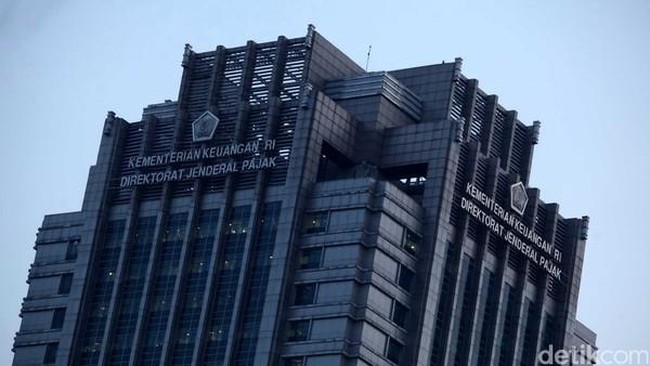
Jakarta, CNBC Indonesia – Director General of Taxes Bimo Wijayanto has issued Circular Letter Number SE-8/PJ/2026 to his staff, effective 15 July 2026. The circular serves as a guideline for monitoring taxpayer compliance.
In the circular, Bimo emphasised that the guideline is necessary for tax officials to achieve continuous taxpayer compliance in connection with the implementation of the tax self-assessment system.
“In the context of providing guidance to taxpayers in connection with the implementation of the tax self-assessment system, supervision of the fulfilment of taxpayers’ tax obligations is necessary, with the aim of achieving continuous compliance,” the circular quoted, Friday (17/7/2026).
- Supervision Targets
Supervision is carried out on taxpayers, whether registered or not, comprising: supervision of registered taxpayers; supervision of unregistered taxpayers; and territorial supervision.
Supervision of registered and unregistered taxpayers is conducted, among other things, through requests for explanations of data and/or information based on data and/or information held by the Directorate General of Taxes (DJP).
This includes obligations on tax objects that have or have not been subject to Land and Building Tax (PBB).
For registered taxpayers, supervision is carried out through Periodic Payment Supervision (PPM) and Material Compliance Supervision (PKM) activities, while for unregistered taxpayers, supervision is conducted through extensification activities.
Territorial supervision is carried out through the collection of economic data in working areas. This is done to encourage improved taxpayer compliance as an effort to broaden the database and strengthen territorial control.
- Methods of Supervision
These activities can be carried out by all DJP employees as a means of obtaining data and/or information from various sources, whether through field or non-field data collection activities.
Field data collection is done by visiting taxpayers’ residences, places of establishment, business premises, and/or freelance work locations, as well as related parties, to identify tax subjects and/or objects.
Meanwhile, non-field data collection is carried out through the use of information technology and other available administrative means without the need for direct visits to the location.
- Involving Babinsa and Bhabinkamtibmas
Supervision by tax officials can be carried out through various methods and approaches, such as visits, canvassing, direct observation, and building information networks, including through Village Supervisory Non-Commissioned Officers (Babinsa) or Community Security and Order Supervisors (Bhabinkamtibmas).
Supervision can also be carried out through assessment using remote sensing technology, web scraping, utilisation of media information, review of journals or academic works, and analysis of unidentified data.
It can also be done through taxpayer profiling, economic zone analysis, mirroring the results of audits/investigations/other business processes, taxation partnerships, and various other methods not contrary to legal provisions.
“Supervision of taxpayer compliance begins with systematic identification and data collection stages to support effective and measurable supervision functions,” the circular stated.
- Targeting Taxpayer Data
To support the effectiveness and efficiency of supervision, data collection activities are an important instrument for obtaining additional taxpayer data, ensuring territorial control, and strengthening extensification activities and database expansion.
The data and/or information obtained through data collection activities (KPD) have been set out by Bimo in the circular.
First, income data, which is data and/or information related to income earned or received by taxpayers.
Second, cost data, which is data and/or information related to expenses incurred and/or borne by taxpayers.
Third, asset data, which is data and/or information related to the wealth or assets owned by taxpayers.
Fourth, debt/liability data, which is data and/or information related to debts or obligations held by taxpayers.
Fifth, equity data, which is data and/or information related to the capital owned by taxpayers; and
Sixth, profile data, which is data and/or information related to the taxpayer’s profile, taking into account the Statute of Limitations on Assessment.
In the circular, Bimo also emphasised that data collection can be carried out by tax officials through both field and non-field methods.
Field data collection is done by visiting taxpayers’ residences, places of establishment, business premises, and/or freelance work locations, as well as related parties, to identify tax subjects and/or objects.
Meanwhile, non-field data collection is carried out through the use of information technology and other available administrative means without direct visits.
- Pursuing New Taxpayers
In the circular, DJP is also targeting new taxpayers or those not yet registered in the tax system, in order to strengthen compliance supervision.
Under Circular Letter Number SE-8/PJ/2026 on Guidelines for Taxpayer Compliance Supervision, signed by Director General of Taxes Bimo Wijayanto as of 15 July 2026, supervision of unregistered taxpayers will be classified into the Extensification Priority List (DPE).
“The DPE is a list of extensification targets proposed by the compliance committee at the level of Tax Offices (KPP) and DJP Regional Offices, and determined by the compliance committee at DJP Head Office level, prioritised for follow-up with extensification or education activities in the current year,” the circular stated, Friday (17/7/2026).
Supervision of unregistered taxpayers is preceded by supervision planning through the preparation of supervision strategies and the DPE in accordance with provisions governing the Compliance Committee.
In its implementation, based on the DPE determined by DJP Head Office, the Head of the Supervision Section with territorial-based supervision duties and functions proposes a Tax Supervision Team to conduct supervision of unregistered taxpayers designated in the DPE.
The Tax Supervision Team consists of 1 supervisor, 1 team leader who is an account representative (AR) and/or an assigned DJP employee with a supervision zone map according to the taxpayer’s location, and 1 team member who is an AR and/or assigned DJP employee within the same supervision section.
The Tax Supervision Team carries out preparation in order to understand data and/or information on the profile, risk position, and income, cost, asset, liability, and/or equity data of taxpayers in the DJP Supervision Administration System.
As part of the preparation for supervising unregistered taxpayers, requests for data and/or information support may also be made, including: requests for third-party data; requests for information and/or evidence or explanations; requests for valuation assistance for tax purposes; and/or requests for data and/or information to Related Parties, through the DJP Supervision Administration System.
During the data collection process, officers are even required to collect information on tax object data, including identity numbers such as vehicle plate numbers, land certificate numbers, account numbers, and purchase deed numbers where available.
Afterwards, the Head of the Pratama Tax Office will issue a Request for Explanation of Data and/or Information Letter (SP2DK) based on the data and/or information obtained, such as income, cost, asset, liability and equity data of unregistered taxpayers.
Following the issuance of the SP2DK, taxpayers are required to respond by fulfilling their tax obligations. If they are unwilling, the response period can be extended for a maximum of 7 days after the original response period ends.
In addition, follow-up on the results of supervision of unregistered taxpayers may also include proposals for Restriction or Blocking of Certain Public Services, to be carried out in accordance with prevailing laws and regulations.
There may also be proposals for audits, proposals for development and analysis of data information, as well as reports and complaints.
Source: jawawa.id (https://jawawa.id/newsitem/5-facts-about-the-tax-offices-new-compliance-monitoring-methods-including-involving-village-babinsa-1784508648)
Originally published by CNBC Indonesia (https://www.cnbcindonesia.com/news/20260719200839-4-752007/5-fakta-cara-baru-djp-awasi-kepatuhan-pajak-hingga-libatkan-babinsa), translated from Indonesian