
5 Characteristics of Lower-Class Citizens, Do Any Apply to You?
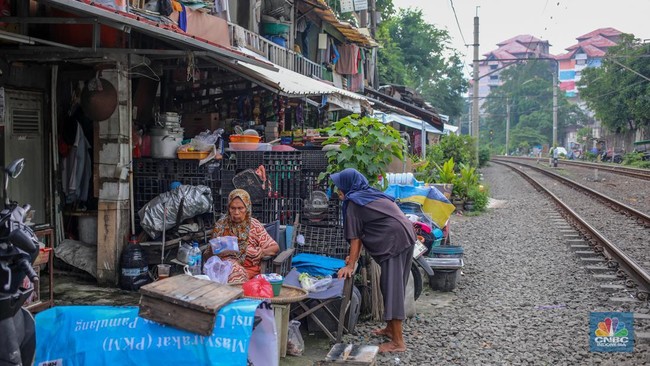
President Prabowo Subianto highlighted the decline in extreme poverty in Indonesia during his speech at the World Economic Forum (WEF) in Davos, Switzerland. The government continues to push various policies to reduce poverty while improving the people’s standard of living. However, a person’s position on the economic ladder cannot be seen solely from the amount of income. A number of indicators in daily life, from housing to access to education, can also describe a person’s economic condition. Citing GoBankingRates, here are five characteristics often associated with the lower and lower-middle class groups.
- Difficulty obtaining decent housing
Housing is one of the needs with the largest portion of expenditure in a household. Difficulty in obtaining a safe, comfortable home in a decent environment can be an indicator of economic limitations. This condition usually indicates that most of the income must be allocated to meet basic needs, leaving very limited room for other expenditures.
- Low-wage work with minimal benefits
The type of job is also often used to view a person’s economic position. Jobs such as restaurant servers, truck drivers, retail employees, manufacturing workers, and janitors generally have lower income levels compared to managerial or specialist jobs. “You are considered middle class if you work in a managerial position or a specialist job,” said Nathan Brunner, CEO of Salarship. However, occupation cannot be the sole benchmark. Teachers, nurses, accountants, and information technology workers, for example, can be in different economic groups depending on seniority, expertise, certifications, work location, and income level.
- Lack of savings and investments
Savings and investments act as a cushion when facing emergency conditions and serve as a means of building long-term wealth. However, the ability to set aside money for these needs is more difficult when income is only enough to finance daily needs. The absence of an emergency fund, long-term savings, or retirement preparation can be a sign that a person’s financial condition is still vulnerable.
- Difficulty enjoying non-essential spending
The ability to go on holiday, eat out, buy new items, or enjoy occasional entertainment can also reflect a person’s level of financial security. If every expenditure beyond basic needs must be strictly considered due to budget constraints, this condition can be an indicator of economic pressure. Conversely, someone who has room in their budget to enjoy non-essential spending generally has greater financial flexibility. However, lifestyle must still be viewed alongside the overall financial condition. A person with limited income can still enjoy entertainment or holidays through strict budget management.
- Limited access to higher education
Education is also an indicator often linked to economic position. Higher education generally opens greater access to jobs with better income and career paths. Conversely, the high cost of tuition and limited access to education can be barriers for low-income communities to improve their economic mobility. Nonetheless, these five indicators are not absolute measures to determine whether someone belongs to the lower or middle class. Economic conditions are also influenced by income, number of dependents, cost of living, assets, debt, location of residence, and access to public services.