
5 Causes of Rupiah Breaking Through Rp 17,000/US$, Including Donald Trump's Actions
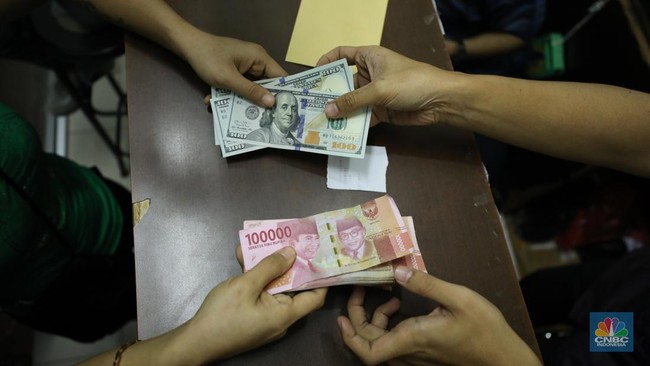
Jakarta, CNBC Indonesia - The rupiah has plummeted against the US dollar this morning. The Garuda currency has even been cornered, surpassing the Rp17,000 per US dollar level as of 09:31 WIB, based on Refinitiv data.
Global Markets Economist at Maybank Indonesia, Myrdal Gunarto, explains that there are five sentiments pressuring the rupiah today.
First, he assesses that the rupiah’s weakening is caused by global investors tending to avoid risks amid global turmoil due to the war in the Middle East following the attack by US President Donald Trump alongside Israel on Iran.
Such investor behaviour impacts emerging markets, which are seen as less attractive to investors. This hinders capital inflows and leads to outflows.
“For the rupiah’s exchange rate movement, I think this is still closely related to developments in global investor behaviour, which continues to engage in risk-averse actions for investments in emerging markets like Indonesia, so if we look, many are continuing to sell or take profits,” Myrdal told CNBC Indonesia on Wednesday (1/4/2026).
Myrdal said investors’ risk-avoidance stance is due to crude oil prices remaining at high levels, although there is US intent to end the war.
The second sentiment is also a factor from increased domestic foreign exchange demand, particularly for import fulfilment needs.
“So imports for fuel seem to be increasing while oil prices are high, which is why we see relatively volatile rupiah exchange rate movements,” Myrdal added.
Third, according to Myrdal, the rupiah’s weakening is related to the impact of routine spending, usually at the end or beginning of the month, particularly for spending on imported goods, not just fuel imports but various products.
The fourth factor is related to the upcoming dividend season, which affects higher domestic dollar demand.
“This is a seasonal factor, so the April to July period sees quite high foreign exchange demand due to dividend needs for foreign investors,” Myrdal stated.
The fifth factor, according to Myrdal, is the shifting of foreign debt payments due to the Eid al-Fitr holiday period.
“Foreign debt payments, this is also somewhat shifted in timing because usually without the Eid holiday period, this is settled at the end of the month, but we suspect it might shift to the early month period, especially after Eid,” he said.