
5 'Bloody' Hours on the Exchange! IDX Composite Crashes to Record Lows
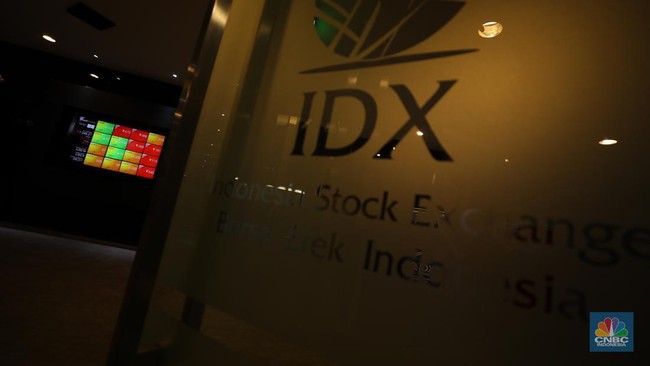
Jakarta, CNBC Indonesia - The Indonesia Composite Index (IHSG) suffered a devastating collapse today, Wednesday (3/6/2026). Within just 5.5 hours of trading, the IHSG experienced severe shocks, recording several historic lows.
Market data shows that the domestic benchmark index had previously reached an all-time high of 9,134.70 on 20 January 2026. However, today the IHSG closed down by 4.11% to the level of 5,941.07 from the previous close. During the second trading session, the index even touched 5,842.00, its lowest level since 31 May 2021 during the height of the COVID-19 Delta variant era in Indonesia.
The decline from its peak on 20 January 2026 to its current position reflects an extreme correction of 34.96% in less than six months of trading.
- Rapid Evaporation of Market Cap
This aggressive index weakness has had a systemic impact on the aggregate valuation of all issuers on the Indonesia Stock Exchange. Total market capitalisation recorded a drastic shrinkage from its peak of Rp16,630 trillion on 19 January 2026 to just Rp10,770 trillion today. This figure confirms that Rp5,862 trillion in market valuation has been eroded and vanished in a very short period of less than five months. This massive evaporation of valuation reflects a large-scale risk profile adjustment by both retail and institutional investors, resulting in massive equity asset sell-offs to mitigate further losses.
- Worst Global Performance
So far this year, the IHSG has plummeted by 30%, making it the worst-performing index in the world. India’s second-worst index (SENSEX) has only declined by 12% during 2026. This sharp correction in the domestic stock market creates a profound anomaly when compared to global equity trends. Wall Street, particularly the S&P 500, has hit record highs multiple times this year. While most indices in developed nations and several emerging markets are enjoying an uptrend, the Indonesian capital market is moving in the opposite direction, officially placing the domestic exchange as the worst-performing index globally in the current period. This phenomenon indicates that the selling pressure is driven by worsening domestic-specific risk perceptions rather than merely global macro sentiments.
- Causes of the IHSG Decline his extreme movement and selling pressure was triggered by a combination of three fundamental macro-economic and domestic institutional sentiments. The primary pressure stems from rumours regarding the publication of a report from S&P Global Ratings. There is negative expectation among market participants that the report may contain unfavourable assessments regarding Indonesia’s economic stability and fiscal space this June. Such speculation has prompted foreign investors to relocate cash flows and engage in net selling of high-risk instruments.
This fundamental pressure was further exacerbated by official releases from other international rating agencies, namely Moody’s and S&P. These agencies downgraded Danantara Investment Management to Baa2 and BBB, respectively, and applied a negative outlook to the strategic fund manager. This downgrade has sparked widespread doubt regarding the stability of long-term investment flows. Complementing these catalysts, the stock market also faces the challenge of the continuous depreciation of the Rupiah against the US Dollar, which has breached the Rp17,945 level. This condition triggers fears of further currency depreciation, increasing losses for foreign investors through both capital loss and exchange rate risk.
- Valuation Plummeting to the Pandemic Era
The drop of the index to the 5,850 level marks a return of market valuations to the crisis levels seen during the COVID-19 pandemic. Historically, the current closing level is equivalent to the index position on 31 May 2021, when Indonesia was hit by the Delta wave. During that period, global and domestic market sentiments were under heavy pressure due to the panic of the Delta variant, which triggered strict mobility restrictions and economic paralysis. The return of the index to this level signifies that the market capitalisation growth painstakingly built over recent years has been erased, returning to the same point of peak pandemic uncertainty.
- Sharp Correction Today: The Worst in History?
Although the current weakness is considered an extreme cycle, index crashes of similar magnitude and speed have occurred several times in the history of the domestic exchange. One of the deepest crises was recorded during the early COVID-19 pandemic, where the index plunged 37.79% from 6,329.31 on 27 December 2019 to 3,937.63 on 24 March 2020. Much earlier, the global financial crisis triggered an index drop of 59.68% from 2,756.31 on 28 February 2008 to 1,111.39 on 28 October 2008. An aggressive correction cycle also marked the previous decade; in 2002, the index weakened by 38.82% from 551.61 in mid-April to 337.48 in mid-October.