
46 UNJ Professors Venture into Remote Mappi to Boost Competence of 1,000 Teachers
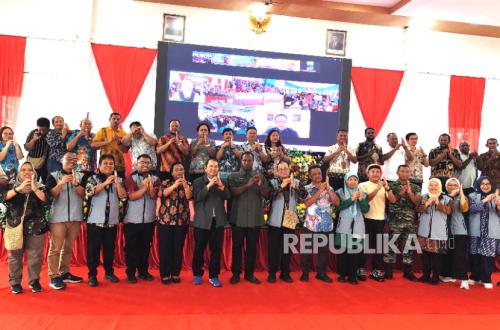
A total of 46 professors and lecturers from Jakarta State University (UNJ), together with Billy Mambrasar, ventured into the remote interior of Mappi Regency, South Papua, to train around 1,000 school principals, teachers, and school supervisors. They held the Capacity and Competence Strengthening Training for School Principals, Teachers, and School Supervisors of Mappi Regency in 2026 from 6 to 10 July 2026. The programme is the result of a collaboration between the Mappi Regency Government and Jakarta State University aimed at strengthening the quality of human resources through education. The training was conducted centrally and in cluster-based formats in the districts of Kepi, Edera, Assue, and Citak Mitak to reach educators in the most remote areas. Facilitators had to travel for hours by land and river, even traversing swamps and muddy terrain, to ensure teachers had equal opportunities to enhance their professional competence. In Citak Mitak District, the journey to the training location took up to six hours. Meanwhile, the team assigned to Assue District had to travel approximately 220 kilometres via routes only passable during certain seasons. The activity was attended by the leadership of Jakarta State University, vice rectors, the deputy regent of Mappi, the chairperson of the Mappi Regency DPRK, heads of regional agencies, and the 46 UNJ professors and lecturers who served as resource persons and facilitators. Over five days, participants received competency strengthening in various strategic areas, including school principal leadership, teacher pedagogical and professional competencies, student-centred learning strategies, curriculum implementation, learning assessment, the use of digital technology in education, strengthening school quality culture, and the preparation of follow-up plans that can be directly implemented in their respective educational units. The training was designed to be participatory through discussions, case studies, practice, and mentoring so that every participant could address learning challenges according to the characteristics of the South Papua region. Billy Mambrasar stressed that development in Papua would not succeed if it focused solely on physical infrastructure. He stated that the greatest investment must be directed towards increasing the capacity of teachers as the main actors in shaping the quality of future generations.