
457 Fires Hit Jakarta During July-August, Electrical Short Circuits Identified as Dominant Cause
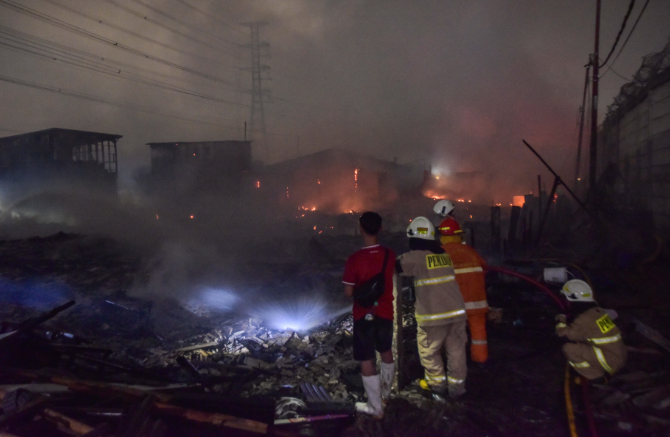
The Jakarta Provincial Government (Pemprov DKI) recorded 457 fire incidents across the capital throughout the period of July to August 2026. Electrical short circuits were identified as the most dominant trigger for this series of disasters.
Jakarta Governor Pramono Anung emphasised that the surge in fire cases is a serious concern for his administration, especially as Jakarta is currently facing the peak of the dry season influenced by the El Niño phenomenon.
“From July to August, there were 457 fire incidents in Jakarta,” said Pramono while leading the Jakarta Guard Assembly in Jakarta on Wednesday (2/9).
Of that total, approximately 240 incidents were recorded throughout August. Pramono noted that electrical short circuits are the suspected primary cause of the fires.
“The most dominant suspected cause is electrical short circuits. The second is waste burning, and there are also several cases caused by negligence in disposing of cigarette butts,” he said.
Furthermore, he mapped the areas with the highest fire potential. West Jakarta was the region with the highest number of incidents, followed by East Jakarta.
Pramono identified Tambora District in West Jakarta and Cakung District in East Jakarta as areas with high fire potential.
“Indeed, these two areas have the highest potential, namely Tambora in the West and Cakung in the East,” he stated.
To strengthen prevention at the neighbourhood level, Pramono requested that every RW (community unit) possess a portable fire extinguisher (APAR). This equipment is expected to be used for initial response when a fire occurs.
“As this programme is already underway, I am confident that every RW now possesses them,” he said.
Preparedness is also being strengthened by involving 1,027 joint personnel from the Jakarta Provincial Government, TNI, Polri, BNPB, BMKG, PAM Jaya, PMI, volunteers, and disaster mitigation partners.
The Jakarta Provincial Government is encouraging the strengthening of prevention at the local level to reduce fire risks amidst the threat of a prolonged dry season.