
43,805 Workers Laid Off, Apindo Chairman Speaks Out
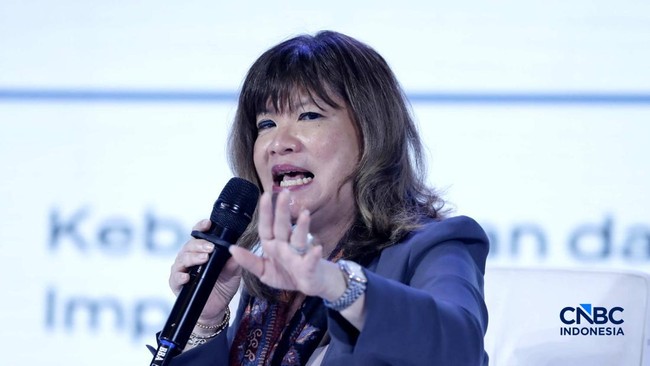
Jakarta, CNBC Indonesia - Chairman of the Indonesian Employers Association (Apindo) Shinta Kamdani has spoken out in response to Ministry of Manpower (Kemnaker) data on layoffs (PHK). Kemnaker data shows the number of layoffs in the January-July 2026 period reached 43,000 people.
Shinta believes layoff cases cannot be assessed solely by the number of cases occurring. In this regard, the business community is more focused on finding solutions so that layoffs can be prevented.
“We no longer want to look only at data, because what we are looking at is how to anticipate solutions, so that layoffs do not happen,” said Shinta at the Coordinating Ministry for Economic Affairs, Central Jakarta, Friday (21/8/2026).
Shinta argued that layoffs are a downstream impact. Meanwhile, the various problems that cause companies to carry out layoffs largely originate from the upstream side.
“And as I have said many times, layoffs are only at the downstream end; the issues are largely at the upstream end,” she continued.
Therefore, she supports resolving the various obstacles or debottlenecking faced by industry. She believes resolving upstream problems can help prevent layoffs.
“That is why we are very focused on debottlenecking, because many layoffs occur because the upstream issues cannot be resolved. So, I do not want to look only at the numbers; we must look at how to find solutions, so that layoffs do not happen, and layoffs are always the last option for employers. No one wants layoffs if they can be avoided,” Shinta explained.
According to Shinta, labour-intensive industrial sectors are currently among those requiring greater attention. She sees that the textile and garment industry is still facing various problems that could affect business continuity and labour absorption.
On the other hand, Shinta also emphasised that labour-intensive industries are highly dependent on the availability of raw materials and industrial gas supplies. If these issues are not resolved promptly, the impact could extend to the workforce.
“Textiles and garments have long remained an issue. Labour-intensive industries are closely linked to raw material availability and industrial gas, all of which are significant, so it will certainly have a major impact if these are not resolved,” said Shinta.
The Ministry of Manpower (Kemnaker) reported that layoff data for the January-July 2026 period reached 43,805 people. This figure increased by 11,416 compared to the January-June 2026 period, which recorded 32,389.
Compared to the January-July 2025 period, the layoff figure was lower by 15,878, with layoffs in that period reaching 59,683. The layoff data calculated by Kemnaker refers to workers classified as participants in the Job Loss Insurance (JKP) programme.
“In the January to July 2026 period, there were 43,805 workers laid off who were registered in the Job Loss Insurance (JKP) programme,” as stated on the Kemnaker Satudata website, quoted Friday (21/8/2026).
Of the total figure, West Java was the province with the highest number of layoffs. Layoffs in West Java province were recorded at 8,830 people, equivalent to 20.16% of layoffs across all regions of Indonesia.
Source: jawawa.id (https://jawawa.id/newsitem/43-805-workers-laid-off-apindo-chairman-speaks-out-1787302321)
Originally published by CNBC Indonesia (https://www.cnbcindonesia.com/news/20260821142142-4-761311/43805-orang-kena-phk-bos-apindo-buka-suara), translated from Indonesian