
421 Villages and Urban Wards in Central Java Now on TB Alert
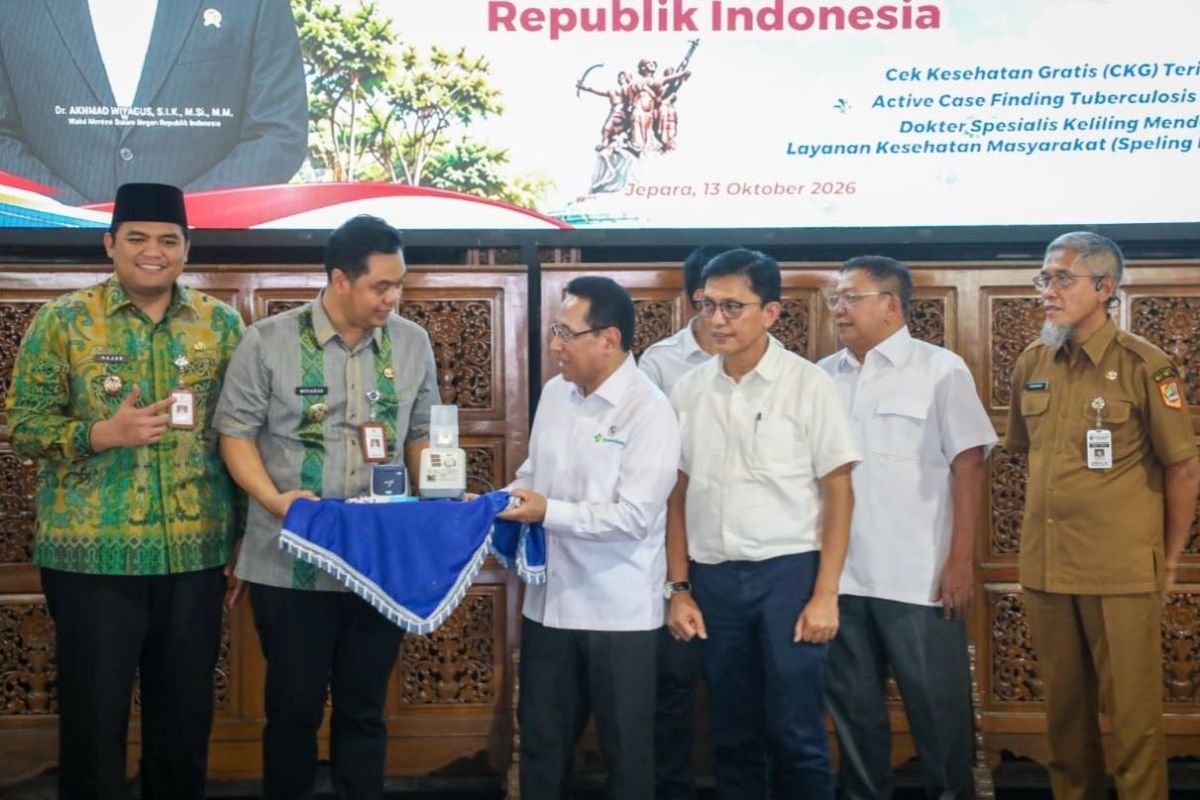
Jepara (ANTARA) – The Central Java Provincial Government is stepping up efforts to accelerate the elimination of tuberculosis (TB) by expanding screening, prevention and treatment down to village level. A total of 421 villages and urban wards have now been designated TB-alert areas.
“As of 9 October 2026, 421 of Central Java’s 8,563 villages and urban wards have TB-alert status,” Central Java Regional Secretary Sumarno said at a declaration ceremony at the Jepara Regency Hall on Tuesday.
He said tackling TB required cooperation and support from many parties, making the involvement of village governments and communities important to speeding up case detection and ensuring patients received appropriate care.
Data up to 9 October 2026 showed that 68,617 TB cases had been detected in Central Java, or 65.08 per cent of the estimated total. The proportion of patients who began treatment was 91.76 per cent.
Treatment success reached 84.07 per cent for drug-susceptible TB and 79.54 per cent for drug-resistant TB. Meanwhile, Tuberculosis Preventive Treatment (TPT) had reached 23.31 per cent of its target of 326,038 people.
Sumarno said these results needed to be matched by stronger prevention, especially for people who had been in close contact with TB patients. Early case detection, diagnostic testing and treatment follow-up should be carried out in an integrated manner.
The Central Java Provincial Government is also promoting the integration of the TB Active Case Finding (ACF) programme with primary healthcare services. The integration is expected to align screening, referrals, record-keeping and patient follow-up.
As of 12 October 2026, Central Java’s CKG health-check programme had served 18.8 million people. The provincial government’s Speling mobile specialist doctor programme had delivered 1,857 sessions, reaching around 131,500 people.
Deputy Health Minister Benyamin Paulus Oktavianus said TB-control programmes needed to be evaluated regularly to ensure prevention and treatment efforts were effective.
He praised the intensive screening of close contacts of TB patients in Jepara Regency. Of the 161 screening sites targeted, activities had been conducted at 107.
“This means the programme is already going very well. We evaluate it every year so that it can improve further,” he said.
Benyamin said the challenge in tackling TB was not only ensuring that patients completed treatment, but also raising public awareness of the need for testing and prevention before people fell ill.
He said TB treatment in Indonesia was already working reasonably well, but prevention needed to be strengthened, including by providing preventive medication to close contacts who met the relevant medical criteria.
Benyamin added that the CKG programme was one of the government’s efforts to encourage people to take greater responsibility for their health. Checks and screening are intended to identify disease risks earlier, allowing treatment before a person’s condition worsens.
He also highlighted Central Java’s CKG programme, which is supported by the Speling programme, saying that the two initiatives help extend healthcare services to more people.