
42 Million Residents Undergo Free Health Screening in 2026, Government Aims to Reduce Diabetes and Hypertension Complications
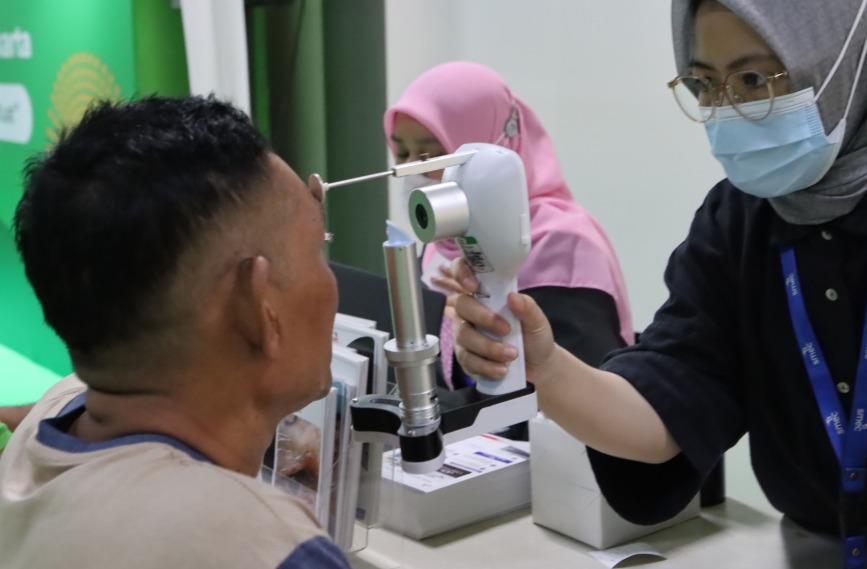
Throughout 2026, early detection through the Free Health Screening (CKG) programme has reached 42.3 million residents across 38 provinces. Out of 43,660,900 registrants, 42,291,657 attended and were served.
Deputy Minister of Health Dr. Benjamin Paulus Octavianus noted that Central Java recorded the highest participation figures. “I observe that the highest number remains in Central Java, meaning public education there is quite good as it has exceeded 10 million, followed by East Java with 6.8 million and West Java with 5.2 million,” he said. Benny, his nickname, pointed out that West Java has a larger population than Central Java, indicating that the CKG programme is running quite effectively in Central Java.
Results from blood pressure and blood sugar tests conducted during the CKG found that 10% of cases involved hypertension and 3% diabetes. Both diseases are highly dangerous but often present no initial complaints. “Therefore, by conducting this CKG, we hope that the number of complications from diabetes and hypertension—which we know cause heart attacks, kidney disorders leading to dialysis, and strokes—can be reduced through the consistent implementation of the CKG programme across all regions of Indonesia with sufficient knowledge and understanding,” he emphasised.
The programme involves an integrated pattern of CKG screening and the National Health Insurance (JKN) programme, incorporating early detection and integrated disease management within JKN. On the other hand, although JKN service visits have increased, access inequality between regions persists. A significant difference occurs in the access rate for participants in JKN services, especially in eastern Indonesia, due to disparities in the availability of health facilities. “We see that the most challenging conditions are in West Papua and Papua. Meanwhile, the best remains in Yogyakarta, which has reached 60 percent. This means that in Yogyakarta and Bali, people find it easy to access health services,” he concluded.