
41% of Antibiotic Users Obtain Medicines Without a Prescription, Oversight Must Be Strengthened
CIKARANG — The use of antibiotics without a doctor’s prescription remains a challenge in efforts to control antimicrobial resistance in Indonesia. The 2023 Indonesian Health Survey (SKI) found that 41% of antibiotic users obtained the medicines without a prescription. This underlines the importance of educating the public about the rational use of medicines and strengthening oversight throughout the pharmaceutical distribution chain.
The management of unused or expired medicines also requires attention. Medicines disposed of carelessly can pose environmental problems, making access to appropriate disposal facilities important for the public.
The National Agency of Drug and Food Control (BPOM), together with pharmaceutical businesses, is promoting more responsible medicine management through the Ayo Buang Sampah Obat (ABSO, or ‘Let’s Dispose of Medicine Waste’) programme. One of its initiatives is to provide collection boxes, or drop boxes, at pharmacies where people can hand in medicines that are no longer needed or have expired.
PT Anugrah Argon Medica (AAM) President Director Juliwaty said compliance with distribution standards and collaboration with regulators were important parts of pharmaceutical companies’ responsibility to safeguard the quality and safety of medicines.
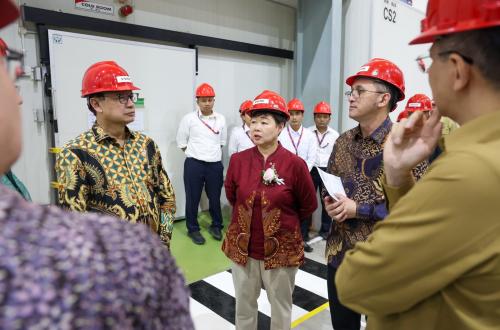
“As part of the healthcare ecosystem, particularly in pharmaceutical and medical-device distribution, AAM is committed to supporting BPOM in strengthening implementation of Good Distribution Practices for Drugs (CDOB) and maintaining the quality and safety of medicines throughout the distribution chain,” Juliwaty said during a visit by BPOM chief Taruna Ikrar to AAM’s National Distribution Centre (NDC) in Cikarang on Tuesday (24 November 2026).
During the visit, Taruna inspected the implementation of the Warehouse Management System (WMS) and CDOB at AAM’s distribution facility. Juliwaty also symbolically handed an ABSO drop box to Taruna, who then passed it on to a pharmacy representative to serve as a collection point for medicines from the public.
Taruna said collaboration between regulators and businesses was needed to strengthen medicine oversight and improve public understanding of the proper use and management of medicines.
“Through the ABSO programme, we hope more pharmacies will be able to act as collection points for medicines that are no longer needed or have expired, giving the public access to appropriate medicine-management facilities,” Taruna said.
Efforts to control antimicrobial resistance also require the involvement of pharmacy professionals. Inappropriate antibiotic use is one factor that can drive resistance, making ongoing public education and stronger healthcare-worker skills essential.
AAM is also supporting pharmacy professionals’ understanding through technical training for pharmacists at pharmacies in 22 cities across Indonesia. The activities include strengthening pharmacy practice, including understanding the prudent use of antibiotics and the prevention of antimicrobial resistance.
Globally, commitment to tackling antimicrobial resistance is also reflected in the 2024 United Nations High-Level Meeting Political Declaration on Antimicrobial Resistance. The declaration emphasises the importance of a One Health approach linking human, animal and environmental health.
In distribution, inventory management, storage conditions, product traceability and accurate delivery are all important to preserving medicine quality until products reach healthcare facilities.
Collaboration among regulators, businesses, pharmacy professionals and the public is expected to strengthen oversight and foster rational medicine use. Education on using antibiotics only as prescribed, alongside access to proper medicine-disposal facilities, forms part of efforts to protect public health.
Source: jawawa.id (https://jawawa.id/newsitem/41-of-antibiotic-users-obtain-medicines-without-a-prescription-oversight-must-be-strengthened-1795755098)
Originally published by Republika (https://ameera.republika.co.id/berita/tp57vq522/41-persen-pengguna-antibiotik-dapat-obat-tanpa-resep-pengawasan-perlu-diperkuat), translated from Indonesian