
40-Metre Tsunami Mistaken for 3 Metres, 18,500 Deaths in an Instant
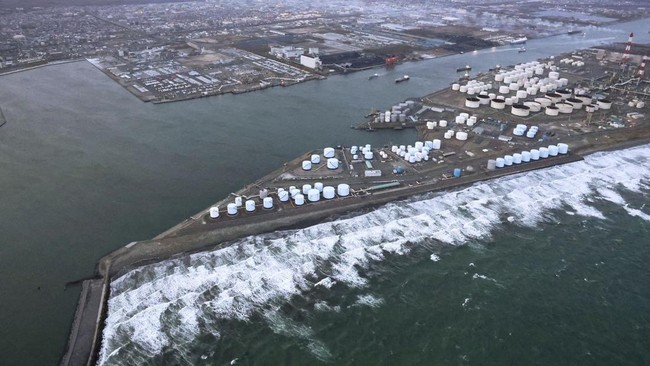
Japan experienced one of the most devastating natural disasters in modern history when a magnitude 9.0 meg thrust earthquake struck in 2011. The powerful tremor triggered a massive tsunami that hit coastal areas at high speed, killing tens of thousands.
Encyclopædia Britannica records that the disaster caused approximately 18,500 deaths, 10,800 people missing, and over 4,000 injuries.
The casualties were not the only consequence. Thousands of homes and buildings were destroyed by the giant waves, leaving many homeless within minutes.
The situation worsened the following day when Japanese authorities announced a radiation leak at the Fukushima nuclear plant. Radiation exposure rendered parts of the region uninhabitable, forcing residents to abandon their homes.
Japan, like Indonesia, is prone to earthquakes and tsunamis. Over time, Japan has developed advanced technology to enhance disaster mitigation efforts.
One quick measure is disseminating early warnings to the public before disaster strikes. However, during the 2011 tsunami, a significant miscalibration occurred.
Following the major earthquake, Japanese authorities issued a tsunami warnings to the public, stating the waves would be ’ only ’ metres high.
This was revealed by Ryo Kanouya, who recounted his experience on the disaster day. In the morning, Ryo rushed to work.
Everything seemed normal. He focused on work from morning until noon, as did his colleagues.
This continued until 3:30 PM local time when Ryo’s phone and his colleagues’ phones began ringing.
Earthquake alerts followed by intense shaking in Fukushima. Buildings swayed violently. People ran for shelter, but the strong tremors made it difficult to move or flee.
At the same time, many buildings collapsed. Trees and electrical poles fell instantly. All this lasted six minutes. Ryo then tried to calm himself after the earthquake. However, it was far from over.
’ As we tried to calm down from the earthquake, a tsunami warnings was issued,’ Ryo told National Geographic.
Authorities stated the incoming tsunami would reach 3 metres. The company ordered all staff to go home and assist residents.
Ryo immediately left for his house, which was just 1 km from the coast.
Upon arriving home, his family reassured him that the tsunami warnings had passed.
Yet, after several minutes, the water had not yet reached land. His family’s assumption was wrong, and Ryo’s fears correct.
When he looked out the window, the 1990-born man was shocked. The water surged like lightning, right before his eyes. He could not escape and helplessly watched the waves crash through the windows and walls.
Initially, Ryo thought his house would withstand it, but the increasingly high waves and strong currents eventually levelled his home.
Ryo was adrift, breathing in water. When conditions normalised, the tsunami had reached 40 metres.
’ I better exhale the last breath in my lungs to die,’ Ryo recalled.
He was separated from his family. Ryo remembered being adrift on water while holding a cabinet. At that point, he felt relief but also compassion for those less fortunate.
As far as he could see, many people were drowning. Others clung to debris for survival, while some floating lifelessly.
’ I waited until the water receded, slowly as it went down until I could stand on land,’ he said.
Upon stepping on solid ground, Ryo’s legs gave way. After ’ the apocalypse,’ he saw Fukushima levelled. Many had died; others were injured. Ryo himself was unharmed but faced hypothermia.
However, one thing to be grateful for: Ryo, his father, mother, and sister survived. Only his grandmother was missing, presumed dead and never found.