
40 Countries Now 'Flagged' by Trump, Including Indonesia: What's Happening?
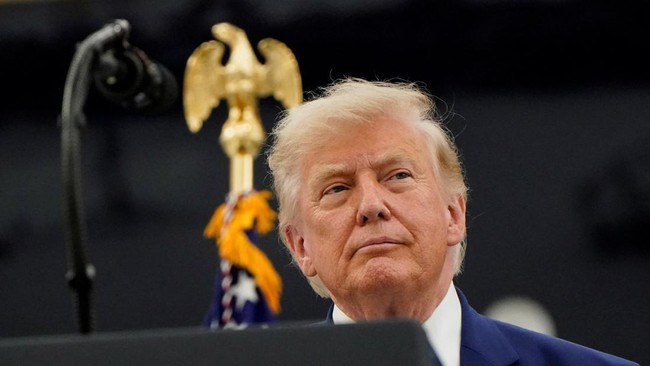
The government of US President Donald Trump has now ‘flagged’ 40 countries in connection with the US-China trade war. Trump said these countries could potentially help China evade tariffs. The report was released by the White House via its official website whitehouse.gov on Friday (14/8/2026).
The Trump administration is concerned about ‘illegal transshipment’, referring to the practice of shipping goods through a third country subject to lower US tariffs in order to avoid the higher import duties imposed by Trump.
Broadly, the US classifies the 40 countries into three main groups. Indonesia falls into the second group. What are the distinctions?
The first group refers to countries and trade blocs that handle large volumes of China-related goods. However, these countries still have diversified industrial bases and serve as major export platforms to the US. Eight countries are included: Canada, the European Union (EU), India, Israel, Japan, Mexico, South Korea, and Taiwan.
The second group consists of countries deemed to have closer linkages through supply chains connected to China, ranging from raw material sources, manufacturing bases, and logistics systems to regional diversion routes. Six countries are included: Indonesia, Brazil, Malaysia, Thailand, Turkey, and Vietnam.
‘These countries possess sufficient industrial scale, port capacity, supplier infrastructure, manufacturing depth, or logistics capacity to channel large volumes of China-related goods into trade flows destined for the US,’ the White House report explained.
‘Vietnam, Thailand, Malaysia, and Indonesia have close linkages with China-related manufacturing networks and have become major platforms for the production of electronics, machinery, plastics, footwear, apparel, components, and various other industrial goods using Chinese materials or components,’ the report added.
‘Brazil and Turkey function as larger regional production and logistics platforms capable of supporting route diversion or product transformation claims for certain categories of goods,’ it stated.
The third group comprises countries with advantages such as special access to the US market, making them ‘attractive opportunistic targets’ for diverting Chinese goods. At least 24 countries are included.
These countries include Argentina, Azerbaijan, Bangladesh, Cambodia, Chile, Colombia, Costa Rica, the Dominican Republic, Georgia, Jordan, Kazakhstan, Kenya, Laos, Morocco, Myanmar, Oman, Panama, Peru, the Philippines, Singapore, Sri Lanka, Switzerland, the United Arab Emirates (UAE), and Uzbekistan.
The White House will work closely with US Customs and Border Protection (CBP) to develop an AI-based ‘detective border’ system. This system will help assess whether a shipment involves transshipment practices.
The system will use information such as shipping data, route history, and other tools. However, it is not yet known whether additional tariffs or specific penalties will be imposed on the flagged countries.
‘The Trump administration will evaluate whether, and to what extent, the transshipment eradication measures implemented have been successful,’ the report continued.
‘This ongoing evaluation reflects the administration’s commitment to ensuring the American people receive the full benefits of President Trump’s trade and tariff programme,’ the White House added in its conclusion.