
4 Countries Possess 2,800-Year-Old Agricultural Technology, Including Indonesia
Climate change is presenting increasingly significant water challenges to the agricultural sector. Droughts, erratic rainfall patterns, and flooding mean that irrigation systems can no longer function merely by delivering water to fields. The World Bank assesses that the need for climate-resilient irrigation is becoming more urgent. Better-managed irrigation systems can reduce water pressure, increase agricultural productivity, expand crop choices, and strengthen farmers’ resilience to climate shocks.
Agricultural productivity with climate-reslagrant irrigation is said to be potentially more than double that of rain-fed agriculture. With a growing global population and increasing food demands, agricultural water management is becoming increasingly vital. This pressure is evident in the massive volume of water used by the agricultural sector. According to the FAO AQUASTAT Water Data Snapshot 2025, approximately 72% of global water withdrawals are used for agriculture, significantly higher than industry (15%) and municipal needs (13%). In South Asia, this proportion reaches 91%, while in Southeast Asia, it is around 85%.
However, various principles now referred to as climate-resilient irrigation are not entirely new. Long before the development of sensor technology, digital applications, and automated irrigation systems, societies across the world created ways to manage water according to their specific natural conditions. Some of these systems have survived for hundreds to thousands of years and are still used to support agriculture today.
Global Irrigation Strategies Have Evolved Over Thousands of Years
Not all regions face the same water issues. China must control rivers that can overflow while simultaneously irrigating agricultural plains. Oman must maintain agriculture in areas with extremely low rainfall. Meanwhile, Bali must distribute water among thousands of farmers across a terraced paddy landscape. From these conditions, irrigation systems with different strategies have developed, ranging from utilising natural river forms and using gravity to bring water from underground, to regulating water distribution through farmer organisations.
Here are three irrigation systems that still persist today:
- Dujiangyan, China: Managing Rivers Without Dams
The Dujiangyan irrigation system began construction around 256 BC on the Minjiang River in Sichuan. Unlike large dams, this system does not stop the river’s flow but divides and directs it by utilising topography and the natural characteristics of the flow. Three main structures work together: the Yuzui divides the river flow, the Feishayan discharges excess water and sediment, while the Baopingkou regulates the amount of water entering the irrigation network. With this design, Dujiangyan performs three functions simultaneously: irrigation, flood control, and sediment management. More than 2,200 years later, Dujiangyan still irrigates approximately 668,700 hectares of farmland in the Chengdu Plain. Its advantage in climate resilience lies in its ability to manage changes in water discharge; when flow increases, excess water and sediment can be released, while during periods when water is needed for agriculture, part of the flow can still be directed into the irrigation network.
- Aflaj, Oman: Transporting Desert Water via Gravity
Unlike China, Oman’s primary challenge is water scarcity and high evaporation rates. The aflaj system takes water from underground sources, springs, or surface flows, then carries it to settlements and agricultural land through a network of canals. Some canals are built underground. In addition to protecting water sources from desert heat, this method helps reduce water loss due to evaporation before it reaches the fields. Water then moves following the slope of the land via gravity, eliminating the need for pumps. Efficiency also stems from the distribution method; each farmer receives a water quota based on time, ensuring limited resources are not used by all users simultaneously. Around 3,000 aflaj are still functional in Oman, providing approximately 30%-50% of the country’s water usage.
- Subak, Bali: Water Managed Collectively by Farmers
Indonesia possesses the Subak Bali, a traditional irrigation system that has been used for over a thousand years and remains functional today. Water from rivers and springs is channelled through weirs, canals, and tunnels to paddy fields, including terraced fields that follow the natural contours of the land. The strength of Subak lies not only in its infrastructure but also in its collective water governance. UNESCO notes that approximately 1,200 Subak groups manage water distribution for farmers, ensuring that the use of a single water source can be coordinated from the upstream to the downstream agricultural lands. In terms of climate resilience, this system allows farmers to adjust water distribution when availability changes. Collective management also reduces the risk of upstream farmers taking too much water, leaving downstream lands in deficit.
- Qanat: Iran’s Secret Strategy to Conquer the Desert for 2,800 Years
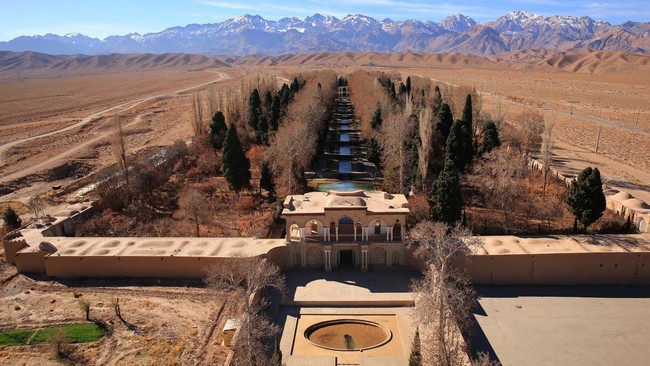
The ancient qanat irrigation system has been the foundation of life in the arid regions of Iran for thousands of years. This technology allows groundwater to be transported from mountains to agricultural areas in dry plains through a network of underground tunnels. According to the Food and Agriculture Organization (FAO)…