
4.33 Million Families Have Received Social Assistance Since DTSEN Was Introduced, Here Are the Facts
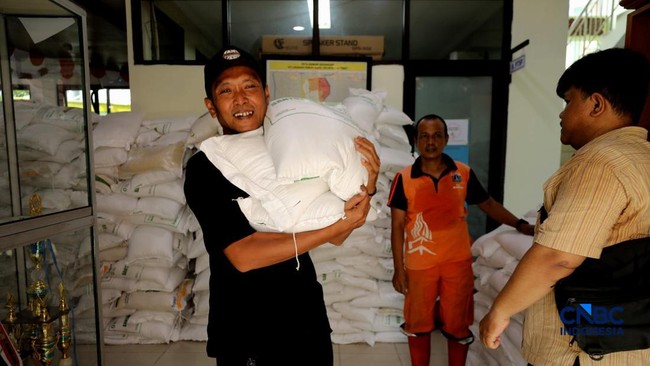
Jakarta, CNBC Indonesia — The government has recorded 4.33 million new beneficiary families (KPM) entering social assistance (bansos) programmes following the introduction of the National Single Social and Economic Data (DTSEN).
Head of the Government Communication Agency (Bakom) Muhammad Qodari said that DTSEN is not data that is compiled once and finished. People’s socio-economic conditions can change rapidly, and the data must therefore be continuously updated.
To that end, the government has provided an updating mechanism, including public submissions and objections, so that residents who have not yet been recorded or who encounter discrepancies can have their data examined and corrected.
“Updating and integrating data does not merely serve to tidy up the list of recipients; it has also succeeded in helping to find citizens who previously did not receive assistance despite meeting the criteria. This is the tangible presence of the state, ensuring that social protection programmes increasingly reach citizens who genuinely need them,” said Qodari in a statement on Monday (14/9/2026).
Before DTSEN existed, the mapping of people’s socio-economic conditions was scattered across several datasets, namely the Socio-Economic Registration (Regsosek), the Integrated Social Welfare Data (DTKS), and the Targeting for the Acceleration of Extreme Poverty Elimination (P3KE). This meant government programmes were distributed using different sets of data.
For this reason, the government mandated Statistics Indonesia (BPS) to compile and integrate all data sources into DTSEN. According to its records, since DTSEN was implemented, 4.33 million new beneficiary families have been registered under social assistance programmes.
One example is Mistam Rizwandi, a resident of West Java in the first decile. Previously, he did not receive social assistance. However, after the implementation of DTSEN, he now receives the Family Hope Programme (PKH) and food assistance.
Another is Mrs Juriah from Brebes Regency, also in the first decile. She previously did not receive social assistance, but after the implementation of DTSEN she now receives PKH and food assistance.
“The experiences of Mr Mistam Rizwandi and Mrs Juriah are a clear reflection of the data fragmentation between agencies prior to the implementation of DTSEN. With a single database that is continuously updated, the government has a stronger foundation for reducing the number of citizens who are overlooked while also preventing assistance from being poorly targeted,” said Qodari.
He emphasised that DTSEN is a social registry, not a list of recipients for all government programmes or a beneficiary registry. The determination of programme recipients remains the responsibility of ministries and agencies according to the criteria of each respective programme.
Therefore, when cases of decile discrepancies are found, the government can update the data and conduct reassessments in accordance with the applicable mechanism.
“So the measure of DTSEN’s success is not solely whether the data is perfect, but whether the data mechanism is increasingly open, able to reach those entitled, and continually corrected whenever errors are found,” Qodari explained.
DTSEN now serves as a common reference across ministries and agencies in the distribution and implementation of various priority programmes, including social assistance (bansos), Sekolah Rakyat, the 3 Million Houses Programme, the Smart Indonesia Card, BPJS Kesehatan Contribution Assistance Recipients (PBI), and other programmes.