
3kg LPG Consumption Rises, Government to Prepare New Regulations
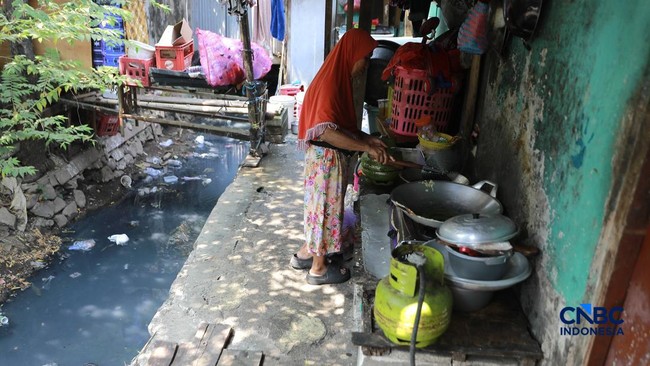
The Ministry of Energy and Mineral Resources (ESDM) has noted that the consumption of 3kg LPG continues to increase annually. This rise in consumption has contributed to the swelling subsidy burden that must be borne by the government.
The Director General of Oil and Gas at the Ministry of ESDM, Laode Sulaeman, stated that one of the factors driving high 3kg LPG consumption is the current open distribution system. This condition allows subsidised LPG to be accessed by various layers of society without restrictions based on recipient groups.
The government, alongside PT Pertamina (Persero), is currently preparing a transformation in the regulations for 3kg LPG usage. This policy is aimed at making the distribution of subsidies more organised and targeted.
One of the schemes being studied is the use of wealth-based decile data to determine which community groups are entitled to receive subsidised LPG. In this classification, decile 9 represents the upper-middle class, while decimetre 10 represents the upper class. However, the government is still reviewing the specific boundaries for subsidy recipients.
Meanwhile, the price of 3kg LPG at official distribution bases in East Jakarta remains at Rp19,000 per cylinder, in accordance with the Maximum Retail Price (HET). However, prices at the retailer level have reached approximately Rp22,000 per cylinder, including delivery costs.
For small traders who rely on 3kg LPG for their daily business activities, certainty regarding supply and price is a major concern. One fried food vendor expressed hope that the change in regulations would not make life more difficult for low-income communities.
“As small traders who use LPG cylinders daily, we hope it does not become scarce like before and that prices do not rise. Trading is already difficult; if gas becomes hard to find due to regulations, it will be a struggle,” the trader told CNBC Indonesia.
The government is still discussing the mechanism for restricting 3kg LPG. Implementation is expected to reduce untargeted consumption while ensuring that subsidies remain available for those truly in need.