
3kg CNG Cylinders Undergoing Lemigas Trials; Pilot Cities to be Established
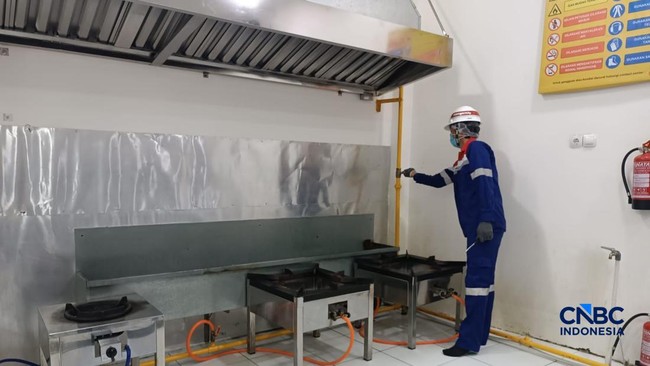
The Ministry of Energy and Mineral Resources (ESDM) is currently conducting trials for the use of 3kg Compressed Natural Gas (CNG) cylinders. These trials are being carried out by Lemigas and have now entered the stage of direct use by consumers.
The Director General of Oil and Gas at ESDM, Laode Sulaeman, stated that the trial will last for one month to evaluate cylinder performance as well as monitor user response and utilisation.
“We are conducting CNG trials over this one-month period because the process has moved to the direct user stage. Previously, we were still testing cylinder durability and other factors. Now, we are preparing for use and evaluation over the next month,” Laode said at the DPR RI Building on Wednesday (2/9/2026).
Laode revealed that the evaluation results are expected by this coming September. The evaluation will cover not only technical aspects and cylinder performance but also how CNG can be utilised by the community.
However, Laode noted that the government has not yet reached the stage of determining the impact of CNG usage on 3kg LPG subsidy policies for 2027. He mentioned that several trial stages must still be completed, including expanding CNG use to the public through pilot cities.
“The important thing now is that the results of these trials will be scaled up to community-level testing, as the Minister announced previously regarding the establishment of pilot cities. After that, we will recalculate the distribution patterns. Only then can we calculate the potential conversion rate from LPG to CNG,” he added.
Previously, the Minister of Energy and Mineral Resources, Bahlil Lahadalia, revealed that the development of 3kg capacity CNG cylinders as an alternative to Liquefied Petroleum Gas (LPG) has entered the final testing phase.
According to Bahlil, he recently received a briefing regarding the progress of the 3kg CNG cylinders. Currently, the testing process is still being conducted by Lemigas before the product can be deployed.
“Just three days ago, the results for the 3kg cylinder and its valve were presented to me. Lemigas is now conducting the final tests,” he said when met at the Ministry of ESDM on Monday (3/8/2026).
According to his report, only one testing stage remains: the ‘fire test’ or testing the cylinder’s resistance to extreme conditions. This involves exposing the cylinder to heat of up to approximately 850 degrees Celsius.
“Based on the information I received, only the fire test remains. This involves testing the cylinder against combustion at 850 degrees heat. That is the final step,” he stated.