
3D Technology Now Helps Doctors Treat Heart Rhythm Disorder Patients in Bali
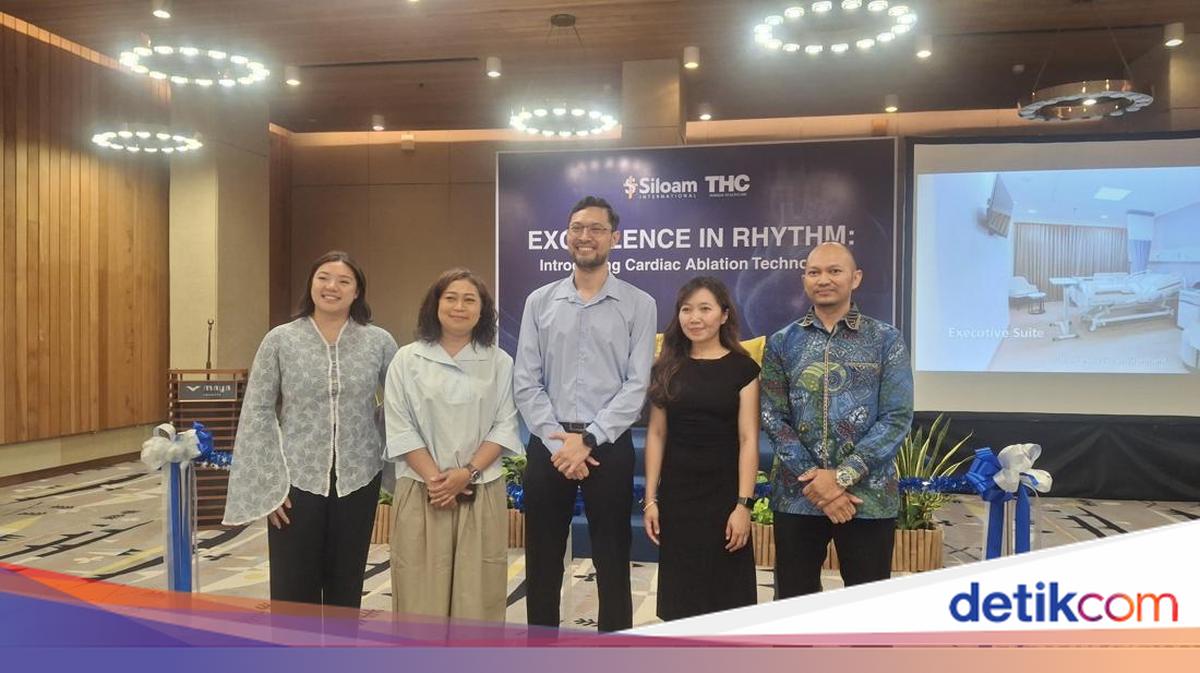
Three-dimensional (3D) mapping technology for cardiac ablation is now available in Bali. The technology helps doctors map a patient’s heart condition in greater detail when treating heart rhythm disorders, or arrhythmia.
Cardiologist and arrhythmia subspecialist I Made Putra Swi Antara explained that every heartbeat is regulated by an ‘electrical system’ that should work regularly. However, in some people, this electrical system is disrupted, causing the heart rhythm to become unstable.
According to him, ablation is one of the procedures used to address the disorder. The procedure is carried out by locating the source of the disturbance in the heart’s electrical system and then treating the part causing the heart rhythm disorder.
‘The ablation procedure is about how we repair the problematic electrical wiring. It could perhaps be likened to someone servicing electronics. We look for which component is faulty, then solder or replace that part,’ he said on Saturday (29/8/2026).
Before 3D mapping technology was available, Putra explained that conventional ablation relied on electrical signals from the heart to locate the source of the disturbance. With 3D technology, doctors can now see a more detailed image of the heart chambers to determine the location of the disturbance and the part that needs to be ablated.
The technology helps doctors determine which part of the heart needs ablation and which part does not need to be treated.
‘With 3D, it can be likened to using Google Maps or GPS. The goal is the same: to bring us to the destination, to find where the short circuit is, but of course it is far more practical, faster, and perhaps safer, without getting lost so much,’ he explained.
The use of the technology also has the potential to shorten procedure times. However, the duration of ablation still depends on the patient’s condition and level of complexity. In general, the procedure lasts around one to three hours.
Putra said the need for ablation services in Bali is quite high. When he was still working at a government hospital, he was able to handle around 120 ablation cases a year.
However, the high demand cannot yet be fully met due to limited human resources. Currently, he is the only one performing the procedure, and one more doctor will be added later.
In fact, in early 2026, the queue for ablation procedures at a government hospital in Bali reached around four to six months.
‘At the beginning of the year, the queue at the government hospital for procedures requiring ablation was around 4 to 6 months. The limitation is more about the people doing the work, but the number of patients is quite large,’ he added.
Meanwhile, Hospital Director of Siloam Hospitals Bali, Ni Gusti Ayu Putri Mayuni, said the presence of 3D mapping technology at Siloam Hospitals Bali is expected to help expand access to cardiac services for the public, including patients from eastern Indonesia.
According to her, patients from eastern Indonesia have closer access if referred to Bali compared with having to receive similar services in Jakarta, Surabaya, or abroad.
‘From eastern Indonesia to Bali is closer than having to go to Jakarta, Surabaya, let alone abroad. So the aim is indeed to improve accessibility for the public to obtain more comprehensive cardiac services,’ she said.
However, ablation services using 3D technology require relatively high costs, in line with the still limited equipment. She said the cost of an ablation procedure ranges from around Rp 190 million to Rp 200 million.
Source: jawawa.id (https://jawawa.id/newsitem/3d-technology-now-helps-doctors-treat-heart-rhythm-disorder-patients-in-bali-1788000637)
Originally published by detikBali (https://www.detik.com/bali/berita/d-8639615/teknologi-3d-kini-bantu-dokter-tangani-pasien-gangguan-irama-jantung-di-bali), translated from Indonesian