
3D Printers Increasingly in Demand, Bambu Lab Opens Creative Hub in Bandung
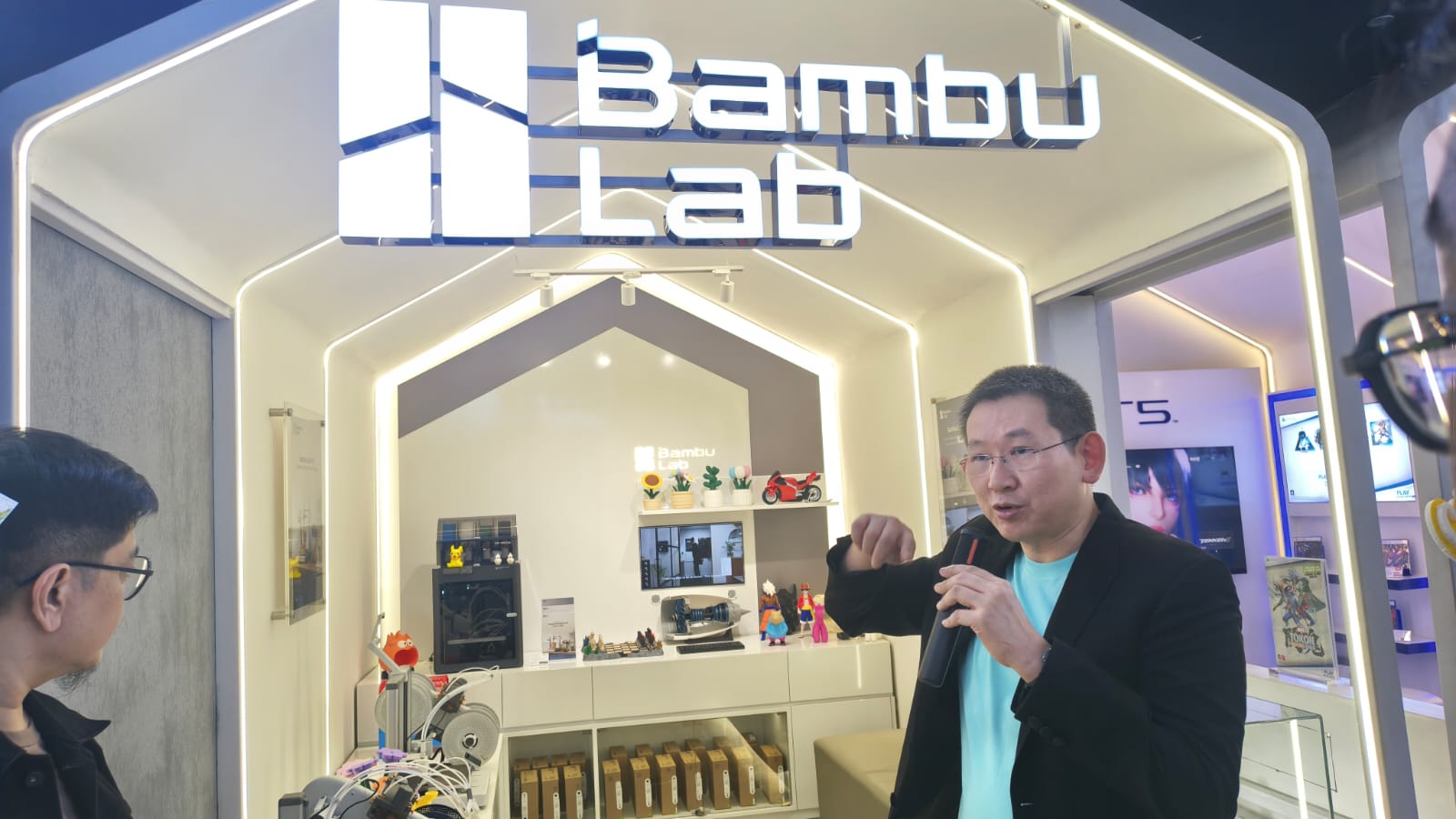
Amid the growth of the creative industry and micro, small, and medium enterprises (UMKM), 3D printer technology is increasingly attracting public attention. The technology is not only used for industrial needs but is also beginning to be utilised as a means of education and developing children’s creativity. Seeing this potential, Chinese technology company Bambu Lab has opened a creative hub at Urban Republic Dago in Bandung. The creative space is intended as a place for the public, students, and business actors to learn about and try 3D printer technology. Country Head of PT Tek Lab Indonesia, distributor of Bambu Lab products, Jeffry Rianto, stated on Friday (21/8) that Bandung was chosen because it has a strong creative ecosystem and high public enthusiasm for technological and creative developments. The presence of the creative hub is expected to introduce various uses of 3D printers to the public, so that the technology is not only seen as a device for professionals or certain industries. “We hope the public will not only buy but also see directly, try, discuss, and get inspiration to create something using a 3D printer,” he said. Jeffry assessed that current developments in 3D printer technology have made the devices increasingly easy to use by various groups. User creativity is also not limited to a particular field. In addition to creative industry needs, 3D printers are beginning to be considered by parents as a means to develop children’s creativity while diverting their attention from gadget use. “Using a 3D printer can provide more productive activities for children. On the other hand, the technology also opens opportunities for beginners to develop businesses based on creative products. Mobile phones are less productive for children,” he explained. Jeffry noted that a number of beginner users utilise 3D printers to make various products, such as decorations and toys, which can then be developed into UMKM products. At the creative hub, the public can also see directly the process of printing various prototypes using 3D printers. Several products that have been made include ship miniatures, aircraft engines, and basketball-themed toys. Bambu Lab has also prepared raw materials in the form of corn-based filament claimed to be more environmentally friendly. To make it easier for users, Bambu Lab 3D printers can be operated through an application. Users can choose from available designs or create their own designs as needed before printing. Jeffry added that in addition to providing a space to try products, Bambu Lab plans to hold various workshops and training sessions. The company has also prepared a learning curriculum that can be used for students, particularly vocational high school (SMK) students. The move is expected to introduce digital manufacturing technology from an early age while encouraging the emergence of creativity and new skills relevant to industry needs. For the public interested in using the technology, Bambu Lab 3D printer products are currently available in several types with prices ranging from around Rp3 million to Rp13 million. “The presence of the creative hub in Bandung is part of efforts to expand the use of 3D printer technology beyond professional circles. With access to try, learn, and discuss directly, the public is expected to see 3D printers not merely as printing devices, but as tools to produce various creative products and open new business opportunities,” he continued.