
3D Map of the Universe from DESI Reveals 4 Billion Cosmic Objects
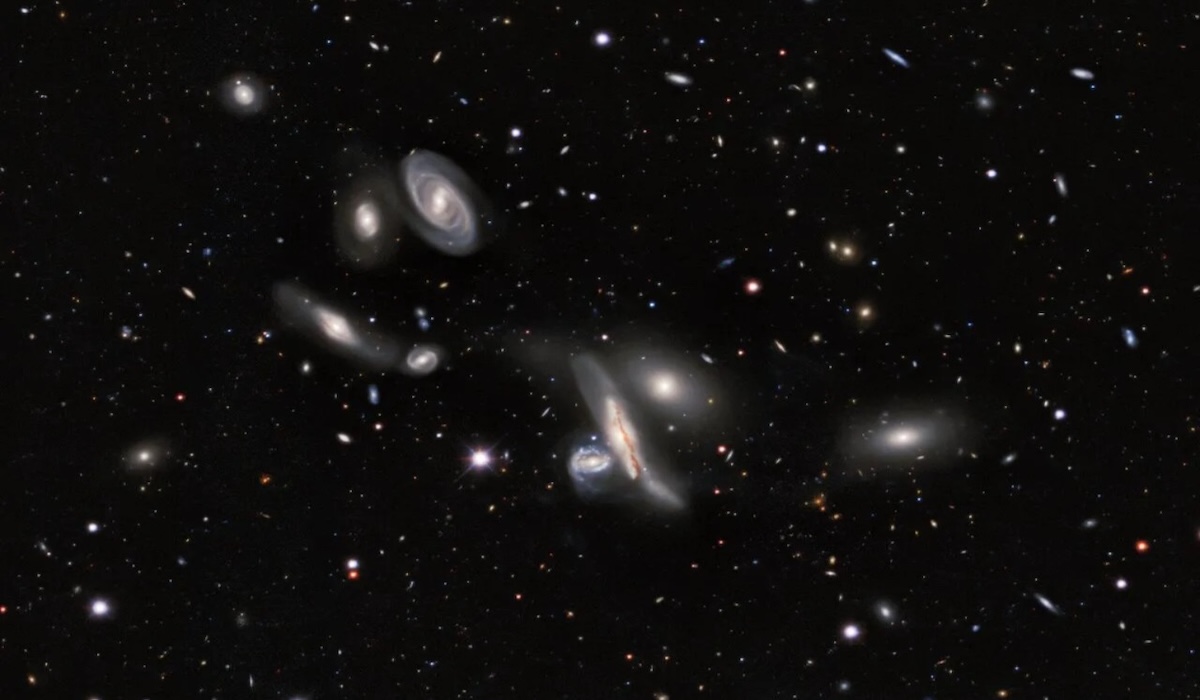
Astronomers have successfully completed one of the largest cosmological mapping projects in history using the Dark Energy Spectroscopic Instrument (DESI) in Arizona, United States. The three-dimensional (3D) map covers around 75 per cent of the sky and records nearly 4 billion celestial objects in extraordinary detail.
Reported by WIRED, the giant map has a capacity of up to 5.6 trillion pixels. The data collected encompasses a wide range of cosmic objects, from stars, galaxies and black holes to asteroids, recorded through observations of visible and near-infrared light.
This ambitious project was not built in a short time. Reports indicate that the main observations took place over five years, preceded by 13 years of preparatory work. More than 160 scientists were actively involved in collecting and processing this massive dataset.
DESI is equipped with around 5,000 mechanical “eyes” that allow the instrument to observe objects far beyond the Milky Way. To obtain a clear view, researchers pointed the instrument towards the regions above and below the galactic plane to avoid obstruction from dust and stars within our own galaxy.
The mapping results are now available to the public through the DESI Legacy Imaging Surveys. This online platform allows members of the public to explore the cosmic data gathered by the experts.
The primary aim of the mapping is to understand dark energy, the mysterious force believed to be driving the accelerating expansion of the universe. Previously, DESI had mapped the distances of around 47 million galaxies and quasars to reconstruct 11 billion years of the universe’s history.
Initial data from the first three years of DESI observations provided intriguing clues. When combined with supernova observations, the data suggest the possibility that dark energy is not constant, but is slowly weakening over time.
A full analysis of the five years of observational data is scheduled to be released in 2027. The final results are expected to provide clearer answers about the structure, history and future of our universe.