
395,000 East Java Residents Affected by Drought; Deputy Speaker Urges Mitigation
East Java Regional House of Representatives Deputy Speaker Deni Wicaksono has urged Governor Khofifah Indar Parawansa to strengthen mitigation of drought and forest and land fires. His call came after hundreds of thousands of residents were affected by drought and thousands of hectares of land burned during the 2026 dry season.
He said disaster figures for the 2026 dry season should serve as a serious warning to the East Java Provincial Government. By early October, about 395,438 people in 24 districts and cities had been affected by drought.
During the same period, at least 150 forest and land fire incidents occurred in 25 districts and cities. The area burned was estimated at 9,540 hectares.
“These figures are too large to be treated as an ordinary seasonal problem. Nearly 400,000 people have been affected by drought and more than 9,500 hectares of land have burned. This must be a warning. The government needs to do more on mitigation; it must not wait until the water runs out and forests burn before mobilising all its resources,” Deni said in a written statement on Wednesday (21 October 2026).
The East Java PDI-P regional board secretary praised the provincial government’s efforts to distribute clean water, carry out water-bombing operations and conduct weather modification. However, he said emergency measures needed to be matched by targeted prevention.
The East Java Provincial Government declared an emergency alert for drought and forest and land fires on 26 May 2026. Deni said the declaration had to be followed by preparedness in infrastructure, personnel and equipment in disaster-prone areas.
“An alert status must not remain an administrative label. It must be clear what is prepared before a disaster occurs, how many at-risk villages have water reserves, and how many fire-prone locations have firebreaks,” Deni said.
He urged the governor to bring together the Regional Disaster Management Agency, the Forestry Agency, the Meteorology, Climatology and Geophysics Agency (BMKG), and district and city governments. The aim, he said, should be to produce an integrated risk map down to village level to guide the prioritisation of budgets and equipment.
In drought-prone areas, the government should accelerate the construction of deep wells, small reservoirs and water-storage facilities, and protect springs. In areas at risk of forest and land fires, it must ensure firebreaks are in place and trained firefighting personnel are ready.
Deni highlighted the close relationship between ecological damage from fires around Mount Bromo, Mount Arjuno and Mount Welirang and residents’ water security.
“Forest and land fires do not end when the flames are extinguished. Forests store water; if the upstream areas are damaged, people downstream feel the effects,” he said.
He therefore called for a review of disaster-management spending in the East Java provincial budget. The budget, he said, should allocate a greater share to prevention and risk reduction rather than responding only once an emergency has begun.
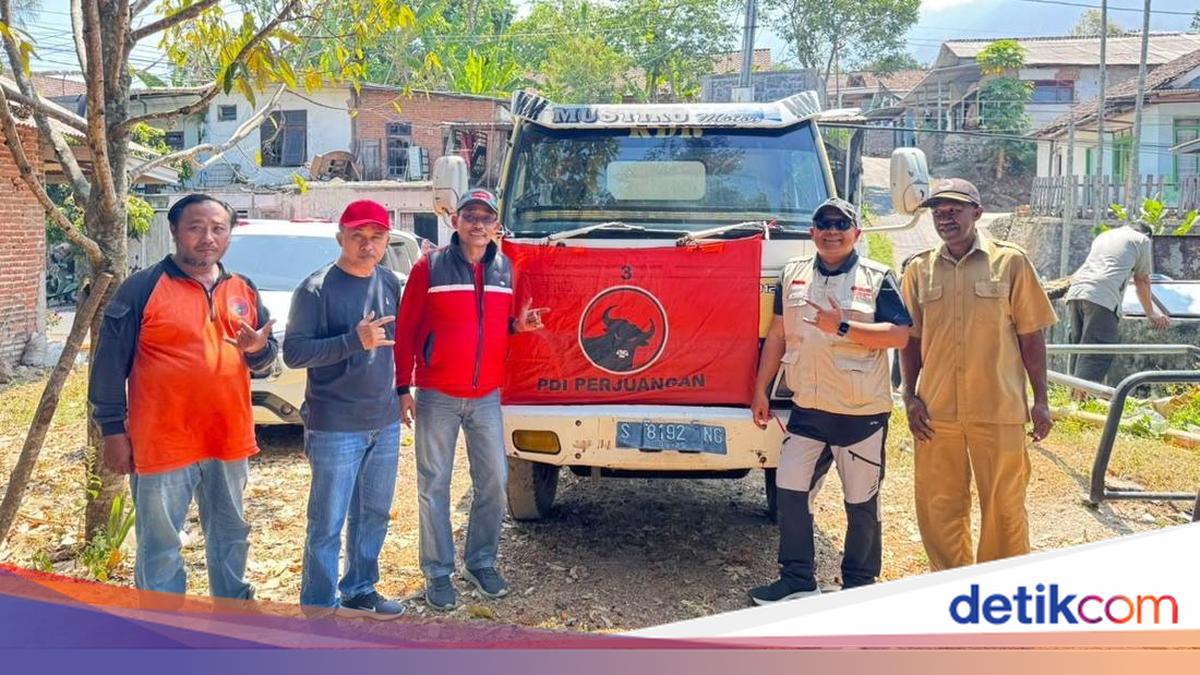
Meanwhile, PDI-P East Java has mobilised its local branches to assist affected communities. Hundreds of thousands of litres of clean water have been distributed to Bojonegoro, Gresik, Nganjuk and Bangkalan.
Party members have also been deployed to deliver supplies to forest-fire crews in mountainous areas. Nevertheless, Deni stressed that community and party solidarity could not replace the government’s full responsibility.
“Community and party solidarity will continue. But the government has far greater authority, funding, data and resources. That is why we are urging the Governor to lead this mitigation effort directly,” he said.
Deni also recalled a message from PDI-P chair Megawati Soekarnoputri about party members serving as “Pandu Ibu Pertiwi” (Scouts of the Motherland). He said the message was relevant to efforts to protect water sources, forests and the environment.
Deni said the government needed to set mitigation indicators that could be assessed each year, including a reduction in the number of villages facing water shortages, a decrease in the area affected by fires, and faster emergency response times.
“Our targets must be clear: in the next dry season, fewer villages should face a water crisis, the area affected by fires should be smaller, and response times should be faster. If the indicators do not change from year to year, then our mitigation is not working,” he concluded.