
380-Million-Year-Old Fish Fossil Reveals the First Creature to Crawl onto Land
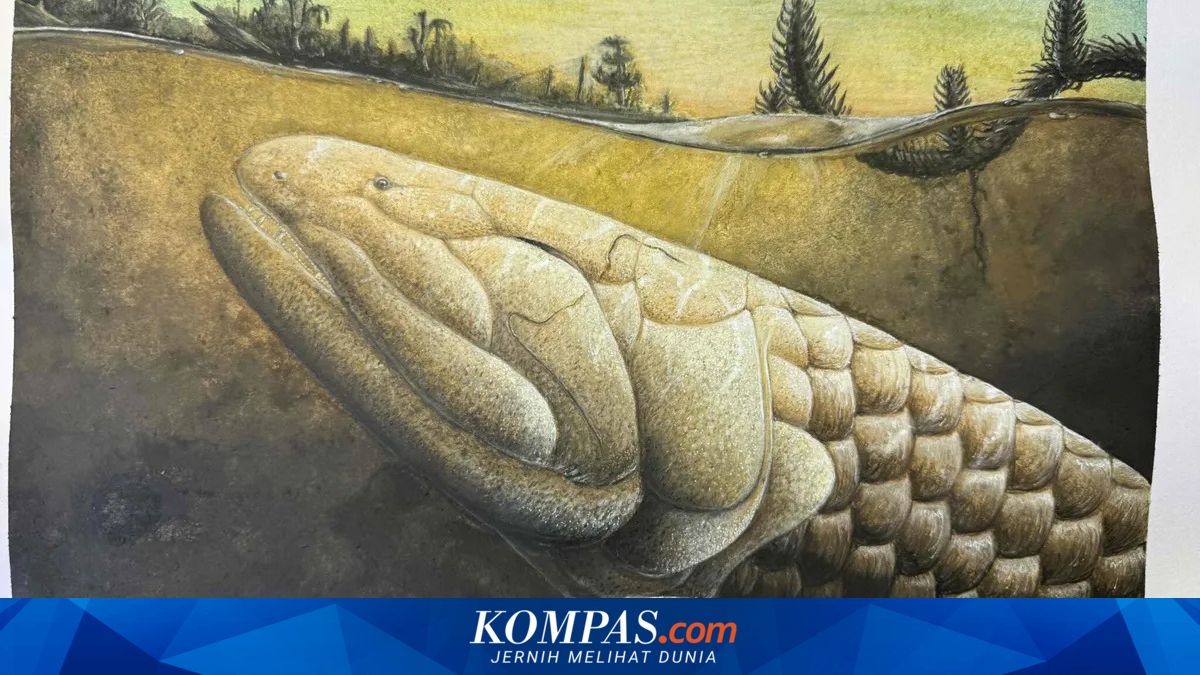
Hundreds of millions of years ago, a major event changed Earth’s history as aquatic beings first crawled from the oceans and explored dry land. The conquest of land by vertebrate animals is one of the planet’s pivotal chapters, though much remains shrouded in mystery. Now, that mystery is starting to yield to findings from a stubborn-headed ancient fish. As a carnivorous fish with fleshy fins, scientists believe this species was among the earliest groups of fish to begin adapting from ocean dwelling to land-dwelling life. Fossil remains were found several decades ago in a location that may sound unusual: the Lashly Mountains in Antarctica. When Koharalepis was still swimming in the ocean and possibly crawling along shorelines, the region was not a snowbound, ice-covered terrain as it is today, but part of the ancient supercontinent Gondwana. To date, scientists have only found a single specimen of this species. Fortunately, that lone fossil is in exceptionally good condition with much of the skull still intact. In a recent study, a team of scientists from Flinders University in Australia re-examined this valuable specimen, focusing on the internal skull bones. “We chose to focus on Koharalepis because this is the only fossil across the family that preserves the internal skull bones, which gives us valuable insights into the braincase and its neuroanatomy,” said the study’s lead author, Corinne Mensforth, a PhD candidate at the Flinders University Palaeontology Laboratory, in an official statement, cited by IFLScience. “We found evidence that Koharalepis’s brain resembles that of fishes that bridge the vertebrate transition from water to land. We also found adaptations to life near the water’s surface, including a hole at the top of the skull for additional air intake and brain structures that detect light and circadian rhythms,” Mensforth explained. Mensforth added that Koharalepis could grow to about 1 metre in size. This animal was an ambush predator that preyed on other animals in its surroundings, and with relatively small eyes, it surely relied on other senses to catch its prey. “Koharalepis that grows to about 1 metre is an ambush predator that preys on other animals in its surroundings, and with relatively small eyes, it must rely heavily on other senses to capture its prey,” added Mensforth. As its name suggests, this freshwater fish had a unique respiratory system that allows it to breathe air outside water. By sequencing the genome of this unique aquatic creature, scientists can gain additional insights into how the terrestrial transition unfolded. Yet, experts believe the big transition did not happen in a single event. Some studies indicate that the transition from aquatic (water) to terrestrial (land) may have occurred dozens of times across several different species. This scientific fact indicates that the story of life’s evolution on Earth is far more complicated than previously thought. The comprehensive study of this ancient fish fossil has been officially published in the scientific journal Frontiers in Ecology and Evolution.
Source: jawawa.id (https://jawawa.id/newsitem/380-million-year-old-fish-fossil-reveals-the-first-creature-to-crawl-onto-land-1779542475)
Originally published by Kompas (https://www.kompas.com/sains/read/2026/05/21/195600823/fosil-ikan-berusia-380-juta-tahun-ungkap-hewan-pertama-yang-merangkak-ke?utm_source=ABC&utm_medium=rss), translated from Indonesian