
35th NU Congress Expected to Provide Solutions to National Problems, Focusing on 5 Strategic Agendas
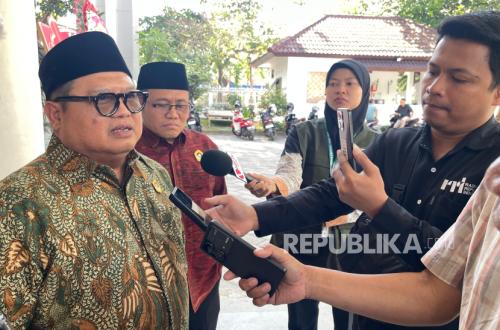
The 35th Nahdlatul Ulama (NU) Congress is considered an important momentum to formulate the Muslim community’s response to various national challenges and developments in the Islamic world.
The Indonesian Islamic Da’wah Institute views the highest consultative forum of NU, taking place from 27 to 31 August 2026 at the Bahrul Ulum Tambakberas Islamic Boarding School in Jombang, East Java, as being expected to contribute to strengthening religious and national life.
The General Chairman of the Indonesian Islamic Da’wah Institute, Dody Taufiq Wijaya, said the challenges facing Muslims today are increasingly complex because religious issues are intertwined with developments in technology, economy, politics, environment, education, and social change.
“Muslims need a shared agenda that does not stop at internal organisational matters,” he said in a statement in Jakarta on Thursday (27/8/2026).
He stated that the challenges faced by the ummah today are cross-sectoral in nature. Therefore, the results of the NU Congress are highly anticipated, as a solution to national problems, while strengthening Islam’s contribution to the nation and civilisation.
According to Dody, there are at least several strategic issues that need to be the shared concern of Islamic organisations in Indonesia.
First, social polarisation and the strengthening of identity politics. Dody assessed that differences in political choices are still often carried over into social and religious spaces. If not managed properly, these differences can erode Islamic brotherhood and national brotherhood.
“Differences in political choices are part of democracy. What must be maintained is that these differences do not turn into social hostility. Islam has a tradition of deliberation and etiquette in dealing with differences,” he said.
The solution, according to Dody, is for Islamic mass organisations to strengthen national education, political literacy, and a culture of dialogue. Religious scholars and leaders also need to be calming figures when society faces political contestation.
Second, the strong flow of digital information and the development of artificial intelligence. The Indonesian Islamic Da’wah Institute views digital transformation, including the use of artificial intelligence (AI), as presenting great opportunities for education and da’wah.