
324 Landfills Still Using Open Dumping, Environment Minister Requests Political Support to Address This
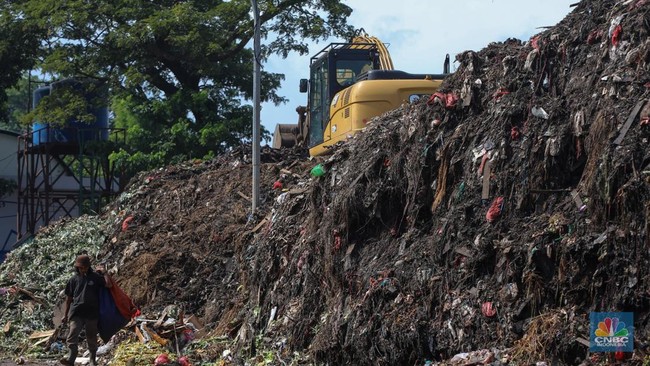
The government’s efforts to reorganise the national waste management system have entered a crucial phase. The year 2026 has been set as the deadline for halting open dumping practices at all final disposal sites (TPAs), which have long been the primary source of environmental problems.
Environment Minister Hanif Faisol Nurofiq stressed that the improvement process cannot be done instantaneously. The approach must be measured, detailed, and based on field data.
“Through criminal sanctions. This is indeed not straightforward, so very detailed steps are required, which is the progress we have made so far,” he said during a working meeting with the House of Representatives Commission XII on Monday (6/4/2026).
Currently, the government records hundreds of TPAs operating with open methods. This condition not only impacts environmental pollution but also increases health risks for communities around the sites.
“There are 324 TPAs in 300 districts and cities that we must end the open dumping practice for. Therefore, on this occasion, political support is once again very important to promptly end the open dumping practice that poses a very significant risk of environmental damage,” he said.
The government assesses that halting open dumping does not require expensive technology. Simple interventions such as covering with soil or geotextile materials are considered sufficiently effective.
“Ending it is actually not too difficult, just by capping with sub-soil or geotextiles that are not too expensive but have a very good impact on improving environmental capacity,” Faisol stated.
This step is also believed to directly impact the increase in the national waste management rate, which is currently far from the target.
“Our real waste management data today is at 26%. This figure has risen by 16% compared to last year in 2024,” he said.
This increase is largely supported by the seriousness of local governments in reducing open dumping practices in several regions.
Nevertheless, the government acknowledges there is still significant work to meet the national target set in the medium-term development plan.
“The national target based on the RPJMN requires us to reach 63.4%, so there is still a gap between the current achievement and the national target,” he noted.
One additional step to be taken is cracking down on illegal waste dumping practices, particularly in major cities.
With these various strategies, the government is optimistic that the 2026 target to end open dumping can be achieved, while significantly improving environmental quality.
“For that, we ensure and request support from all of us that open dumping can be ended in 2026,” Faisol said.